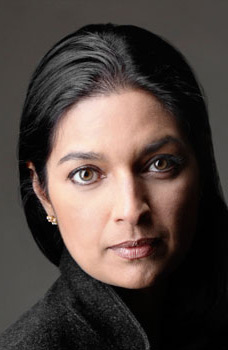
Jhumpa Lahiri discusses the cultural conflicts of growing up in America as the child of immigrants and how the experience of writing her first novel differed from writing the short stories in the Pulitzer prize-winning Interpreter of Maladies.
In your first book, Interpreter of Maladies, some of the stories are
set in India, others in the United States. The Namesake is set predominantly in
the United States. Can you talk a bit about the significance of setting in your
work?
When I began writing fiction seriously, my first attempts were, for some
reason, always set in Calcutta, which is a city I know quite well as a result of
repeated visits with my family, sometimes for several months at a time. These
trips, to a vast, unruly, fascinating city so different from the small New
England town where I was raised, shaped my perceptions of the world and of
people from a very early age. I went to Calcutta neither as a tourist nor as a
former resident -- a valuable position, I think, for a writer.
The reason my
first stories were set in Calcutta is due partly to that perspective -- that
necessary combination of distance and intimacy with a place. Eventually I
started to set my stories in America, and as a result the majority of stories in
Interpreter of Maladies have an American setting. Still, though I've never lived
anywhere but America, India continues to form part of my fictional landscape. As
most of my characters have an Indian background, India keeps cropping up as a
setting, sometimes literally, sometimes more figuratively, in the memory of the
characters.
The Namesake is, essentially, a story about life in the United
States, so the American setting was always a given. The terrain is very much the
terrain of my own life -- New England and New York, with Calcutta always
hovering in the background. Now that the writing is done I've realized that
America is a real presence in the book; the characters must struggle and come to
terms with what it means to live here, to be brought up here, to belong and not
belong here.
The Namesake deals with Indian immigrants in the United States as well as
their children. What, in your opinion, distinguishes the experiences of the
former from the latter?
In a sense, very little. The question of identity is always a difficult
one, but especially so for those who are culturally displaced, as immigrants
are, or those who grow up in two worlds simultaneously, as is the case for their
children. The older I get, the more I am aware that I have somehow inherited a
sense of exile from my parents, even though in many ways I am so much more
American than they are. In fact, it is still very hard to think of myself as an
American. (This is of course complicated by the fact that I was born in London.)
I think that for immigrants, the challenges of exile, the loneliness, the
constant sense of alienation, the knowledge of and longing for a lost world, are
more explicit and distressing than for their children.
On the other hand, the
problem for the children of immigrants -- those with strong ties to their
country of origin -- is that they feel neither one thing nor the other. This has
been my experience, in any case. For example, I never know how to answer the
question "Where are you from?" If I say I'm from Rhode Island, people
are seldom satisfied. They want to know more, based on things such as my name,
my appearance, etc. Alternatively, if I say I'm from India, a place where I was
not born and have never lived, this is also inaccurate. It bothers me less now.
But it bothered me growing up, the feeling that there was no single place to
which I fully belonged.
Can you talk a little bit more specifically about the conflicts you felt
growing up as the child of immigrants?
It was always a question of allegiance, of choice. I wanted to please my
parents and meet their expectations. I also wanted to meet the expectations of
my American peers, and the expectations I put on myself to fit into American
society. It's a classic case of divided identity, but depending on the degree to
which the immigrants in question are willing to assimilate, the conflict is more
or less pronounced.
My parents were fearful and suspicious of America and
American culture when I was growing up. Maintaining ties to India, and
preserving Indian traditions in America, meant a lot to them. They're more at
home now, but it's always an issue, and they will always feel like, and be
treated as, foreigners here.
Now that I'm an adult I understand and sympathize
more with my parents' predicament. But when I was a child it was harder for me
to understand their views. At times I felt that their expectations for me were
in direct opposition to the reality of the world we lived in. Things like
dating, living on one's own, having close friendships with Americans, listening
to American music and eating American food -- all of it was a mystery to them.
On the other hand, when I was growing up, India was largely a mystery to
Americans as well, not nearly as present in the fabric of American culture as it
is today. It wasn't until I was in college that my American friends expressed
curiosity about and interest in my Indian background. As a young child, I felt
that that the Indian part of me was unacknowledged, and therefore somehow
negated, by my American environment, and vice versa. I felt that I led two very
separate lives.
Did you feel as rebellious as your character Gogol does early in your
novel?
Neither Gogol nor I were terribly rebellious, really. I suppose I, like
Gogol, had my moments. But even ordinary things felt like a rebellion from my
upbringing -- what I ate, what I listened to, whom I befriended, what I read.
Things my American friends' parents wouldn't think to remark upon were always
remarked upon by mine.
In The Namesake, characters have both good names, used in public, and pet
names, used by families. Is this still a tradition in Bengali families? Do you
have both a public and a family name?
I can't speak for all Bengalis. But all the Bengalis I know personally,
especially those living in India, have two names, one public, one private. It's
always fascinated me. My parents are called by different names depending on what
country they happen to be in; in India they're known by their pet names, but in
America they're known by their good names. My sister, who was born and raised in
America, has two names. I'm like Gogol in that my pet name inadvertently became
my good name. I have two other names on my passport and my birth certificate (my
mother couldn't settle on just one). But when I was enrolled in school the
teachers decided that Jhumpa was the easiest of my names to pronounce and that
was that. To this day many of my relatives think that it's both odd and
inappropriate that I'm known as Jhumpa in an official, public context.
You write frequently from the male point of view. Why?
In the beginning I think it was mainly curiosity. I have no brothers, and
growing up, men generally seemed like mysterious creatures to me. Except for an
early story I wrote in college, the first thing I wrote from the male point of
view was the story "This Blessed House," in Interpreter of
Maladies.
It was an exhilarating and liberating thing to do, so much so that I wrote three
stories in a row, all from the male perspective. It's a challenge, as well. I
always have to ask myself, would a man think this? do this? I always knew that
the protagonist of The Namesake would by a boy. The original spark of the book
was the fact that a friend of my cousin in India had the pet name Gogol. I
wanted to write about the pet name / good name distinction for a long time, and
I knew I needed the space of a novel to explore the idea. It's almost too
perfect a metaphor for the experience of growing up as the child of immigrants,
having a divided identity, divided loyalties, etc.
Now that you've written both stories and a novel, which do you prefer?
What was the transition like?
I feel attracted to both forms. Moving from the purity and intensity of
the short story to the broader canvas of a novel felt liberating and, at times,
overwhelming. Writing a novel is certainly more demanding than writing a story,
and the stakes are higher. Every time I questioned something about the novel it
potentially affected hundreds of pages of writing, not just ten or twenty. The
revision process was far more rigorous and daunting. It was much more of a
commitment in every way. And I was juggling much more than I ever have in a
story, more characters, more scenes, more points of view.
At the same time,
there's something more forgiving about a novel. It's roomier, messier, more
tolerant than a short story. The action isn't under a microscope in quite the
same way. Short stories, now matter how complex, always have a ruthless,
distilled quality. They require more control than novels. I hope I can continue
to write both.
Have you re-evaluated any of your writing about men and/or marriage now
that you are both a wife and mother?
Not really. The scenes about Ashima in labor and giving birth were written
long before I became pregnant. I asked my friends and my mother and my mother's
friends a lot of questions, and I based Ashima's experiences on the answers I
got. Being married doesn't make writing about men any easier, just as my being a
woman doesn't make writing about women any easier. It's always a challenge. That
said, the experiences of marriage and motherhood have changed me profoundly,
have grounded me in a way I've never been before. Motherhood, in particular,
makes me look at life in an entirely different way. There's nothing to prepare
you for it, nothing to compare it to. And I imagine that my future work will
reflect or otherwise be informed by that change.
You quote Dostoyevsky as saying, "We all came out of Gogol's
overcoat." Has Nikolai Gogol had any influence on you as a writer?
I'm not sure influence is the right word. I don't turn to Gogol as
consistently as I do to certain other writers when I'm struggling with character
or language. His writing is more overtly comic, more antic and absurd than mine
tends to be. But I admire his work enormously and reread a lot of it as I was
working on the novel, in addition to reading biographical material. "The
Overcoat" is such a superb story. It really does haunt me the way it haunts
the character of Ashoke in the novel. I like to think that every writer I admire
influences me in some way, by teaching me something about writing. Of course,
without the inspiration of Nikolai Gogol, without his name and without his
writing, my novel would never have been conceived. In that respect, this book
came out of Gogol's overcoat, quite literally.
Unless otherwise stated, this interview was conducted at the time the book was first published, and is reproduced with permission of the publisher. This interview may not be reproduced or reprinted without permission in writing from the copyright holder.


Chimamanda Ngozi Adichie was born in Nigeria in 1977. She is from Abba, in Anambra State, but grew up in the university town of Nsukka where she attended primary and secondary schools and briefly studied Medicine and ... (more)
If you enjoyed:
Unaccustomed Earth
Try:
The Thing Around Your Neck
by Chimamanda Ngozi Adichie
Aamina Ahmad, a graduate of the Iowa Writer's Workshop, has received a Stegner Fellowship from Stanford University, a Pushcart Prize, and a Rona Jaffe Writer's Award. Her short fiction has appeared in One Story, The Southern ... (more)
If you enjoyed:
The Lowland
Try:
The Return of Faraz Ali
by Aamina Ahmad
We recommend 77 similar authors



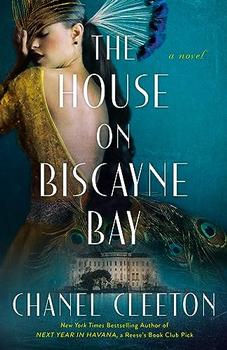
The House on Biscayne Bay
by Chanel Cleeton
As death stalks a gothic mansion in Miami, the lives of two women intertwine as the past and present collide.
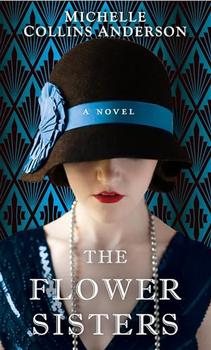
The Flower Sisters
by Michelle Collins Anderson
From the new Fannie Flagg of the Ozarks, a richly-woven story of family, forgiveness, and reinvention.

The Funeral Cryer by Wenyan Lu
Debut novelist Wenyan Lu brings us this witty yet profound story about one woman's midlife reawakening in contemporary rural China.
Your guide toexceptional books
BookBrowse seeks out and recommends the best in contemporary fiction and nonfiction—books that not only engage and entertain but also deepen our understanding of ourselves and the world around us.