
-
Your next favorite book
is waiting.

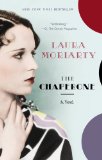
How much research did author Laura Moriarty do for her book The Chaperone? Did she even wear a corset to precisely capture the binding details? Find out in this discussion with fellow author Curtis Sittenfeld.
Curtis Sittenfeld is the author of the bestselling novels American Wife, Prep, and The Man of My Dreams, which have been translated into twenty–five languages. Here she talks with novelist Laura Moriarty about her experiences writing The Chaperone.
Curtis Sittenfeld: You tell the story of two characters whose trajectories overlap—Louise Brooks before she becomes famous, and quietly complicated housewife Cora Carlisle, who serves as 15–year–old Louise's chaperone in New York in the fateful summer of 1922. Did you always know they belonged in a book together, or did you decide to write about one of them first?
Laura Moriarty: I always found Louise Brooks interesting. She was an icon of the silent–film era, and I knew she'd grown up in Kansas, and that she was smart and rebellious and sharp–tongued. But it wasn't until I learned that she'd first gone to New York as a teenager with a 36–year–old chaperone that I saw a story I wanted to write. I'm drawn to intergenerational tension, and it must have been strong in the 1920s: I wondered how Louise's generation of flappers appeared to the women who came of age at the beginning of the century—wearing corsets, long skirts, and high collars. This older generation of women had campaigned for suffrage and prohibition of alcohol; they must have been bewildered by the very different values and sensibilities of their daughters. I liked the idea of a chaperone, someone thrown into this dynamic all at once.
Curtis Sittenfeld: Were you a fan of Louise Brooks specifically, or of movies from the 1920s and 1930s generally, or were you exploring an art form unfamiliar to you when you started writing this novel?
Laura Moriarty: I wasn't that familiar with silent films. I didn't know, for example, how hugely popular silent films were in the 1920s, how people would go to the movies several times a week. While I was writing the book, I went to see Louise Brooks's most famous film, Pandora's Box, at the Tivoli in Kansas City, and it was a lovely experience. You can watch old silent films on DVD or even on YouTube, but it was a different feeling watching her up on the big screen, seeing the film the way people saw it all those years ago.
Curtis Sittenfeld: You've clearly done a lot of research. What form did your research take? Were there discoveries you made—about Brooks, or the early twentieth century, or Wichita—that particularly captured your imagination? Was there any incredibly juicy details you came across that just didn't belong in the book?
Laura Moriarty: One of the first things I did, and maybe the most important, was drive down to Wichita and walk around Union Station, where Louise and her chaperone disembarked for New York in 1922. It's boarded up now, but just seeing the physical place helped me see the story and the journey as real. I read Louise's autobiography and Barry Paris's biography of her. I read oral histories of Manhattan in the '20s, and I read travel guides from that era as well. I spent a lot of time learning about 1920s fashion, not just what flappers were wearing, but what most women were wearing, what men were wearing. Overall I learned a lot of details about 1920s clothes, cars, kitchen appliances, and food. I had a character eating peanut butter in one scene until I learned that peanut butter wasn't commercially packaged and sold until 1924. But the biggest challenge was probably getting into the psychology of someone living in that era—to know her values, and how she saw the world.
Here's an interesting bit about Louise that didn't get in the book: After she became famous, she and some friends were dining in a restaurant in Europe; she was bored, and she spotted a man she'd been friendly with, and she asked the waiter to summon him. The man didn't come over right away because he was with a woman, and he didn't want to be rude. When he finally did go over to Louise's table, apologizing and explaining his delay, she picked up a bouquet of roses and sliced him across the face with it, the thorns actually cutting his skin so his face was dripping blood. This story, to me, says a lot about the dark side of Louise's personality. Yes, she was beautiful and intelligent, and she could be very funny, but obviously there was a deep insecurity there, a real destructive rage and immaturity. I couldn't work that scene into the book, but I knew what it told me about Louise, and I thought about it when I was writing her scenes with Cora.
Curtis Sittenfeld: One of your characters was part of the Orphan Train, which placed children with midwestern families (who also happened to be strangers!). Is her experience based on that of anyone real, or is it more of an amalgamation?
Laura Moriarty: The thing that got me about the Orphan Trains was that the experiences were so varied. Some of the kids went from neglect and hunger in New York to loving farm families who couldn't wait to fatten them up, who gave them medical care, an education, affection. And some of the kids became the victims of terrible cruelty, and more hunger, and more neglect—it all depended on who adopted them off of the train. Because the experiences of the children were so varied, I wouldn't say this character's experience is an amalgamation, though she isn't based on any one real person either. Her story is just what could have happened to a child, and what probably did happen to many of them.
Curtis Sittenfeld: Like Cora, you yourself live in Kansas, and you've set earlier fiction there. What do you like about writing and living in a place that's not considered a literary hotbed? (Admittedly, I ask this as someone who lives in nearby Missouri!)
Laura Moriarty: I love my town, Lawrence, Kansas, so I'm glad I get to live here. I've never felt that wanting to write required me to live in New York. There are so many great authors living there, of course, but I can get their books here, or I can read their stories online or in journals. And there's a great community of writers right here in my town. I teach creative writing at the University of Kansas, and I have creative colleagues and thoughtful graduate students, and I have a writing group I meet with almost every week. I suppose it's a little humbling to write from Kansas. I know I'm not at the literary center of the universe. But that might not be a bad thing.
Curtis Sittenfeld: I want to ask you a variation of a question I've been asked. I wrote a novel, American Wife, that borrowed from the life of a real person—Laura Bush—but I changed her name. You've written about a real person—Louise Brooks—and used her real name, but she's no longer living. Do you feel any moral qualms about portraying a real person saying and doing things that you've made up?
Laura Moriarty: I was so excited about this book when I started it that I didn't have a lot of moral qualms. But the more I read about Louise and the more I wrote about her, the more I started to really care for her, and I did worry about getting her right, portraying her in a way that was accurate. I tried to keep my depiction true to what I learned from her autobiography and biographies about her. It's impossible to know what she'd think of my portrayal, but I hope she would approve. In any case, I don't think Louise Brooks ever lost too much sleep over what other people thought of her.
Curtis Sittenfeld: Your descriptions of Cora wearing a corset are incredibly convincing. Did you—for the sake of research, of course—ever try one on yourself?
Laura Moriarty: I don't think I've ever tried on a corset, though a certain bridesmaid's dress did require a torturous bustier that will stay forever burned in my sensory memory.
Laura Moriarty, Author of The Chaperone, on Historical Fiction
I don't feel much nostalgia for the past - I'm a big fan of voting rights, permanent-press clothes, and antibiotics - but I've always loved reading historical fiction. I like the way it makes me think about previous generations, and how their lives and worries were very different from mine. I also like the way historical fiction reminds me to think of my own era as simply another moment in time, one that will seem antiquated too someday. Not only did you have to create a whole world and a cast of characters, but you also had to capture the essence of a time you've never experienced.
And then, a little over two years ago, I fell in love with the idea for a novel that had to take place, most emphatically, in 1922. I'd already written three novels, but they were all set in places I'd lived, in times I'd experienced. My work drew on scenes I'd witnessed, in settings that I knew and understood. But this was different. This novel had to take place in 1922 because that was the year a bobbed-haired Louise Brooks, soon to become a silent-film star and an icon of her generation, left her hometown of Wichita for New York accompanied by a chaperone. Not much is known about the real chaperone except that she was a thirty-six-year-old housewife of good standing, but I imagined her as my heroine, a complicated woman who would have her own reasons for going to New York. I could imagine her character, and how impossible it would be for her to keep someone like Louise Brooks from impropriety. And I could imagine how the summer might change the chaperone's life in ways she never anticipated.
But I couldn't just imagine 1922. Or Louise Brooks. Because both really existed. And I had to get the details right.
Fortunately, I find the 1920s fascinating. It was a decade of rapid change for women, for technology, and social mores. Hemlines were rising, then falling again. Alcohol was both illegal and widely available. I plunged into reading. Documentaries, old photographs, and field trips were helpful, too. I read a 1922 edition of Emily Post's Etiquette in Society, in Business, in Politics and at Home. I got my hands on an old tour guide to New York City, complete with subway maps and hotel and restaurant recommendations. I found a B. Altman catalogue for the summer of 1922 - it was full of fawning descriptions of mushroom hats and straw turbans, bathing suits made of wool jersey, whalebone corsets, boudoir caps, and middy suits for children. I went to a train museum. I read Louise's autobiography and biographies about her. I drove into Kansas City to watch her finest film, Pandora's Box, up on the big screen at the old Tivoli Theater, and I studied her expressions, the way she moved. I read archived 1922 articles from Ladies' Home Journal and The New York Times, and I spent a winter afternoon talking with a friend's mother, now in her eighties, who'd grown up in Wichita. The more I learned, the more I realized how much more I had to learn - but I began see and feel and hear and smell Louise and Cora's world as vividly as if I'd lived in it myself.
And really, I knew the biggest challenge of writing this novel wouldn't be getting the details right; it would be getting into the psychology of a woman born in 1886 - to truly understand how she would perceive the world. I didn't want Cora to be a heroine with modern-day sensibilities trapped in 1922. I wanted her to be a woman of her time, struggling with what she thinks she knows, what she's been taught, and what she comes to see for herself. At the same time, I didn't want to think of her as so very different from me. Human emotions - longing, annoyance, jealousy, giddiness, disappointment, hope - are timeless, and stories about the past need not always feel historical.
Before I actually started writing, I drove down to Wichita. Wichita's elegant Union Station, where Louise and her chaperone boarded the train for New York, was still there. It was boarded up, the doors padlocked, but I walked around it once, then twice, and I swear I could almost see them on the platform, standing together in the hot July sun, waiting for the train. The taller woman wore a pretty hat and long skirt; the girl was bareheaded, her dark hair bobbed. A train whistle blew in the distance. I could imagine the humidity, the squeeze of a corset, the guarded silence between them. I imagined until they were real, until I could feel their excitement, all three of us certain a great adventure lay in store.
A Conversation with Laura Moriarty author of The Rest of Her Life
Q: What inspired you to write
The Rest of
Her Life?
A:. The
novel opens with the narrator learning that her bright and accomplished
eighteen-year-old daughter has accidentally run over and killed a pedestrian.
Whenever I read about accidents like this, I of course have sympathy for the
victim and the victim's family; but I also feel terrible - and maybe even more
sympathy - for the driver. Here I'm referring to drivers who aren't drunk or
drag racing or doing anything overtly irresponsible - I'm thinking about the
driver who doesn't see the cyclist when turning right, or the driver who is so
distracted by the crying child in the back seat that she just doesn't see the stop sign, etc. That's the crazy thing about cars - they are
so much a part of our lives, and I think we forget the damage we can do in them:
a small, unthreatening, and basically decent person can get behind the wheel
and, in just a moment of distraction, do irreparable damage to another human
being. As a novelist, I wanted to look at how a sensitive, idealistic person
might deal with the knowledge that she has done so much harm without meaning to.
Q: Both of your novels -The
Center of Everything and The Rest of
Her
Life - are set in Kansas, where you live. Why?
A: I moved around a lot as a kid - my
dad was a marine. I came to Kansas for college, and I just fell in love with it.
I know it sounds crazy - I've lived in some places known for their beauty -
Montana, Utah, Florida, and Maine. I spent a year in Malta. But there is
something about the landscape of Kansas - how green and lush it looks in warm
weather, how huge the sky appears, how violent the storms are; it all just
really appeals to me. I do hate cold weather, so sometimes I think about packing
it all up and heading back to Florida. But a wise and irate friend just told me,
'You're not moving to Florida. Don't be ridiculous. You live where people love
you. What? You think I'm here for the weather?' I guess that's it. I live in
Kansas, and I probably love Kansas, because so many of the people I love live
here, and because I have finally lived in one place long enough to not feel like
a stranger. I may whine all winter, but this is home.
Q: What other aspects of the novel, if any, are taken from
personal experiences?
A: I try not to put too much of my own
experiences into my work, though they probably seep in without me even realizing
it. I know you're supposed to 'write what you know,' and to an extent, I do. I
use little details from my own experiences - or maybe they aren't my
experiences, but a friend's, or a former client from my social work days. It's
interesting, because when I read a book I like, my first question for the author
would be 'Is this true? Is this you?' So I completely understand the impulse to
ask that question of an author. But as a writer, I'm often frustrated by the
assumption that I'm writing about myself, if only because I find myself not
writing about certain subjects or feelings or circumstances because I don't want
people to connect them with me as a person. And that's too bad. I don't write as
therapy. I write for the joy of creating, and for the experience of connecting
with a reader. I write to get out of my head, not into it.
Q: You've made some interesting comments about being labeled a
"chick lit" writer, and about the term in general. How do you define chick-lit,
and where do you feel your books lie as far as genre is concerned?
A: I don't know that I've ever been
explicitly referred to as a "chick-lit" writer. I think because it's a
relatively new term, people are still working out the definition, but I worry
that the subtle but persistent marginalization of women writers has entered the
process. I see 'chick-lit' as a term for escapist and entertaining books that
are by and about women. When I think of 'chick-lit,' I think of books with
high-heeled shoes, or purses, or lips on the cover. Some of them are fun to
read, some of them are thought-provoking, and some of them are well written.
Many of them are formulaic with vapid and materialistic protagonists, but you
could say that of a lot of genres. The problem, for me, is that it's a slippery
slope - for certain people, 'chick-lit' refers to any book that has a
predominantly female cast. People can read what they want, and they usually do,
but when I write, I'm thinking about not only my characters and their world, but
also the world we all actually live in and the competing philosophies and points
of view it inspires. I certainly don't think it's wrong to want to read
something light every now and then - people need escape and entertainment. But
my characters are not stressing out about how to land a husband, and they're not
going on shopping trips for five hundred dollar shoes. My characters, like most
women - like most people- in the real world, deal with things like poverty and
hard choices and regret and hope and how difficult it can be to love someone in
the active sense of the word. I hope what I write is literary fiction - it's
usually categorized that way. But in bookstores and in the media, my work is
sometimes labeled 'women's fiction.' This isn't necessarily a bad thing - I am a
woman, and my protagonists are women, and most of my readers are women. But you
don't see 'The Kite Runner' categorized as Men's Fiction, though all of the
major characters are male. 'A Prayer for Owen Meany' isn't Men's Fiction. I
don't even think most book stores have a section for 'Men's Fiction,' unless it
refers to gay literature. As I understand it, 'Men's Fiction' is just called 'Fiction.' That's sort of the unspoken rule: literature - Moby Dick, The Lord of
the Flies - can be almost entirely populated by male characters, but if a book
has mostly female characters, it becomes 'women's fiction;' which for some
people, unfortunately, is synonymous with 'chick-lit.' The implication is that
stories about women's lives are 'lite' and frivolous simply because they are
about women.
I know this double standard isn't just a huge marketing
conspiracy. The truth is women readers will buy and read books by and about men.
(I'm guessing that more than half of the readers of 'The Kite Runner' and 'Owen
Meany' were female.) I know there are some men who read fiction by women, and I
know there are a few highly respected female writers - Zadie Smith, Joyce Carol
Oates, and Virginia Woolf - who have a significant male readership. But I would
argue that even at that level of writing (genius), there are a lot more women
reading about fictional male characters than vice-versa. Maybe this is just
human nature, the way it is. And so sales categories reflect that.
But I don't write chick-lit. I write books about women. Our
lives are as serious and as full of wonder and grief as men's, and a female
protagonist does not equal a beach read. I wish sales reports would show that
more male readers were as curious about our lives and stories as I have always
been about theirs. I can't imagine not having read The Lord of the Flies, or
Moby Dick, or Heart of Darkness, or This Boy's Life, or A Separate Peace, or Malcom X, or The Fortress of Solitude, or the hundreds of other amazing books
I've loved that are by and about men. But if the marketers are correct, and most
men don't want to read about women, I can't make them. It's okay. Women buy more
books anyway.
Q: Did you have a particular message in mind when you wrote The
Rest of her Life?
A:
When I was developing the
characters, it occurred to me that the idea that you could cause so much harm by
just being distracted was a good metaphor for (accidentally) bad parenting. I've
heard parenting instructors warn people 'no one gets out of bed in the morning
and says, 'I'm going to really screw up my kid today.' Similarly, no one gets in
a car and thinks, 'I'm going to get on my cell phone and roll through a stop
sign and kill someone.' But we do these things. We get distracted. We're full of
good intentions, but we don't see what's right in front of us. So after you make
the mistake, you can promise to be more attentive, more careful. But you also
have to consider the harm you've already done.
Q: How do you come up with plot-lines? Do you develop a main
character first and find that a story naturally follows?
A: With The Center of Everything, I
came up with the narrator, Evelyn, first. That is such a voice driven novel, and
I was somewhat content to just sort of follow her voice and see where it led. I
say 'somewhat' because when I was writing it, people would ask 'what's your
novel about?' and I would have to say 'it's about a girl growing up in Kansas.'
Their eyes would sort of glaze over with pity, and I would get worried. All
those how-to books on writing have these rules - the protagonist has to want
something, the conflict has to be established by the third page, etc, and I
didn't have any of that. But I think following Evelyn's voice and her character
was the right way to write that particular book. In contrast, I considered the
plot for The Rest of Her Life before I developed any of the characters. That's
also supposed to be a big no-no - in graduate creative writing programs, you
hear a lot about how you're supposed to come up with characters first unless
you're just writing a mindless pot-boiler. But for this book (The Rest of Her
Life) I really wanted to investigate a particular situation, and I do feel as if
the characters I finally decided on are dynamic and round characters. I think the
characters and their inner conflicts echo some of the themes that the plot
brings up.
Q: Are there certain conditions that help you focus on writing?
Any advice on how to overcome writer's block?
A: I would not presume to give anyone advice on writer's block,
because I myself am tormented by it. Actually, it's not so much block - I always
come up with ideas - I just have trouble to committing to one. I get worried I'm
on the wrong track, and I want to start over with a different idea, etc.
Sometimes this is productive, but if I let myself do this too much, I would
never complete anything out of fear of failure. It's okay to back out of a bad
idea, but sometimes you just have to push yourself to see something through. I
should write that on my arm every morning.
Q: The Rest of
Her Life
tells the story of Leigh, a mother, and Kara, her teenaged daughter, whose
already troubled relationship is tested in the extreme in the aftermath of
tragedy. How do you write characters like Leigh and Kara who are going through
such an immensely difficult experience?
A:
I try to imagine it. While I'm
writing - and I mean while I'm actually composing a sentence or a piece of
dialogue - I really try to think what the characters would be feeling. Sometimes
I can connect the feeling to something hard I've gone through in my own life.
But sometimes I just have to imagine and guess. There is a scene in 'The Rest of
Her Life' where the narrator is trying to imagine how the daughter must feel
about having killed someone. She can only think of the time when she
accidentally hurt a child in a much less permanent way and try to amplify the
guilt and shame she felt exponentially. I spend a lot of time thinking 'how
would this make me feel?' and, more importantly, 'how would this make this
character feel?'
Q: What attracts you to writing fiction? Do you ever consider
branching into poetry, non-fiction, or any other type of writing?
A: One of the things I like about
writing is the escape it offers - just as reading a novel allows someone to
enter into another world, writing a novel can serve as an escape. It's funny - I
love reading memoirs, but I don't think I would ever write one. I have a hard
enough time justifying myself to myself. I'd hate to try to do it for critics.
So I admire people who write thoughtful non-fiction, exposing themselves so that
others might experience another time and place and perspective. But for writing,
I'll stick with fiction. I like the idea of really imagining another world,
another personality, and getting a break from my own head. I also love the
puzzle of trying to figure out the best way to tell a story - which point of
view, which part to start out with, what parts to leave out, etc. I won't name
names, but I will say I have a person in my life who tells stories without ever
seeming to consider any of these things, and it has always driven me absolutely
crazy.
Q: Is your Kansas community as small as the one in The Rest of
Her Life?
Do you find that closely-knit towns tend to band together after a
momentous event, however tragic, or, do you think Leigh is right in suspecting
the entire town is whispering about her and her family behind her back?
A:
My town, Lawrence, has about eighty
thousand people; it's much larger than the town in The Rest of Her Life. However
- and I think people from larger cities will relate to this - I've noticed I
have a smaller radius with the city limits where I shop and live and recognize
people, and sometimes that feels like a very small town. I know that when I
don't want to bump into someone at the grocery store, I will. So if I really,
really, really don't want to bump into that someone, I will go to a grocery
store on the other end of town. (Here I understand I'm admitting to how neurotic
I can be. I can only assure people this doesn't happen often.) But the narrator
of The Rest of Her Life doesn't have the option of driving across town. There is
no across town, and there is only one store. She has to face people. I think
that is a major difference between small towns and larger communities, and so
the small town setting can make for better drama. I also think this gives small
towns a different character as a whole. If you know you are going to bump into
someone over and over again, you are going to be more invested in - and possibly
more cornered by - your relationship with that person. That's going to affect
the way everyone interacts with everyone else.
But I don't know if 'closely-knit' is always such a good thing.
Small towns can be small minded and claustrophobic. But just like larger towns,
they can be full of caring and support. Before the accident, the narrator of The
Rest of Her Life enjoyed living in a small town, knowing things about her
neighbors - not in a mean-spirited way - I would call her a kind-hearted voyeur.
But she doesn't like it when, after her daughter's accident, she realizes other
people are talking about her. She finds it hard to believe (and maybe hard to
accept) that other people are looking at her own messy life with the same
compassion she had when looking at theirs. Her daughter's accident forces her to
see herself as part of the community, not just someone standing on the
sidelines.
Q: What are you working on now?
A: I hope I'm working on my next novel! I write every day, but when I start
on a project, I spend a lot of time worrying I'm on the wrong track - the wrong
idea, the wrong point of view, the wrong opening, the wrong tone. I know that at
some point, I just have to pick something and commit to it. I can make myself
crazy trying to figure out whether I'm making the best choices. I know that
there are many ways to tell a story, many choices that would be the right one.
Charles Bukowski asked, "How can you say you love one person when there are ten
thousand people in the world you would love more if you ever met them? But
you'll never meet them." It's cynical, but it's also funny and true, and a lot
like writing. At some point, you have to quit obsessing over the finding the 'right' character or point of view or opening, and just try to love the one
you're with.
Unless otherwise stated, this interview was conducted at the time the book was first published, and is reproduced with permission of the publisher. This interview may not be reproduced or reprinted without permission in writing from the copyright holder.

Kate Atkinson won the Whitbread (now Costa) Book of the Year prize with her first novel, Behind the Scenes at the Museum. Her four bestselling novels featuring former detective Jackson Brodie became the BBC television series ... (more)
If you enjoyed:
The Chaperone
Try:
Shrines of Gaiety
by Kate Atkinson
Melanie Benjamin is the New York Times bestselling author of The Children's Blizzard, Mistress of the Ritz, The Girls in the Picture, The Swans of Fifth Avenue, The Aviator's Wife, The Autobiography of Mrs. Tom Thumb, and ... (more)
If you enjoyed:
The Chaperone
Try:
The Girls in the Picture
by Melanie Benjamin
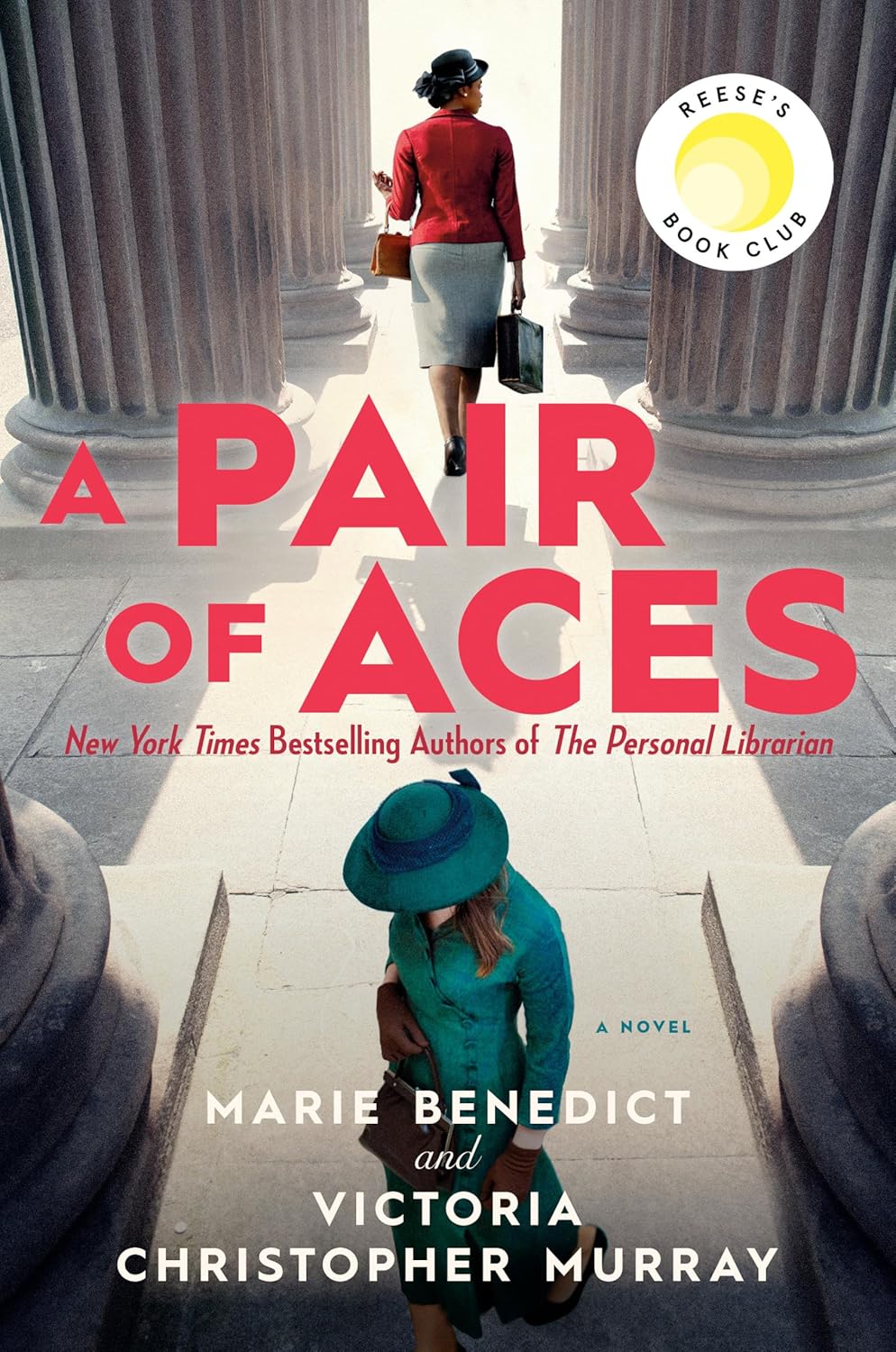
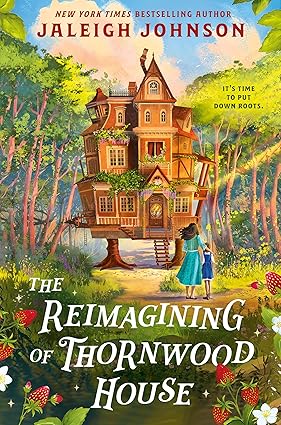
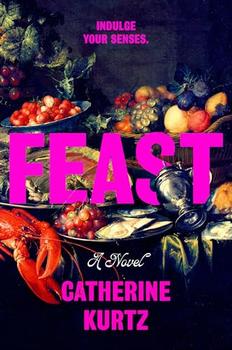
We recommend 16 similar authors



The third-rate mind is only happy when it is thinking with the majority. The second-rate mind is only happy when it...
Click Here to find out who said this, as well as discovering other famous literary quotes!

Can you name the title?
Test your book knowledge with our daily trivia challenge!
Your guide toexceptional books
BookBrowse seeks out and recommends the best in contemporary fiction and nonfiction—books that not only engage and entertain but also deepen our understanding of ourselves and the world around us.
