Brady Udall discusses his reasons for writing The Lonely Polygamist (2010), his experience growing up as one of nine children and his heritage as the great-grandchild of polygamists. In a separate interview he talks about the inspiration behind The Miracle Life of Edgar Mint (2001) and people's reactions to the book.
Brady Udall discusses The Lonely Polygamist and The Miracle Life of Edgar Mint
A Q&A about The Lonely Polygamist
Why did you decide to take your nonfiction article that first appeared in Esquire in 1998 and was originally titled “Big Love” and make it into a novel?
My novel is not based on my Esquire piece, exactly, but the research I did for the piece was the basis for The Lonely Polygamist (there's a distinction there if you look for it). I have a strong family connection to polygamy, but I had no real understanding of how polygamy is lived today, and after doing the research and writing the article there was no question my next novel would be about contemporary polygamy. This all occurred well before the wave of fascination with polygamy in this country, and I thought it was something I absolutely had to write about, to call attention to in a fair, non-judgmental and (hopefully) compelling way.
You've said that you wouldn't be here if it weren't for polygamy. What do you mean?
My great-great grandfather, David King Udall, was a polygamist. His second wife, Ida Hunt Udall, was my great-great grandmother. So it's pretty straightforward: if polygamy didn't exist, neither would I. It seemed only right, then, that I should write a novel on the subject.
Are you Mormon? What was your own family dynamic like?
I grew up in a devout Mormon family, and as one of nine children I had firsthand experience with what life is like in an oversized family. This experience certainly served me well in writing the book.
You spent time among polygamists while researching this novel. Did you go into the experience expecting a certain way of life?
Oh yeah. I figured I'd meet a lot of megalomaniacal men with their shirts buttoned up to their necks, and their meek, cow-eyed wives (the ones with the pioneer dresses and weird hair-dos). I have to say I was almost disappointed when these people turned out to be nice, everyday, regular folks, hardly distinguishable from the rest of the populace.
For example, one of the families I got to know best lived in suburban Salt Lake in several well-appointed town homes. They drove mini-vans and wore jeans and standard modern American regalia. The husband was a businessman, and of the four wives one was a lawyer, one had a PhD, one owned a heath food store, and one was a stay-at-home mom. Did I mention they had 30 children? What I found out was that these were normal people living in a very abnormal way, and I most wanted to understand how they managed to live that way, the sacrifices and compromises they all had to make to uphold such an extreme lifestyle.
Rusty is a fascinating character—he's an isolated little boy dying for the attention of his distant parents. What inspired you to create this character?
While most of us are fascinated with the hows and whats and whys of the way in which the adults navigate this lifestyle, the children are often forgotten. And I think it's the children who suffer most in these situations. In such a crowd, it's easy to get lost—I can attest to this from personal experience. Though I had my difficulties, I fared okay as a kid in my own oversized family. As I see it, Rusty is the kid I might have turned into had I been ignored, lost in the shuffle, left completely to my own devices.
And I'll say this: though Rusty's circumstances are very difficult in the book, and were sometimes hard for me as a writer to face, I've never had so much fun writing a character.
A recent National Geographic article suggested that polygamy actually has many qualities of a matriarchy and not, as many people assume, a patriarchy. To what extent do you think this portrayal is accurate?
I think it's accurate in the sense that just as with monogamy, there are any number of permutations to plural marriage. In some marriages the husband is the unquestioned leader. In others, a single wife, or the wives as a group, run the show. It's all about how the different personalities relate to each other. In the time I spent with different polygamist families, I saw extreme differences in family dynamics and culture. Because of the size of some of the families I often felt like an anthropologist studying a tribe with its own unique politics and hierarchies and mores. It was fascinating.
Why do you think people are fascinated by polygamy?
In one word: sex.
A Q&A about The Miracle Life of Edgar Mint
How did you
come to write The Miracle Life of Edgar Mint? Was there a specific event that
inspired you to write a book about a mailman running over the head of a young
boy?
My wife's ex-boyfriend was actually run over by a mail truck, just
like Edgar in the book. This guy was dating my wife at the same time I was
dating her (unbeknownst to me) and when she finally fessed up about it, I
demanded to know all about this bastard. Among other things, she told me that in
his youth he'd been run over by a mailman and was so badly injured that he was
presumed dead. It turned out that he survived and went on to become my rival for
my future-wife's affections. Anyway, after my wife's confession, I went out
to find this guy—not to beat him up, but to verify his story. I found him at
his apartment and he very graciously told me everything. He told me there was
one thing he wanted to do in this life: find the mailman and tell him that he
was okay, that he had lived a healthy, normal life. I jotted it all down in a
notebook while he talked, knowing I'd write a book about it some day.
Have you received any reaction from the Native American community in
response to the way reservation life and the Willie Sherman school are
represented in the book?
The only responses I've gotten from Native Americans have been good
ones. It seems that only educated white folks object to the portrayal of the
reservation and the school. Most Native Americans are quite aware of the extreme
poverty and destitution that can be found in reservations all over this country.
What sort of research did you do for this book?
A lot more than was actually necessary. I spent a lot of time at the
boarding school, talking to people, getting the feel of the place. It's one of
my favorite places in the world and one I will return to time and again. I also
did some research on brain trauma, but in the end I learned that convincing the
reader is all about attitude. You simply render your material in such a
convincing way that the reader has no choice but to believe.
What, if anything, does Edgar's typewriter symbolize? What about his
urinal puck?
Not to be difficult, but the typewriter and urinal puck don't
symbolize anything at all, not to me at least. I guess I don't believe in
literary symbols. To Edgar these objects are simply sources of comfort,
replacements for the loved ones he doesn't have.
In your opinion, is the character Edgar Mint an optimist?
Yes, mostly because he doesn't know any better. Somebody smarter
than me once said that children are able to survive the afflictions of the world
simply because they aren't aware of the alternatives. Edgar expects nothing
and does the best he can.
Edgar's relationship with the Mormon Elders and his baptism represent a
new and arguably better stage in his life. Any comment on the role religion
plays in the book?
I grew up in a very religious household and though I'm not the most
spiritual or religious guy in the world, I know that God plays a central role in
the lives of people everywhere. It's hard for me to understand why so many
contemporary writers seem to be reluctant or downright afraid to confront God in
their work. I guess I write about God because God is in our lives, whether we
want Him there or not.
Can you name some of the writers that have inspired you or influenced your
work?
My biggest influence is Mark Twain. There has never been a funnier
writer and yet very few have possessed a darker view of human existence. I love
Flannery O'Connor and Gunter Grass and I've learned a lot from contemporary
writers like Denis Johnson and Barry Hannah. When I was 11 my mother gave me
Kafka's The Metamorphosis to read. I don't think I've been the
same since.
What are you working on now?
A novel called The Lonely Polygamist. My first novel is about
a boy who is totally alone in the world, without family or tribe. So I thought I'd
go in the opposite direction with my second novel: a story about a guy with 4
wives and 28 children.
Unless otherwise stated, this interview was conducted at the time the book was first published, and is reproduced with permission of the publisher. This interview may not be reproduced or reprinted without permission in writing from the copyright holder.


James Anderson grew up in the Pacific Northwest. He is a graduate of Reed College, and received his MFA in creative writing from Pine Manor College. His short fiction, poetry, essays, and reviews have appeared in many ... (more)
If you enjoyed:
The Miracle Life of Edgar Mint
Try:
The Never-Open Desert Diner
by James Anderson
Carol Birch is the author of ten novels. Jamrach's Menagerie was shortlisted for the Man Booker Prize, longlisted for the Orange Prize and shortlisted for the Galaxy National Book Awards. Birch won the David Higham Prize for ... (more)
If you enjoyed:
The Miracle Life of Edgar Mint
Try:
Jamrach's Menagerie
by Carol Birch
We recommend 21 similar authors

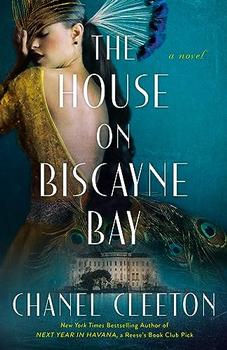
The House on Biscayne Bay
by Chanel Cleeton
As death stalks a gothic mansion in Miami, the lives of two women intertwine as the past and present collide.
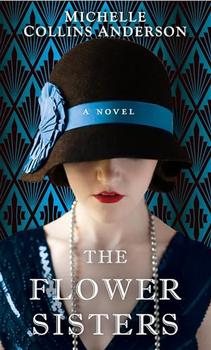
The Flower Sisters
by Michelle Collins Anderson
From the new Fannie Flagg of the Ozarks, a richly-woven story of family, forgiveness, and reinvention.
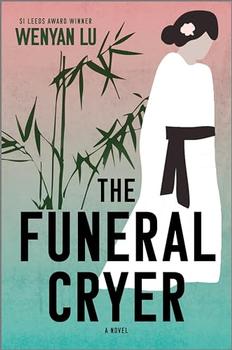
The Funeral Cryer by Wenyan Lu
Debut novelist Wenyan Lu brings us this witty yet profound story about one woman's midlife reawakening in contemporary rural China.
Your guide toexceptional books
BookBrowse seeks out and recommends the best in contemporary fiction and nonfiction—books that not only engage and entertain but also deepen our understanding of ourselves and the world around us.