Eric Schlosser shares some of the fascinating and often frightening facts about the "fast food" industry that are detailed in his books, Fast Food Nation and Chew on This (for children), and suggests what children can do to make a difference.
Kids love fast food. Why did you write a book for them about
its history and harmful consequences?
An editor came up with the idea not long after the 2002
paperback publication of Fast Food Nation [Eric's
best-selling exposé of the fast-food industry, written for
adults]. We were drawn to the challenge of recasting the
material for a younger readership. It seemed that the people
who needed this information most didn't have a way to get it
directly. We decided to write a book for young people that
wouldn't be condescending, preachy, or hectoring. We hope
that Chew on This respects the intelligence of its
readers and challenges kids to think for themselves.
The fast-food industry spends billions of dollars every year
marketing unhealthy food to children. We felt that kids
needed to hear the other side of the story. The eating
habits that a person develops as a child are difficult to
break later. And if a child is obese by the age of thirteen,
he or she is likely to remain obese for life. The
nutritional education of American children shouldn't be left
to the fast food, junk food, and soda companies.
It's easy to take the fast-food industry for granted. It
seems like fast-food restaurants are everywhere and have
always been with us. The book tries to show that the growth
of this industry wasn't inevitable. It was promoted by
government subsidies, deceptive marketing, and individual
choices. It can be changed through a different set of
choices. We want to help kids think critically about the
world around them and believe that a better world is still
possible. Although Chew on This is full of disturbing
and depressing information, it is grounded in a fundamental
optimism.
You include a lot of historical information on the
industry.
Chew on This traces the rise of the fast-food
industry and its effects on how we work, how we eat, and how
we live. It's a book both for and about young people. It
begins in 1885 with a fifteen-year-old boy at a Wisconsin
fair who invents the hamburger — and it winds up at the
recent opening of a Burger King in Baghdad. The book traces
the careers of the men who created fast food and describes
how Walt Disney and Ray Kroc, the founder of the McDonald's
Corporation, changed how products were marketed to children.
It describes how the fast-food culture has transformed the
American landscape, making cities and towns look the same,
with the same chain restaurants and stores. It explores how
the labor policies of the fast-food chains have affected the
lives of teenage workers. It takes readers behind the scenes
at a flavor factory, where the taste of fast food is
manufactured, at a huge industrial French fry factory, at
the poultry and beef slaughterhouses that supply the meat
for burgers and chicken nuggets. It describes the efforts of
the fast food and soda companies to target children in
schools. And it looks at the impact that fast-food
consumption has had on the health of America's children,
telling the story of a young man in suburban Chicago and his
struggles with obesity.
The book also offers grounds for hope. It introduces young
people who are resisting the fast-food giants. It suggests
that the future will bring a whole new attitude toward the
production and distribution of food, encouraging sustainable
agriculture and healthier diets. The goal of the book isn't
to indoctrinate children with any single point of view. Our
aim is to make kids think about what they're eating, where
it comes from, and the consequences of every bite.
Did you approach the research for Chew on This in
a different way than that for Fast Food Nation?
The research process for Chew on This was much the
same: a mix of firsthand reporting and a lot of digging
through archival and published sources. The fast-food
industry is now global in scope, and we hoped to capture a
sense of that in the book. Chew on This required a
great deal of original research and investigative trips to
Colorado, Illinois, New Jersey, West Virginia, Alaska, Great
Britain, and Singapore. The only real difference between the
books is emphasis. For this book, we focused on how the
industry affects the lives of young people. It wasn't hard
to find good stories. The real difficulty was deciding which
ones to tell. Just about every teen in America has some
connection to fast food, for better or worse.
Fast food, in addition to tasting good, is cheap and
easily accessible for almost everyone in America. Fresh
produce and meats can be expensive and hard to find, making
this an economic as well as a health issue. Is it
realistically possible for everyone to eat fresh, healthy
food?
One of the main points of the book is that fast food isn't
cheap at all, once you add up all the social and health
costs. Those French fries and shakes may seem inexpensive
when you buy them. But if you add the cost of the dialysis
when you develop diabetes from eating too much fast food,
it's a pretty high price to pay. At the moment, the U.S.
government heavily subsidizes the production of unhealthy
foods while providing little direct support to ranchers and
farmers who are producing the kind of healthy foods we
should be eating. The poor are feeling the worst effects of
these misguided policies. The food that they can most easily
afford, in the long run, will damage their health. We need
government policies that support the right kind of foods.
And people need to realize that it's worth spending a little
more money on what they eat. Americans now spend a smaller
proportion of their income on food than any other society in
history. There could hardly be a more important purchase,
and, as with everything else, you get what you pay for.
Some folks might see the fast-food industry as an example
of the success of capitalism.
In many ways the fast-food industry represents a perversion
of free market capitalism. The major chains wield
extraordinary power not only over the distribution and
production of food, but also over the food and labor policy
of the U. S. government. That's not what Adam Smith had in
mind. The behavior of the industry and its suppliers brings
to mind that of the nineteenth-century trusts, which
controlled the American economy with an iron fist, setting
prices, breaking unions, and ruthlessly eliminating
independent businesses.
Are you vegetarians? Do you eat fast food?
Charles is a lifelong vegetarian. But he has tremendous
respect for independent ranchers. His uncle used to own a
ranch, and whenever Charles visited, he'd help round up the
cattle on horseback. Eric still eats meat. His favorite meal
is a cheeseburger, fries, and chocolate shake. He won't buy
food, however, from any of the major fast-food chains. He
simply doesn't want to give them any money. And for the same
reason, he won't buy meat produced by the large meatpacking
firms.
Fast-food restaurants are opening at a rapid pace around
the world. There are protests, but there are also customers.
Do you see this trend continuing? Why or why not?
Time will tell if the industry can continue to expand
overseas. The major fast-food chains have run out of places
to open new restaurants in the United States. The market has
been pretty well saturated. And so this massive overseas
expansion — which seems like a sign of the industry's
strength and popularity — is actually a symptom of some
underlying weaknesses. It's much more expensive to enter new
countries than to open new restaurants close to home. The
industry's growth seems to have run out of steam in Europe.
China now offers the best hope of success. McDonald's is
aggressively targeting children and teenagers there. But
China is beginning to have its own obesity epidemic. It
remains to be seen whether China will blindly follow our
example when it comes to food, or learn from our mistakes.
Want to make a difference? You can!
Has Chew on This inspired you to make some changes in
the food you purchase and eat? Here are some suggestions on
where to start!
Start your own "Stop the Pop" campaign to remove soda
machines from your school.
Want fresh vegetables in your cafeteria?
Worried you are eating too much junk food?
Upset by how animals and workers are treated at meatpacking plants?
Support your locally owned restaurants!
Unless otherwise stated, this interview was conducted at the time the book was first published, and is reproduced with permission of the publisher. This interview may not be reproduced or reprinted without permission in writing from the copyright holder.


Jonathan Bloom is a journalist whose work has appeared in the New York Times, the Washington Post, and the Boston Globe. He lives with his wife and two sons in Chapel Hill, North Carolina. (more)
If you enjoyed:
Fast Food Nation
Try:
American Wasteland
by Jonathan Bloom

Tyler Cowen is the Holbert C. Harris Professor of Economics at George Mason University. He received his PhD in Economics from Harvard University in 1987. He is a prominent blogger at marginalrevolution.com, the world's ... (more)
If you enjoyed:
Fast Food Nation
Try:
An Economist Gets Lunch
by Tyler Cowen
We recommend 16 similar authors


The House on Biscayne Bay
by Chanel Cleeton
As death stalks a gothic mansion in Miami, the lives of two women intertwine as the past and present collide.
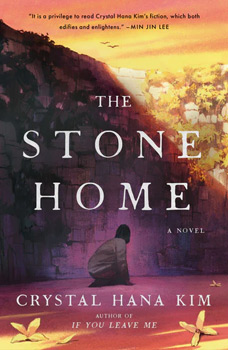
The Stone Home
by Crystal Hana Kim
A moving family drama and coming-of-age story revealing a dark corner of South Korean history.

The Funeral Cryer by Wenyan Lu
Debut novelist Wenyan Lu brings us this witty yet profound story about one woman's midlife reawakening in contemporary rural China.
Your guide toexceptional books
BookBrowse seeks out and recommends the best in contemporary fiction and nonfiction—books that not only engage and entertain but also deepen our understanding of ourselves and the world around us.