
-
Your next favorite book
is waiting.
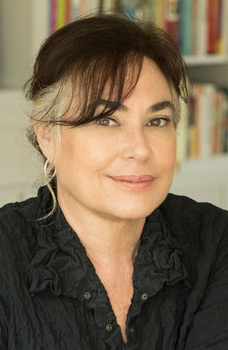
Amy Bloom explains how a long night of dictation to a former student, plus a bottle of wine, led to the creation of Away, an epic and intimate story of young Lillian Leyb, a dangerous innocent and accidental heroine.
Random House Reader's Circle: Away is loosely based on a real
woman in history. Can you tell us a bit about her life, and how you came upon
her story? Ultimately, how did you make her story your own?
Amy Bloom: I don't know that I'd call Lillian Alling a "real woman in
history." There've always been bits and fragments of a story about a foreign
woman, mute or silent by choice, who came up the Telegraph Trail, determined to
walk to Russia. There are no records of her arriving in Ellis Island and no
records of her life in Alaska and, of course, one of the first questions is: If
she didn't speak, how did they know where she was going? I ignored all the
fanciful parts and also all the shoddy investigations into her story (this was
the golden age of yellow journalism–when whole wars were made up to sell papers)
and thought instead: If you weren't crazy or particularly adventurous, why would
you make this extraordinary trip? And I thought, I would only do it for love.
RHRC: Lillian Leyb's journey takes her across the globe, from Russia to
New York's Lower East Side, to Seattle, to Alaska, to Siberia. Did you chart out
her epic journey before writing? How did you conceive the arc of the novel?
AB: I sat down with a former student and a bottle of wine and dictated a
forty-page outline to him. We wrapped it up at about four in the morning. The
outline included a million unanswered questions, which led to all my research,
and it also provided the entrances and exits of some of my favorite characters.
This journey is as much about Lillian becoming alive again, and becoming an
American, as it is about anything else.
RHRC: Away captures the mood of the Roaring Twenties, both in the
rhythms of your language and in the atmosphere that you create. What sort of
historical research did you undertake? What about the period captured your
imagination to begin with?
AB: The Roaring Twenties only roared for some people. For lots of working
people, it was a fast-paced world, but not one with hip flasks and flappers. The
thing that truly captured my imagination was the way in which the twenties were
so much like our modern world; they had everything we had (corruption,
advertising, rapid transit, the cult of celebrity, expanded sense of sexuality)
except television and computers. I researched in libraries from Alaska (which
has extraordinary archives of first-person accounts) to Yale's Sterling Library
(which is just around the corner from a good cup of coffee) to making use, like
everyone else, of all the search engines.
RHRC: This novel is filled with so many colorful characters, from the
theater idol, Meyer Burstein, to the hardscrabble call girl, Gumdrop, to the
loveable convict, Chinky Chang. Do you have a favorite character in the novel?
Whose voice stands out to you most, and why?
AB: I love them all and they are all parts of me. My elegant sister, a
hardworking and very upright lawyer says, "Gumdrop, c'est moi." Gumdrop's
conflicts between love and practicality appeal to me, as does Chinky's capacity
to fall in love instantly. I also love Arthur Gilpin and his second wife,
Lorena, a cardsharp who chooses love over glamour and money. The voice that is
always with me is the omniscient narrator, the God's Eye.
RHRC: The third-person omniscient narrator allows the novel to jump
forward and backward in time and between parallel narratives. Tell us a little
bit about your decision to use this technique. Why did you want the reader to
know what happened to Sophie, even though Lillian herself never learns? Do you
think Lillian ever stopped looking for Sophie?
AB:The omniscient narrator is God's Eye on this world.The Eye can see
into the past, into the future, and make connections that would not be available
to the characters (Gumdrop doesn't know that she is like Lenin). Lillian stops
looking for Sophie, but never stops watching for her, never completely gives up
the habit of holding her breath when she sees a brown braid tied with a blue
ribbon, even fifty years after they have last seen each other. We see what
happens to Sophie, as we do with all of the characters; what will be is part of
the story.
RHRC: What significance do the chapter titles have? What are they derived
from? And can you tell us why you decided to call the novel Away?
AB: Each of the chapter titles is a song title. The first half are
Yiddish or Russian lullabies; the second half are American folk songs or
Christian hymns. The book's title is simple, to balance the complexity of the
plot. It's also one of those words that has in it both coming and going. I go
away, I come away; I leave here, to go away and must go away again, in order to
come home.
RHRC: As the author of a number of award-winning short story collections
including Come to Me and A Blind Man Can See How Much I Love You,
how did you approach writing a novel? Do you find it more challenging, or more
freeing, to write in a longer narrative form?
AB: I approached writing this nove
l as I would a large, dangerous animal whom it might be possible to work with,
if not to tame. I tried to apply the discipline of my short story writing (no
longueurs, no self-indulgent riffs or pointless dialogue) to the novel, so that
it would be dense, but not too long, full of characters but not baggy.
RHRC: We'd love to know what you'll be working on next–can you share any
details of your next book?
AB: It's set in pre—World War Two America, in both the Boston Brahmin
part of Beacon Hill and the make-it-up-as-we-go world of Hollywood at that time.
At the center are two half-sisters, their mothers, and their father.
Unless otherwise stated, this interview was conducted at the time the book was first published, and is reproduced with permission of the publisher. This interview may not be reproduced or reprinted without permission in writing from the copyright holder.


Poet, essayist, and naturalist, Diane Ackerman is the author of many highly acclaimed works of nonfiction, including A Natural History of the Senses -- a book beloved by readers all over the world and the volumes Deep Play, A... (more)
If you enjoyed:
Away
Try:
The Zookeeper's Wife
by Diane Ackerman
Louis Bayard is the critically acclaimed bestselling author of nine historical novels, including Jackie & Me and The Pale Blue Eye, which was adapted into the global #1 Netflix release starring Christian Bale. His articles, ... (more)
If you enjoyed:
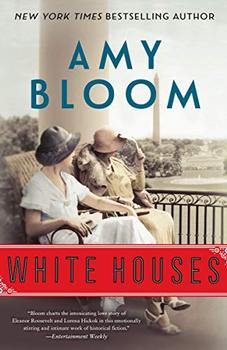
White Houses
Try:
Courting Mr. Lincoln
by Louis Bayard
We recommend 42 similar authors



Failure is the condiment that gives success its flavor
Click Here to find out who said this, as well as discovering other famous literary quotes!

Can you name the title?
Test your book knowledge with our daily trivia challenge!
Your guide toexceptional books
BookBrowse seeks out and recommends the best in contemporary fiction and nonfiction—books that not only engage and entertain but also deepen our understanding of ourselves and the world around us.
