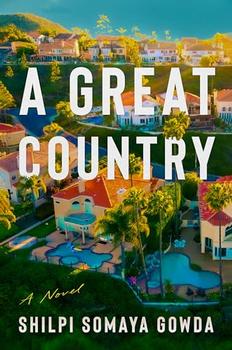
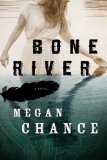
Megan Chance discusses her latest book, Bone River, set in the mid-19th century in Shoalwater Bay in the Pacific Northwest.
What was the inspiration for Bone River?
My family and I go on vacation to the Oregon coast for at least a few days every summer. Our route takes us past Bone River, which is just south of South Bend, Washington. The road passes over the point where the river meets the bay, and it's isolated, unsettled and beautiful. For years, I'd been saying: "Bone River would be a great title for a book," and then one day a first line came to me, and I knew the story would be about a woman who found a body buried in the riverbank. When I began researching, I discovered that settlement on Shoalwater (now Willapa) Bay predated that of Seattle, thanks to the prevalence of the native oyster, which was prized in San Francisco, and that the land I'd been staring at for ten years or more had been one of the earliest homestead claims in western Washington. James Swan settled at the mouth of the Bone River, (which was known then as the Querquelin, or Mouse River) just where the highway crosses, and wrote a memoir of his time there. When Bruce Weilepp, then the director of the Pacific County Historical Museum, told me Swan's claim had been on an old Indian burial ground, and that the natives believed the area was haunted, my story was born.
The narrator of the story, Leonie Russell, and her husband, Junius, are ethnologists who study the native culture, which includes collecting not just artifacts, but skeletons. Did this really happen?
Absolutely. The publication of Darwin's Origin of Species in 1859 raised new questions of human origin, and America became the center of those questions because of the native peoples still living here. The prevailing scientific theory of the time was that of unilinear evolution—the idea that all cultures progressed along the same path, from savagery to civilization, without deviation or devolution. The resulting corollary was that you could therefore understand ancient, extinct cultures by studying the primitive cultures of today—i.e. the Indians—before those cultures were corrupted by the influence of "advanced" cultures—i.e. whites.
It was also believed that the American Indians were living fossils destined for extinction, that they were primitive and had always been so, a static culture. Indians were not just a separate racial type, they were also a holdover from an earlier, inferior state of human evolution, and one that could help scientists in understanding the past. And so the goal became to preserve as much of the Indian culture as possible for future generations to study. The Smithsonian sent out a circular telling its collectors that nothing should be considered trivial or commonplace if it served to elucidate the manners and customs of the people, and emphasizing the desire for a full series of skulls and skeletons "to be procured without offense to the living."
In 1865, Louis Agassiz wrote a letter to Secretary of War Edwin Stanton asking: "Let me have the bodies of some Indians … I should like one or two handsome fellows entire and the heads of two or three more." The U.S. Army given charge of collecting Indian bodies during its relentless war against them, and soon Indian skeletons filled the Army Medical Museum. Skull science—the measuring and weighing of skulls for classification and study, followed the widespread Phrenological movement, which theorized that personality could be determined by the positioning and size of lumps on the skull. Such measurements and classifications were used relentlessly in arguing evolutionary theory and supporting social science claims that women and minorities should be placed on lower rungs of the evolutionary ladder of progression—thereby providing "facts" to justify and rationalize slavery and discrimination, and numerous other social ills.
What happened to all those skeletons?
At some point the Army Medical Museum turned them over to the Smithsonian, and I imagine many of them are still there. The Native American Graves and Repatriation Act in 1990 (1990!!!) required museums to return native cultural items to their respective tribes, but also required that the tribes prove those items belong to them. It's a long and hotly contested process. Wikipedia has an excellent discussion of the Act and the problems associated with it.
There are also some excellent books written on the topic, including: Skull Wars: Kennewick Man, Archaeology, And The Battle For Native American Identity, by David Hurst Thomas; and Ancient Encounters: Kennewick Man and the First Americans, by James C. Chatters.
Junius makes the claim that collecting something "big" for the Centennial Exposition would make his career. Can you tell us more about that?
The Museum age of the 19th C. meant there was a race for artifacts among museums all over the world. Those in Germany and France were also interested in collecting for their museums—especially native American artifacts, and especially those from the Pacific Coast. The Smithsonian was given charge of the ethnological exhibit for the 1876 Centennial Exposition in Philadelphia, which was a very big deal. For Junius, having his name splashed all over an exhibit hotly anticipated by all of America meant that he would be nationally recognized, but the exhibit meant far more than that to the Secretary of the Smithsonian, Joseph Henry, and his Assistant Secretary, Spencer Baird. By this time, the Smithsonian had amassed so many artifacts that there was no more room in the original building—the red castle (1855-1881), and things were being stored in the U.S. Armory. Congress had promised that if the ethnological exhibit was a success, they would loan money for the construction of a new building. So Baird, who was in charge of the exhibit, was under enormous pressure to make it work. It was a success—people were both horrified and fascinated by artifacts of what they considered to be primitive tribes who were also living (gasp!), and exhibit was crowded. Congress loaned the money. The Smithsonian moved into its new building in 1881.
In the book, Leonie makes the comment that "drunken Indians were not a rarity." Doesn't this play into stereotypes?
First, it's historically accurate. That it's offensive to modern sensibilities doesn't make it less true. Alcohol abuse—considered a moral failing in the 19th Century—was so prevalent among the Pacific Coast Indians that ethnologists and social scientists of the time included it as part of their proof that the Indians were an unevolved and primitive people. It was not noted without sympathy and compassion, however, and some ethnologists recognized that alcohol might be analogous to measles or smallpox when it came to the Indians—something extremely dangerous which they'd never been exposed to, and therefore had no immunity or resistence against.
(Spoiler!) Secondly, Leonie's comment, along with Junius's assertion that he doesn't let her drink, is a clue to the mystery of Leonie's past. This foreshadowing not only points to Leonie's heritage, but also to Junius's culpability. As such, it has to be a stereotype—something considered to be characteristic of an entire people. I thought long and hard about offending modern readers, but in the end I thought it was an accurate portrayal of thought processes in the 19th Century, and it was also important to the story.
What inspired the characters in Bone River?
Junius was, in particular, inspired by his real-life counterpart, James Swan, who originally settled the claim at the mouth of Bone River, and wrote a memoir of his time there, The Northwest Coast, or Three Years Residence in Washington Territory.
Swan was a fascinating guy, and a sort of all-around dilettante with a restless foot. He left his wife and children in Boston to follow the gold rush in California, and never returned to them. He was an amateur ethnogist who collected for the Smithsonian. He was also variously an oysterman, customs official, schoolteacher, lawyer and burgeoning politician. His memoir is engaging, and he writes about the Indians in the fashion of one who is interested in them personally. His accounts of their culture have been invaluable.
When he left Shoalwater Bay, he spent some years exploring other Pacific Coast tribes, including the Quileute, Makah, Lummi and Haida, before he settled in Port Townshend. When he died, he left behind some 60 diaries chronicling his experiences.
One of the more interesting instances in the book (at least to modern day readers) is Leonie's casual acceptance of Junius's bigamy. Can you comment on that?
Divorce was a rarity in the 19th Century. It was hard to get and expensive as well. It would have been impossible for Junius to get a divorce from Mary, given the circumstances. She had cause—desertion—but even that would have not made the granting of a divorce a certainty, and she waited for him to return, so clearly she would not have been interested in dissolving their marriage. It was much more common for men to simply walk away from marriage, to dissolve the union practically if not legally, particularly in the west, where there wasn't the onus of societal expectation or condemnation. Common-law marriages were much more the thing, easily ended when either party walked away. Leonie never assumed that Junius would divorce Mary, only that he would tell her not to wait for him, because he was with someone else. In Washington state at this time, the population was mostly transitory. In Shoalwater Bay in particular, it was much like the waning days of the CA gold rush, where men came and went regularly, setting down for a time and then leaving. There was no onus attached to a non-dissolved union—it was just a practicality everyone understood. Leonie would never have thought of Junius's bigamy as a problem—it simply had no application to her day-to-day life.
What do you hope readers take away from Bone River?
I think there is a similar theme that runs through all of my work: that truth is not absolute, that the subjugation of the human soul is always a dangerous thing, and that we are not always who we think we are. Sometimes we must find the courage to reject the expectations of others to be who we're meant to be—as Daniel says in the book, "We have to live our own lives. Others haven't the right to dictate it for us."
Unless otherwise stated, this interview was conducted at the time the book was first published, and is reproduced with permission of the publisher. This interview may not be reproduced or reprinted without permission in writing from the copyright holder.

Katherine Howe is the New York Times bestselling author of The Physick Book of Deliverance Dane, The House of Velvet and Glass, and Conversion. She has hosted "Salem: Unmasking the Devil" for the National Geographic Channel, ... (more)
If you enjoyed:
Bone River
Try:
The Physick Book of Deliverance Dane
by Katherine Howe

Lily King is The New York Times bestselling author of five novels: The Pleasing Hour (1999), The English Teacher (2005), Father of the Rain (2010), Euphoria (2014), and Writers & Lovers (2020). Her first story collection,... (more)
If you enjoyed:
Bone River
Try:
Euphoria
by Lily King
We recommend 6 similar authors

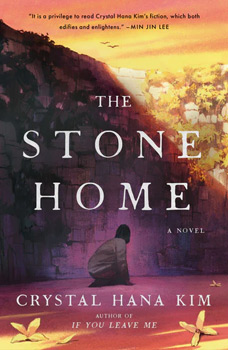
The Stone Home
by Crystal Hana Kim
A moving family drama and coming-of-age story revealing a dark corner of South Korean history.
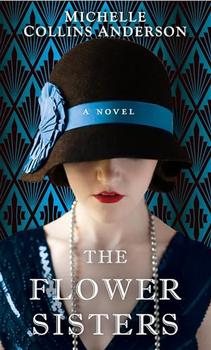
The Flower Sisters
by Michelle Collins Anderson
From the new Fannie Flagg of the Ozarks, a richly-woven story of family, forgiveness, and reinvention.
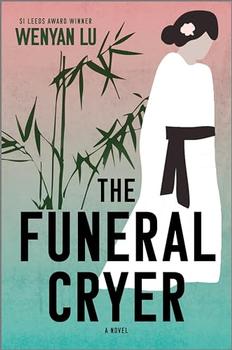
The Funeral Cryer by Wenyan Lu
Debut novelist Wenyan Lu brings us this witty yet profound story about one woman's midlife reawakening in contemporary rural China.
Your guide toexceptional books
BookBrowse seeks out and recommends the best in contemporary fiction and nonfiction—books that not only engage and entertain but also deepen our understanding of ourselves and the world around us.