
-
Your next favorite book
is waiting.

Madeline Miller discusses her debut novel, The Song of Achilles, takes readers on a tour of ancient Greece, and thoughtfully considers the importance of myths in today's modern world.
I have loved ancient Greece since I was five and my mother began reading me the Greek myths. I was enthralled: by the larger-than-life gods, the epic adventures, and most particularly by the stories of the Trojan War, with its noble and deeply flawed heroes. "Sing, goddess, of the terrible rage of Achilles," begins The Iliad. The words resonated in me, lingering long after my mother had closed the book and turned out the light.
Years later, when I became a student of Greek and Latin, I immediately sought out The Iliad. The poetry and language were gorgeous, the story even more compelling than I remembered. I spent a summer in Greece working on an archaeological dig, and my copy of the The Iliad came with me. There, wandering in olive groves and swimming in the beautiful Aegean, I began to think of how I, too, could sing of these ancient tales.
I had always been especially moved by Achilles, and his desperate grief over the loss of his companion Patroclus. But who was Patroclus? I searched the ancient texts for every mention of his name, and discovered an amazing man: exile and outcast, loyal and self-sacrificing, compassionate in a world where compassion was in short supply. I had not thought The Iliad had a love story; I was wrong.
It has been the deepest privilege and pleasure to spend the last ten years sailing in Homer's wine-dark waters. I very much hope you will enjoy reading this book as much as I have loved writing it.
An interview with Madeline Miller on her debut novel, The Song of Achilles
Do the Greek myths really matter in our modern world of cutting-edge technology and tenuous global politics?
It can be a cliché to call a story timeless. But the stories of ancient Greece - the Iliad foremost among them - are exactly what this cliché was made for. To borrow Ben Jonson, they are not "of an age, but for all time." Human nature and its attendant folly, passion, pride and generosity has not changed in the past three thousand years, and is always relevant. And especially at this fractured and shifting historical moment, I think people are looking back to the past for insight. These stories have endured this long, moving generation after generation of readers - they must, still, have something important to tell us about ourselves. Every day on the front page of the newspaper is an Iliad of woes - from the self-serving Agamemnons to the manipulative, double-speaking Odysseuses, from the senseless loss of life in war to the brutal treatment of the conquered. It is all there, in Homer too: our past, present and future, inspiration and condemnation both.
I would also add, more specifically, that I think the culture is ready for the kind of love story that transcends gender and time. I did not deliberately set out to tell a deliberately "gay" love story; rather, I was deeply moved by the love between these two characters - whose respect and affection for each other, despite the horrors around them, model the kind of relationship we all can aspire to.
How much of the Achilles story depicted in The Song of Achilles is based on the classics and how much did you create in order to tell the story? And, can explain how you did your research for the book?
In some ways I feel like I've been researching this book my whole life. I have loved the ancient Greek myths since I was a child, and studied Latin and Greek throughout high school, college, and graduate school. My professors gave me an incredible and electrifying education in ancient history and literature, and all of it helped provide the foundation for the book - though at the time, of course, I had no idea that I would one day use it for fiction.
Once I started writing the novel, I inevitably discovered that I needed to know more: What exactly did ancient ship sails look like? What kind of flora and fauna does Homer mention? My background in Classics helped there too; I had a lot of the answers already on my bookshelf, or I knew where to go to find the information I needed. It was also extremely helpful that I had spent time in parts of Greece and Turkey.
It was very important to me to stay faithful to the events of Homer's narrative. The central inspiration behind the book is the terrible moment in the Iliad when Achilles hears about Patroclus' death. His reaction is shocking in its intensity. The great half-god warrior - who carelessly defies rules, and condemns a whole army to death - comes completely unglued, desperate with grief and rage. I wanted to understand what it was about Patroclus and their relationship that could create that kind of crisis. Although Homer tells us what his characters do, he doesn't tell us much of why they do it. Who was Achilles? And why did he love Patroclus so much? Writing the novel was my way of answering that question.
The biggest changes to the mythology came with the stories about Achilles' life before he came to Troy, which the Iliad doesn't cover. There are many, many variations on these, so part of what I was doing was figuring out which ones added to the novel's arc, and which ones I should omit.
Most people don't know that much about Patroclus and his relationship with Achilles. How did you come up with your theory that their friendship grew into love?
I stole it from Plato! The idea that Patroclus and Achilles were lovers is quite old. Many Greco-Roman authors read their relationship as a romantic one - it was a common and accepted interpretation in the ancient world. We even have a fragment from a lost tragedy of Aeschylus, where Achilles speaks of his and Patroclus' "frequent kisses."
There is a lot of support for their relationship in the text of the Iliad itself, though Homer never makes it explicit. For me, the most compelling piece of evidence, aside from the depth of Achilles' grief, is how he grieves: Achilles refuses to burn Patroclus' body, insisting instead on keeping the corpse in his tent, where he constantly weeps and embraces it - despite the horrified reactions of those around him. That sense of physical devastation spoke deeply to me of a true and total intimacy between the two men.
What about the "Achilles Heel" legend? Where does it come from, and after all of your research, do you believe it?
Achilles' most famous myth - his fatally vulnerable heel - is actually a very late story. Our earliest account of it is by a Roman author, almost a millennium after the Iliad and the Odyssey were first composed. During those thousand years a number of other stories popped up to explain Achilles' seeming invincibility, but the Iliad and Odyssey contain the simplest: he wasn't really invincible, just extraordinarily gifted in battle. Since the Iliad and Odyssey were my primary inspiration, and since their interpretation seemed more realistic, this was the version I chose to follow.
There are a number of fun myths about the heel, once that story became popular. The most famous one is that, in trying to make him immortal, his mother, the goddess Thetis, dipped him in the river Styx. The place where she held him - his heel - was the only place not made invulnerable. Every time I have told this story to my middle school students, they erupt into chaos:
"That's so stupid! Why didn't she just switch heels and dip him twice?"
"Or go back later, and do it again?"
"The water would still have seeped in!"
So that may have also influenced me on finding that a not-as-compelling reading.
If one wanted to visit Greece and its surrounding countries now, and walk in Achilles and Patroclus' footsteps, and "re-live" the Trojan War, what modern cities should they visit and what might they find there?
The journey would begin in northern Greece, in the region of Thessaly. We aren't sure where Peleus' palace may have been (if it was a real place), but certainly Mount Pelion is still there. It is a gorgeous spot to go hiking, and there's even a mountain train that runs on the weekends. Nearby, the major port town Volos is a wonderful place to visit and, given its excellent location, could very well have been a good Phthian settlement in antiquity.
Next up would be the island of Scyros, where the goddess Thetis hid her son Achilles from the war, disguising him as a woman. Scyros is in the middle of the Aegean, the most southern of the Sporades island cluster. It's quite rocky, especially in its southern region, and also has some wonderful Byzantine and Venetian monuments, along with its stunning landscapes and beaches. If you want the full Achilles experience, cross-dressing is a must.
After that, it's off to Aulis, (modern Avlida), in Boetia, due north of Athens. This is where the Greek fleet gathered before setting off to Troy. It's quite a small town, but there are beaches, of course, and you can sit on them and pretend that you're there waiting for that kid Achilles to finally show up so you can sack Troy already...
Though Achilles and Patroclus didn't actually go there, now is a good time to take a quick detour to Agamemnon's palace at Mycenae, in the northern Peloponnese. It's one of the few Homeric-era ruins that we do have, other than Troy itself. You can see the famous "Lion-Gate" entrance to the city, as well as the circular graves where the golden "Mask of Agamemnon" and "Cup of Nestor" were found. As you tour the site, imagine that you're the proud son of Atreus himself, and bully some subordinates. But don't go too far: Agamemnon was killed with an ax in the bathtub by his fed-up wife.
Now, back to Aulis. After joining up with the fleet, Achilles and Patroclus would have made their way to Troy, stopping several times along the way. Since we don't really know where they stopped (even in mythology), I think that this gives you the right to land at pretty much any fabulous Greek island that you wish. If you take the southern route, you can drop by Lesbos, where the famous poetess Sappho (whom Plato named the tenth muse), lived and wrote. Farther north is the island of Lemnos, which was infamous in ancient mythology as the home of the venomous snake that crippled the hero Philoctetes. Watch where you step!
Personally though, I would recommend choosing the most northern route, which takes you, with just a little detour, by the incredible city of Istanbul. I had the good fortune to visit Istanbul this past spring, and it is breathtaking. Everywhere you look there is some priceless piece of history, from the Hittites to the Ottomans, not to mention its many modern attractions. So, you heard it here first: Patroclus definitely went to Istanbul.
Last stop: Troy itself, perched just below the Dardanelles. The nearby city of Canakkale is a great place to stay and boasts the full-size prop of the Trojan Horse used by the 2004 movie Troy. Brad Pitt himself arranged the donation, the rumor goes!
A short bus ride south brings you to the ancient archaeological site. Stand amid the ruins of five thousand years of history, and look out over the plains where the Greeks and Trojans fought. Though not much is left but stones, the feel of the place is unmistakably epic. Be sure to bring a jacket: not for nothing did Homer call it 'Windy Ilios.' Find the highest point - all that's left of one of the ancient city's famous towers - and remember the Iliad's immortal first line:
Sing, goddess, of the terrible rage of Achilles.
What do you hope that readers will gain from reading your book? And, what do you say to folks that say, reading the Greek myths is just too hard and not very interesting? That kids in school should be able to choose their own reading materials (vampire novels, and the like) and not have to worry about these classics?
For those who have dipped into an ancient epic - the Iliad, say, or the Aeneid - and found it boring, here is my answer: I understand.
As a teacher, I have often had students who would come to me at the beginning of the school year and confess, I read the Aeneid over the summer and hated it. It doesn't worry me: the poems assume a lot of background knowledge - who the gods are, and what the back story is. They also assume that their audience understands epic conventions, like listing all the generals and their ships, or using frequent repetition. If you don't have that knowledge, the book can feel like a confusing slog. But, if you go into it with a guide - a good introduction, a quick re-read of Greek myths, a friend who loves it - then it just comes to life in your hands. Every one of those students, at the end of the school year, declared that they loved Virgil and they loved the Aeneid.
One of my explicit desires in writing this book was to make it so that readers didn't have to know anything about the Iliad to enjoy it. I wanted to give them everything they needed to follow the action right then and there, so that they could experience Homer just as his first audiences would have: as entertainment, instead of an object of study.
The good news is that even if someone doesn't appreciate a Classic text in school, they might go back to it later and realize that they enjoy it after all. I read Toni Morrison’s Sula in tenth grade and it went completely over my head; I just couldn't connect with it. Then I picked it up again a few years ago, and absolutely loved it. So it's never too late.
As for what I would hope readers gain: I certainly would love to hear that the novel inspired some interest in Greek mythology in general, and the Iliad in particular. I hope too that it might help to combat the homophobia that I see too often.
In writing this novel, I thought a lot about personal responsibility. Patroclus is not an epic person, the way Achilles is. He's an
"ordinary" man. But he has more power than he thinks, and the moments where he reaches out to others and offers what he sees as his very modest assistance have huge positive ramifications. Most of us aren't Achilles - but we can still be Patroclus. What does it mean to try to be an ethical person in a violent world?
Unless otherwise stated, this interview was conducted at the time the book was first published, and is reproduced with permission of the publisher. This interview may not be reproduced or reprinted without permission in writing from the copyright holder.
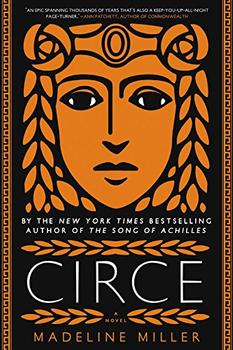

Margaret Atwood is the author of more than fifty books of fiction, poetry, and critical essays. She has won the Booker Prize, the Arthur C. Clarke Award for Imagination in Service to Society, the Franz Kafka Prize, the Peace ... (more)

Par Barker is the author of Union Street, Blow Your House Down, Liza's England, The Man Who Wasn't There, the Regeneration trilogy (Regeneration, The Eye in the Door, and The Ghost Road, which won the Booker Prize), Another ... (more)
If you enjoyed:
The Song of Achilles
Try:
The Women of Troy
by Pat Barker
We recommend 42 similar authors




Choose an author as you would a friend
Click Here to find out who said this, as well as discovering other famous literary quotes!

Can you name the title?
Test your book knowledge with our daily trivia challenge!
Your guide toexceptional books
BookBrowse seeks out and recommends the best in contemporary fiction and nonfiction—books that not only engage and entertain but also deepen our understanding of ourselves and the world around us.
