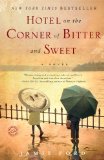
Jamie Ford discusses his first novel, Hotel on the Corner of Bitter and Sweet; where the inspiration came from, and how his own heritage and experiences are reflected in the novel (video and text).
In a video profile and text Q&A, Jamie Ford discusses his first book, Hotel on the Corner of Bitter & Sweet
Where did the idea for Hotel on the Corner of Bitter and Sweet come from?
It really started with the "I Am Chinese" button - this thing my father mentioned wearing as a kid. There was a bit of an identity crisis in the International District in the wake of Pearl Harbor. Many Chinese families feared for their safety, especially as the FBI was rounding up prominent members of the Japanese community. It piqued my curiosity and really led me to research the whole period.
From there I wrote a sliver of a short story, really nothing more than a vignette, and I submitted it to the now-defunct Picolata Review, where it was ultimately accepted. A few weeks later I was accepted to an intensive, immersive, week-long literary boot camp run by science fiction and fantasy writer Orson Scott Card - where we literally read and wrote fifteen to seventeen hours a day. It was while attending that camp in Virginia that Scott inspired me to write what he termed "a noble romantic tragedy." That story was called "The Button," about a Chinese boy (Henry) that tried to prevent his best friend (Keiko) from being taken away. I workshopped the story, changed the title to "I Am Chinese" and sent it off to Glimmer Train, where it became a finalist in their 2006 Short-Story Award for New Writers. That story became a chapter in the book.
You’re part Chinese. Tell us about your Chinese family. And the name Ford, where does it come from?
Actually, I didn’t even know the whole story until last year. I finally tracked it all down. It turns out my great-grandfather, a man named Min Chung, immigrated to America and later adopted the name William Ford - supposedly from the famous outdoorsman, not the father of Henry Ford. My grandfather, oddly enough, switched back to Chung as a screen name, going by George Chung and appearing as an extra in movies during the ‘50s. He went on to be a consultant for the ‘70s TV series Kung Fu. His son, my father, was 100 percent Chinese and fluent. Unfortunately, I don’t speak Chinese - I had four years of German and that doesn’t get me very far at family reunions.
In general, I had a very American childhood, though when you’re half-Chinese, you never fully fit in. You don’t feel white and you don’t feel Chinese - you’re half, or hapa, as they say in Hawaii. Census forms don’t have a box to check for half.
How did you come to learn about the Panama Hotel?
That came about as I was researching a different story - one dealing with the Wa Mei Massacre, which was a mass shooting in the mid-‘80s at a backroom casino in Chinatown, where my grandfather once worked. I was paging through some old news articles and there was an unrelated mention of the Panama Hotel about the owner finding the belongings of all these Japanese families. When I wrote Hotel on the Corner of Bitter and Sweet, I dug further into that story and eventually contacted the hotel owner and flew out to Seattle. It was amazing and humbling to see what still remains to this day in that dank, dusty basement.
Do you personally know anyone that was affected by the Japanese Internment?
I do, but I didn’t know it at the time. I lived in Ashland, Oregon, until I was twelve, and one of my best friend’s fathers had been uprooted as a child and sent to a camp in Arkansas. I never knew that until I was doing my research and saw that he’d written a book of poetry about his camp experiences (five actually). His name is Lawson Inada - he’s now Oregon’s Poet Laureate, by the way. We were able to reconnect and he was kind enough to read an early version of my manuscript.
Do you see any parallels between the Japanese Internment and, say, the desire by some to lock our borders, or round up Muslims because they might be a threat?
Only vague similarities. The empire of Japan had been cornered, and lashed out by attacking Pearl Harbor, Singapore, the Philippines, etcetera - it was an unexpected, vicious attack, but it was an all-out declaration of war between nations with very obvious borders. It’s very different than having cells of foreign-sponsored terrorists within our country or operating overseas. And now, for the most part, we’re a much more integrated society. Rounding up 120,000 Japanese Americans didn’t slow down the ambitions of the empire of Japan, and I don’t think rounding up Muslim Americans will stop the machinations of evil-minded people along the Afghan/Pakistani border. Let’s hope that we learned our lesson sixty-five years ago.
What about people like conservative columnist Michelle Malkin who have spoken out in favor of the Japanese Internment, even writing a book about it - saying it was a just endeavor?
First of all, I really set out to write a people story - a love story and a family story. It ended up as a bit more than that, but any kind of oblique political thing was not my intention. However, after I’d written Hotel on the Corner of Bitter and Sweet, someone pointed out the Malkin book and I guess my answer to that is this: Ronald Reagan, the most beloved conservative in recent memory, was the one who signed legislation apologizing for the Internment and authorizing $1.6 billion in reparations to be paid to those who lost their homes and livelihoods in the camps. Case closed.
You delve a little into the Seattle jazz scene of the ‘40s. How did that come about?
I’ve always had a fascination with the paved-over history of Chinatown and Nihonmachi. My grandparents were always having these anniversary dinners at the China Gate restaurant - this funky old place that was originally a Chinese theater and after that a jazz club where greats like Cab Calloway and Duke Ellington played. As a kid, I was always fascinated by that. It’s sad because now the International District is ripe with decay, but in its heyday - from Prohibition until the Internment - it was the place to go for a wild time on a Saturday night. You could find booze, gambling, and jazz. I find it sad that these great places, like the Black Elks Club where Ray Charles had his first paid gig, have basically vanished.
Also, growing up in Seattle my grandfather would always take me to his favorite seafood restaurant, which was in Rainier Beach between a soul-food restaurant and a Hispanic grocer. I was always fascinated with how Seattle’s ethnic communities ended up right on top of one another. Turns out it was because of the zoning laws in the ‘30s and ‘40s. It was illegal (though how well enforced, I don’t know) to sell land to certain minorities outside of certain zones.
The novel is told in a split-narrative: past and present. What made you decide to go that route?
I wanted to give the book a more redemptive ending. That’s a literary way of saying, "And everyone lived happily ever after."
The short story wrapped up on a fairly tragic note. And even if I continued the story in the ‘40s, there really wasn’t a way to give it an ending that felt satisfying. I mean, after the war was over, it didn’t suddenly get better for Japanese American families. Their lives had been completely turned upside down - sort of like people who survive a hurricane. Sure the wind stops blowing and the floodwaters recede, but what do you have left except rubble, and does that provide happiness, or just relief? It took decades for most of these families to recover. It just seemed natural to have that redemptive ending come years later as well.
Also, I think that most people can relate to seeing their first love again, at a class reunion or just by chance, and there’s this wave of nostalgia and melancholy - it’s very poignant and universal, I think. Plus, as a writer, it was interesting to explore Henry’s character as an adult. As the saying goes, everyone has two chances at a parent/child relationship, once as a child and once as a parent. To me, that was a rich dynamic worth exploring.
You’ve written a compelling and touching novel, which also sheds light on an important time in American history. Which of those elements came most naturally to you?
I’d have to say that the "love story/family drama" came most naturally. If I were to list my all-time favorite movies, they tend to be complicated people stories, a bit sentimental, and devoid of car chases and epic gun battles - it’s just what I relate to and what I like writing about.
The historical aspects are a close second, though. I love cultural history and am always pleasantly surprised at how much I enjoy the research process. I feel like an archaeologist, dusting off the past and presenting it to the reader. And of course, it adds context to my characters, giving them a rich world to splash around in. I find the whole process incredibly motivating as a writer.
Plus, deep down, I think most of us like entertainment that is somewhat enlightening. My grandmother used to watch Jeopardy! because it was "educational." Do game shows really boost your IQ? Probably not, but they can be strangely satisfying to a lot of people.
What is your writing process?
It seems as though some authors meticulously outline everything, while others just write extemporaneously - working without a net. I tend to do a little bit of both. I do start with a few notes that are probably the least amount of words on a page that could possibly be mistaken for an outline - -really nothing more than a beginning and an ending, with maybe a few scene ideas in the middle. But that ending is all-important for me. And by ending, I mean a real, unambiguous, nonmetaphorical ending. I look at storytelling as either banking or spending emotional currency with the reader. Good or bad, happy or sad, the ending is where those emotional debts are paid - if that makes sense? Plus, if I have a clear ending in mind, then the more nails I lay in the path of my characters, the more motivated I am as a writer to help them overcome them. And of course along the way I’ll take a lot of spontaneous twists, turns, and unexpected detours.
Process-wise, I try to get the entire story nailed in one draft - one chapter or one scene at a time. I’ll start my day by cleaning up what I wrote the previous day and just keep going from there, occasionally backing up a chapter and starting over. I try not to slather words on the page with the intent to clean the whole thing up later. If I do, my stories tend to suffer a "death of a thousand cuts."
Is Henry you?
I think readers sometimes feel that there is some sort of linkage between protagonists and their creators. The truth is, there’s a little bit of me in Henry - a small bit. Growing up in Oregon, I was the only Chinese kid in my grade school and my best friend was the only Japanese kid. That’s probably where the Henry/Keiko dynamic came from. But we weren’t outcasts - I think one year we were the class president and vice president. See what a difference thirty years can make!
Do you have a favorite character in the book?
Honestly, I tend to fall in love with the characters that I’m writing at the moment. I’m working on a new book so I’m sort of emotionally vested in these other characters right now. But in the world of Hotel on the Corner of Bitter and Sweet, I really love Sheldon - Mrs. Beatty, too. I love them so much that I’ve written short stories starring each of them. I just wasn’t ready to say goodbye, I guess. Maybe once the dust settles, I’ll post those stories on my website: www.jamieford.com.
Unless otherwise stated, this interview was conducted at the time the book was first published, and is reproduced with permission of the publisher. This interview may not be reproduced or reprinted without permission in writing from the copyright holder.
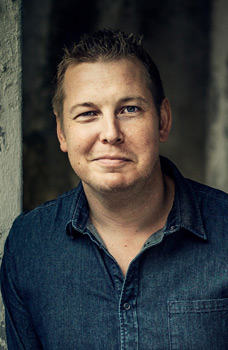
Fredrik Backman is the #1 New York Times bestselling author of A Man Called Ove, My Grandmother Asked Me to Tell You She's Sorry, Britt-Marie Was Here, Beartown, Us Against You, and&#... (more)
If you enjoyed:
Hotel on the Corner of Bitter and Sweet
Try:
A Man Called Ove
by Fredrik Backman
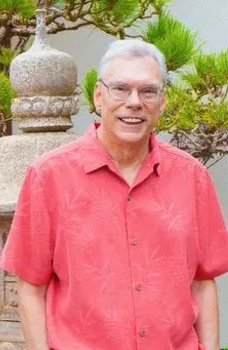
Alan Brennert is a novelist, screenwriter, and playwright. He was born in 1954 in Englewood, New Jersey, to Herbert E. Brennert, an aviation writer, and Almyra E. Brennert, an apartment rentals manager. He has lived since ... (more)
If you enjoyed:
Hotel on the Corner of Bitter and Sweet
Try:
Daughter of Moloka'i
by Alan Brennert
We recommend 21 similar authors


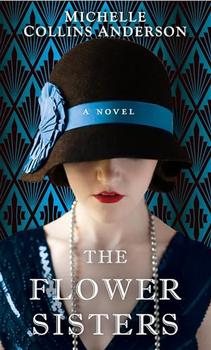
The Flower Sisters
by Michelle Collins Anderson
From the new Fannie Flagg of the Ozarks, a richly-woven story of family, forgiveness, and reinvention.

The House on Biscayne Bay
by Chanel Cleeton
As death stalks a gothic mansion in Miami, the lives of two women intertwine as the past and present collide.

The Funeral Cryer by Wenyan Lu
Debut novelist Wenyan Lu brings us this witty yet profound story about one woman's midlife reawakening in contemporary rural China.
Your guide toexceptional books
BookBrowse seeks out and recommends the best in contemporary fiction and nonfiction—books that not only engage and entertain but also deepen our understanding of ourselves and the world around us.