
-
Your next favorite book
is waiting.

In an exclusive interview with BookBrowse reviewer Karen Rigby, Randa Jarrar discusses how her personal experiences and insights into Muslim culture are reflected in her writing, and her plans for future books.
Readers are likely to notice similarities between your bio. and Nidali's background and may wonder if the novel is something of a roman a clef - how did you go about creating her character?
Nidali and I definitely have a lot in common…she’s an exaggerated version of my younger self. She’s brave and funny. The most important thing for me was making her voice grow over the course of the book. So in the beginning her voice is very child-like, and as she approaches adulthood it becomes more profane.
I still remember where I was when the novel’s first lines came to me. For months, I’d been writing failed first chapters with characters that were similar to Nidali but not as energetic or sassy. But when those first lines came to me, that first chapter flowed out, and Nidali was finally born, both in the book and as a character. It was in the writing of that first chapter that her voice, her worldview, and her history became cemented for me.
A Map of Home--the title suggests many themes, from rootlessness to the search for home to belonging to many countries--would you speak a bit about the importance of place in your writing?
I grew up the daughter of parents who’d experienced a lot of rootlessness. We all lived in a country (Kuwait) to which we didn’t really belong, and when we moved to the US, that old feeling of not-belonging haunted us. My parents both suffered from nostalgia for the countries in which they’d grown up, and that yearning for place was passed onto me.
One of the things I love about reading is that it has the power to transport us to different times and places. I love fiction that takes place in different settings, and I love writing fiction and characters that jump around to different locations. I think the world is more connected now than it ever has been, and I strongly believe that now is the time for the Universal Person (think Obama!).
Mama and Baba nearly steal the show here--I loved the story of how they met and how their relationship is complex, how their backgrounds shape who they are and in turn, shape their desires for their children. Some of their hopes, like education, are likely universal, but are some of their expectations more specific or common to their respective cultures? I'm thinking in particular of Baba's views of appropriate behavior for young women. Could you illuminate a little of what it might be like to be raised as a Muslim girl in Nidali's place and time?
Baba’s beliefs about how young women should behave was inherited from his own parents, and was always in opposition to his feminist beliefs and outlook. It was this conflict— between his desire for his daughter to become a famous professor and his desire that she be virtuous until she marries—that I found fascinating. I think the advent of modernity and the fact that more and more women in the Middle East are entering the workforce creates a little conflict in the way their parents see them. Women no longer need to be married to live lives separate from their parents, and yet culturally there’s still a huge value being placed on marriage. I think for girls being raised now and in the last couple of decades, the mix of the rise in jobs, Islamic observance, despotic rulers, and satellite TV all create a set of conflicts that will take a long, long while to resolve. In the meantime, I love all the cool art, film, and literature that conflict gives rise to.
Music, storytelling and poetry all play roles in the book--what inspired these motifs?
I think music and poetry and dance and storytelling all have a beat, a rhythm, in common. That beat reminds me of how vibrant life can be, and I wanted the book to be alive, to be filled with a sense of vitality. Arab culture is very much connected to music, poetry, dance, and storytelling, and I wanted to convey that to my readers, some of whom may not be aware of that part of Arab culture.
If there's one thing you'd like for readers to remember and understand about this family and their lives after reading the story, what would it be?
That they’re lovable! One of my hopes as I was writing the book was for its audience to be both Arab and non-Arab; for it to work with both camps. For Arabs, I want there to be a glint of recognition, and if not, a glint of, "Oh, wow, not all families are alike." For non-Arabs, I want there to be an Aha moment, where Arabs and Arab-Americans become more humanized, more particular.
It's been said that second books are often the hardest to write (since one has had all of one's life to prepare for the first)--has that been the case? What are you currently working on? What changes do you notice in your writing now, after the experience of writing the first book?
Yes! I’ve already outlined and begun several novels, none of which has panned out. However, I’m in the process of researching a new novel, and I’m really in love with the concept and the characters.
I’m also putting the final touches on a collection of stories. After A Map of Home, I wanted to tell stories in a smaller space, and the voices of a dozen characters came to me, ready to tell me about their lives. The stories are set all over, in Egypt, New York, Zaire, Texas, Iran, the Puget Sound, and Gaza. The changes I’m noticing are mostly in reaction to the way I wrote A Map of Home. I had two years to write full-time, a luxury I no longer enjoy. So now I’m trying to learn a new way to be immersed in a story.
Randa Jarrar was interviewed by Karen Rigby for BookBrowse.com. All rights reserved. No part of this interview maybe reproduced without written permission from BookBrowse.com.
Unless otherwise stated, this interview was conducted at the time the book was first published, and is reproduced with permission of the publisher. This interview may not be reproduced or reprinted without permission in writing from the copyright holder.
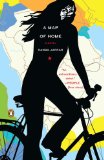

Ayad Akhtar is a novelist and playwright. His work has been published and performed in over two dozen languages. He is the winner of numerous awards, including the Pulitzer Prize for Drama and an Award in Literature from the ... (more)
If you enjoyed:
A Map of Home
Try:
American Dervish
by Ayad Akhtar
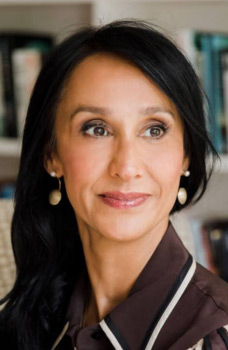
Monica Ali is the daughter of English and Bangladeshi parents.
She came to England at the age of three, and her first home was Bolton in Greater Manchester. Ali later studied at Oxford University.
Her first novel, Brick ...
(more)
If you enjoyed:
A Map of Home
Try:
Brick Lane
by Monica Ali
We recommend 7 similar authors




I like a thin book because it will steady a table...
Click Here to find out who said this, as well as discovering other famous literary quotes!

Can you name the title?
Test your book knowledge with our daily trivia challenge!
Your guide toexceptional books
BookBrowse seeks out and recommends the best in contemporary fiction and nonfiction—books that not only engage and entertain but also deepen our understanding of ourselves and the world around us.
