
-
Your next favorite book
is waiting.

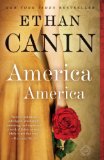
Ethan Canin discusses America America, which is set in the modern day and in a small town during the Nixon era - a story about America and family, politics and tragedy, and the impact of fate on a young man's life.
Random House Reader's Circle: America America is an
ambitious novel that embraces the great themes of politics, power, family,
class, integrity and love; even the title suggests we are in for a
monumental read. How did this novel begin for you personally, and what does
it represent for you as a move in your own life as a writer?
Ethan Canin: America America began for me as a smaller
idea. Originally, it was only the story of Corey Sifter, a
working-class boy, who falls in love with Christian Metarey, an
aristocratic girl. I'd written about 250 pages of that novel when the
attacks occurred on September 11, 2001; and that morning, as it turned out,
was the last time I wrote fiction for close to two years. I put the novel
aside and didn't pick it up again until 2003. And when I began writing again
I found myself much more urgently involved with history and politics and the
nature of power. A senator made his way into the story, then a presidential
campaign. The novel's evolution began to reflect my own, and that of many
others who on that day became more serious about the world.
RHRC: Many have commented on the unmistakable parallels between
Senator Bonwiller and Senator Ted Kennedy. In creating the novel's "man of
history," did you intentionally draw upon the 1969 Chappaquiddick affair and
Senator Kennedy's prominent career?
EC: I was certainly aware of Chappaquiddick as the book took form,
but it was far from the front of my thoughts. For me, that incident merely
brought up the more general problem of what to do about the great
public-minded man or woman whose private behavior is dubious.
I should also say that although the incident in America America is
in some ways similar to what happened off Martha's Vineyard in July 1969,
it's not Senator Kennedy I think of when I think of Senator Henry Bonwiller.
It's much more Lyndon Johnson, actually; Johnson, that seismic paradox of
public generosity, social vision, and political ruthlessness.
RHRC: Corey Sifter says several times in the novel that he is, in a
sense, telling his story for his children. I loved the remark that "children
change your past. ... All one's deeds live doubly" (12-13).
EC: As the novel grew, and even as it became more overtly
political, this nonetheless remained the abiding question that drives Corey
Sifter: his contemplation of how all his own acts – those acts, as he says, of
"honor" and "duplicity" and "veniality" and "ruin"
- of how all those acts now
"live doubly." As a young man he was able to ignore his own questionable
deeds; but now, as a father, and in his case as a father of daughters, he is
obligated to reimagine them.
RHRC: The Washington Post called America America a "masterful feat of literary Photoshop." I loved this observation
because it's impossible not to marvel at the brilliant way in which
fictional characters are superimposed onto the news of the 1960s and 1970s.
Was this difficult to pull off convincingly?
EC: As a matter of fact, the historical background is one of
the easier aspects of writing a novel. Far more difficult is dreaming up the
smaller, character-based scenes, scenes that rise entirely from one's own
imagination. The reason that writing from history is easier, I think, is
that historical incident limits the imagination; and although it may not
seem obvious that limiting the imagination would help a writer, in fact it
does. In my experience, at least, limiting it is the surest way to free it.
One of my favorite ways to find fictional inspiration, by the way, is to
browse historical timelines. I also like world atlases– any country with a
squiggly coastline seems to inspire me, as do visual dictionaries, those
reclusive creatures of the reference shelf.
RHRC: I was delighted by your apparent passion for
presidential history, as evidenced by Mr. Metarey's meditations
on philosopher Isaiah Berlin's "The Hedgehog and the Fox." Is this a field
you delved into while researching the novel, or are you a closet
presidential history junkie?
EC: I'm fascinated by political campaigns - which is not to say I'm not
disgusted by them, too - but I have to admit that much of the knowledge in
that particular scene came from research. I wish I could say it came from
memory.
RHRC: Did you ever have the urge to fly a biplane like Aberdeen Red?
How did you research the technicalities of flight for the novel?
EC: To research the flying bits I went up in small planes with
a couple of pilots who were friends of mine. One of them took me up on a
flight from northern Michigan, over the Great Lake, toward Chicago, and when
we were well over water he let me take control of the plane from the
right-hand seat. It was a cloudy day and I concentrated on keeping the wings
level with the horizon. This seemed rather easy. In fact, I was just getting
slightly bored with it when he mentioned in his calm pilot's voice that
we were in the early stage of "the death spiral." I was too inexperienced to
notice the altimeter, which, as he then pointed out to me, was moving
steadily downward in the dial. It was an eye opener, to say the least. I
thought I'd been keeping us on a level course; I hadn't felt the least hint
of the fact that we'd begun circling down toward the water.
RHRC: As your fans might know, you wear many professional hats: not
just that of a writer, but also of a teacher and a physician. Which career
is most challenging?
EC: I no longer practice medicine, but I can say that for me medicine
was easier, and certainly less emotionally turbulent, than writing. In
medicine there's a fairly large but still finite body of knowledge that you
need at hand for most of your daily work. It takes a few years to learn it,
but once it's there, it's there. With writing, on the other hand, every new
book–indeed every new story–is a fresh and terrifying reinvention of
everything. I don't think you ever fully figure out how to do it; at least,
I haven't. Teaching brings me back to some of the things I most enjoyed in
medicine. As a writer, what I miss most about being a doctor is the intimate
contact I had with all kinds of people. Teaching gives me back some of that
contact–in my own case, the chance to engage with impressively talented,
energetic, and devoted students (which is what we have, generally, at the
Iowa Writers' Workshop)–students who are similarly embarked (and most
of them realize it) on what is probably an un-understandable and certainly
an unmasterable endeavor.
RHRC: America America is a political novel and a
character novel but also in some ways a mystery novel. Yet Corey never
tells us exactly what happened between Senator Bonwiller and JoEllen Charney
and Liam Metarey, as he might have in a standard mystery. Why does he not
reveal everything he knows?
EC: Corey indeed never gives us access to the major dark events of
the book the way, say, a detective narrator might have; but to my mind he
has nonetheless deciphered most of them. I think he's fully aware of his own
role in Senator Bonwiller's dealings, for example, and is also well aware of
the role of Liam Metarey, a man whose kindnesses are in large part
responsible for the life Corey now leads. To my mind, in fact, that is why
Corey can never fully bring himself to tell us everything–out of loyalty to
a generous and lifelong benefactor. But just as Liam Metarey has left clues
for Corey, so Corey has left them for the reader.
From the Trade Paperback edition.
Unless otherwise stated, this interview was conducted at the time the book was first published, and is reproduced with permission of the publisher. This interview may not be reproduced or reprinted without permission in writing from the copyright holder.

Jane Hamilton's novels have won literary prizes, been made into films, have been international best-sellers, and two of them, The Book of Ruth, and A Map of the World, were selections of Oprah's Book Club. Her essays have ... (more)
If you enjoyed:
America America
Try:
Disobedience
by Jane Hamilton

Adam Haslett is the author of the story collection You Are Not a Stranger Here and the novels Union Atlantic and Imagine Me Gone. He has twice been a finalist for the Pulitzer Prize, as well as a finalist for the National ... (more)
If you enjoyed:
A Doubter's Almanac
Try:
Imagine Me Gone
by Adam Haslett
We recommend 14 similar authors



Most of us who turn to any subject we love remember some morning or evening hour when...
Click Here to find out who said this, as well as discovering other famous literary quotes!

Can you name the title?
Test your book knowledge with our daily trivia challenge!
Your guide toexceptional books
BookBrowse seeks out and recommends the best in contemporary fiction and nonfiction—books that not only engage and entertain but also deepen our understanding of ourselves and the world around us.
