
-
Your next favorite book
is waiting.

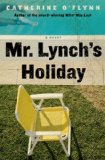
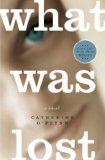
Catherine O’Flynn talks about her debut novel, What Was Lost; how she came to write it, and how her own youth colored the characters and events in this remarkable book.
I started writing What Was Lost without really intending to do so. I was working long hours in a large out-of-town shopping center as a manager in a music store. I found the center a very strange
and extreme environment for many reasons: the trancelike state of the shoppers consuming everything in their wake; the eeriness of the empty center at night; the constant awareness of surveillance; the day-to-day mix of desperation and humor in our dealings with customers; the industrial past buried beneath us (like many U.K. shopping centers it had been built on former industrial land). I started writing notes about it just for myself—to remind me of how hideous it was for some future point when hopefully I would no longer be working there. It was never my intention to write a novel at that stage—I would have considered the idea ridiculous. So these
notes were just descriptive: bizarre exchanges with customers, staff-room scenes, the service corridors.
Then one day the security guard I worked with told me a story he’d heard about a child being seen on the security monitors in the middle of the night. Subsequently I found out that the story is almost certainly a myth—a classic security shaggy-dog story—but I’m a gullible fool and it made a massive impression on me. There was something about this image that stayed with me and seemed to draw together a lot of the thoughts I’d been having about the center’s power and
atmosphere. I started thinking of possible stories about who the child might be and I suppose that was the starting point for writing the novel.
As I wrote the novel, certain themes began to emerge. Many of these had to do with loss—the loss of a child, the loss of direction in life, the loss of a toy monkey, the loss of a certain landscape - but I don’t think of the book as unremittingly bleak. With each of these potential areas of darkness I wanted also to find some light.
Obviously any story about a missing child is sad, but I really wanted to avoid Kate simply being the media cliché of a “missing child”: just another inscrutable face staring out from a poster, a blank canvas onto which we project our images of innocence. I wanted Kate to be a real person - a very resourceful, interesting person with many projects on the go. Kate is a junior detective, and her bible is a book called How to Be a Detective, which is one of those remarkable books you used to be able to buy that advised children to follow strange men down dark alleys at night. Those books were a big influence on me when I was writing What Was Lost - as was my lifelong love of hard-boiled detective fiction and film. Kate takes the book completely seriously—just as I did when I was her age—and there is inevitably humor in this, and also in the juxtaposition of a little girl’s day-to-day life and an imagined backdrop of international crime.
I’m the youngest of six children, but the age gap between my next sibling and me is ten years. By the time I was growing up, most of my siblings had left home and my parents had pretty much exhausted every shred of parental anxiety, so I had a lot of freedom to explore and do my own thing. I split my time between sitting behind the counter in my dad’s candy store watching the customers and doing what I considered top-secret surveillance work in the neighborhood.
There was a bank near our shop; it was built in the 1960s and it seemed very glamorous to me—a cross between an airport and the headquarters of the United Nations. I’d go there with my dad and see
the blond wood, the polished floors, and the men in suits, and I was sure it was a potential hub of international crime. I spent many hours sitting across the road from the bank taking down car registration numbers, hoping that these would prove useful to Interpol when they were inevitably called to the scene. It was one of my earliest and greatest disappointments that nothing remotely clandestine ever happened at the bank. A few years ago I went back to the bank to show a friend where I had wasted so much of my youth. Outside there was a large sign saying ROBBERY HERE. DID YOU SEE ANYTHING? Fate is a bad comedian.
In stark contrast to Kate, most of the adults in the book don’t seem to know what to do with themselves or their lives—they’re stuck in dead-end jobs or relationships, wondering how they got
there. While this is a source of sadness, at the same time the world of work—particularly the world of low-prestige jobs—can be full of humor (and I say this as someone who has had more than her
fair share). It’s a black humor, but that desperate laughter and camaraderie is often what makes the jobs bearable and keeps us there, and I suppose that was something I wanted to both celebrate and lament.
Friendships play a central role in What Was Lost and ultimately help steer some of the central characters away from the darkness in their lives: Teresa’s life is illuminated by Kate, and even years after her disappearance she is guided by the memory of Kate’s burning light; the relationship that develops between Kurt and Lisa rouses each of them from the torpor of their former existences; and Lisa and Dan have higher hopes for each other than they do for themselves. The
friendships in the book withstand age gaps, disappointments, and even death. What I most wanted to convey was the confidence and fidelity of friends. While the characters may have little or no belief in themselves, it is the faith of their friends that provides their salvation.
Unless otherwise stated, this interview was conducted at the time the book was first published, and is reproduced with permission of the publisher. This interview may not be reproduced or reprinted without permission in writing from the copyright holder.
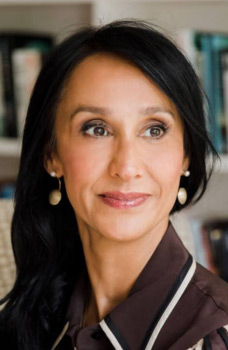
Monica Ali is the daughter of English and Bangladeshi parents.
She came to England at the age of three, and her first home was Bolton in Greater Manchester. Ali later studied at Oxford University.
Her first novel, Brick ...
(more)
If you enjoyed:
What Was Lost
Try:
Brick Lane
by Monica Ali

Jonathan Coe was born in 1961 in Lickey, a suburb of south-west Birmingham. His first novel, The Accidental Woman was published in 1987. His best-selling novels include What a Carve Up! and The Rotters' Club (2001). He is the... (more)
If you enjoyed:
What Was Lost
Try:
The Rotter's Club
by Jonathan Coe
We recommend 3 similar authors



If there is anything more dangerous to the life of the mind than having no independent commitment to ideas...
Click Here to find out who said this, as well as discovering other famous literary quotes!

Can you name the title?
Test your book knowledge with our daily trivia challenge!
Your guide toexceptional books
BookBrowse seeks out and recommends the best in contemporary fiction and nonfiction—books that not only engage and entertain but also deepen our understanding of ourselves and the world around us.
