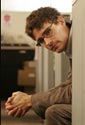
Joshua Ferris talks about his first novel, Then We Came to the End, set in a Chicago ad agency during the business downturn at the end of the 1990s.
Tell us a little about your writing
background up to this point
I lived in Key West as a kid, and there I started writing imitation Alfred
Hitchcock stories — not "The Birds" but, given Key West's coastal view, "The
Crabs." Many good people, boaters and sunbathers, were eaten alive as Hitchcock
turned in his grave. Then in college, at the University of Iowa, I started
writing stories again — again imitations but with sights set a little higher, or
at least more literary: Nabokov, Barthelme. Shortly after college I got a job in
advertising where I wrote ad copy for national brands, which taught me a good
many things. And after my time in advertising I enrolled in the MFA program at
the University of California, Irvine, where I started Then We Came to the
End.
So you had experience working
in an ad agency. Is that how you arrived at the setting of your novel?
Ad agencies can be a lot of fun. Creative departments are full of toys and
games and wacky surprises, and throwing a Nerf football down the hallway to
release tension isn't immediate cause for walking papers. I wanted my characters
to have the freedom to do certain things that wouldn't fly, say, in a law firm.
But I didn't want that freedom to come at the expense of excluding what's
universal about office life. Copywriters, lawyers, financial analysts,
accountants, waiters, and construction workers all share in an inescapable group
dynamic that includes scuttlebutt, in-jokes, disaffection, camaraderie. I hope
Then We Came to the End taps into some of that.
I did yeoman's work in advertising for about three years, and I was fascinated
by the behemoth structure in place — the hierarchies, the coded messages, the
power struggles. I thought such an awesome, malignant, necessary, pervasive,
inscrutable place deserved a novel's attention.
The characters in Then We Came to the End are under the constant threat
of layoffs, and that creates a specific group dynamic: the group's unquenchable
scrutiny of itself. Who's next on the chopping block? Whom do they value most?
What will happen to "us" if the company goes under? Eventually this scrutiny
drives the characters in Then We Came to the End to distraction, and
they do things that even the more carnival environs of advertising can't abide.
Why the narrative "we"?
Companies tend to refer to themselves in the first-person plural — in
annual reports, corporate brochures, within meetings and internal memos, and, in
particular, in advertising. What used to be the royal "we" might now be thought
of as the corporate "we." It's not just a company's way of showing unity and
strength; it's also a matter of making everyone feel as if they're a member of
the club. This is especially true in advertising, where the work is dedicated to
getting more and more people to join the clubs of various clients, who have
dreams of greater market share, bigger profit margins, and, ultimately, global
dominance.
In Then We Came to the End, you see just who this "we" really is — a
collection of messy human beings — stripped of their glossy finish and eternal
corporate optimism. It returns the "we" to the individuals who embody it, people
with anger-management issues and bills to pay, instead of letting the mystic
"we" live on unperturbed in the magic land promoted by billboards and
boardrooms.
But why not tell the story from one office worker's perspective?
My father took a great risk around the time he turned fifty by starting his
own company. It was small at first; he was his only employee. Yet his message
machine told callers that "we" weren't in right now, but if you left a message,
"we" would call you back. Who was this "we"? It was just him! But, of course, he
had to be a "we" — few people trust a one-man show. Over time I came to realize
that every company refers to itself in the first-person plural. It's not just a
way of showing unity and strength; it's also a matter of wanting you to join
that club.
So, thematically, the novel's point of view was a no-brainer. Making it work
took me up and down a long learning curve.
How does the centerpiece interlude (where the "we" disappears) function
in relation to what comes before and after?
The interlude is the book's emotional heart. Without it Then We Came to
the End would have been only an elaborate, if amusing, game. Lynn is forced
to look at the possibility of death when she's diagnosed with breast cancer, and
in turn so is the reader. After the interlude it becomes clear that death
qualifies everything that came before it and everything that follows.
The novel seems more like borderline farce at the beginning, and then
borders on tragedy as the reader comes to empathize more with the characters.
Was this tonal progression part of the plan all along? Was it a challenge to
sustain?
The tonal progression was absolutely part of the plan. I had little interest
in writing a book that was only about what's funny at work. There are some
pretty effective TV shows that do that. A novel asks more time and attention
from its readers than a TV show does of its viewers, and the novel's form has
always demanded a scope as all-encompassing of life as its practitioners can
deliver. So, at the conceptual level, I knew it had to be, one, more than the
complexities of its "we" point-of-view and, two, more than the sum of its jokes.
But I had to puzzle out how to make all that work. I initially spent about a
year and a half on the book before giving it up. Another year and a half of
reflection passed before I returned to it, and I did so only after hearing the
voice of the collective in my head and not being able to tune it out. Once
restarted, the book was finished in about fourteen weeks. So it took three years
and fourteen weeks to gather my wits about me and know how to write a book in
the first-person plural that took work as its subject and that included such
disparate things as e-mail pranks and the emotional and physical ravages of
breast cancer.
Your observations about office life ring so true. Were you working in an
office setting when you wrote the book? Or, like your character Hank Neary, did
it all come to you after you left office life?
After. Much, much after. Like Hank's fictional book, initial versions of my
novel were top-heavy with complaint — the infelicities and pains-in-the-ass that
arise day-to-day when working among other human beings and their foibles. Only
after a certain remove — in fact, only after I had settled into the relatively
solitary routine of a writer — did I realize that office life has a lot to
offer: companionship, the opportunity to clown around, lunch mates. I sort of
became, to my surprise, nostalgic for it. Only then did I see that work wasn't
all misery. For every part dread, there was one part fun. Hopefully Then We
Came to the End provides an equal measure.
Almost anyone working in a cubicle world will see her own experiences and
thoughts in this book, yet most of us get so caught up in it we don't realize
how universal typical office life and behavior is. Would you agree?
You get pretty wrapped up. I left a lot of friends behind when I went off to
pursue writing, and it would be dishonest to say that our scope of conversation
afterwards didn't narrow. We still talked about all the stuff that went on at my
old agency, but those things meant less and less to me. Amazing! Stuff I had
lived and died for, now mere reportage on the machinations of a far-off land.
But, as you say, it's universal. It's perfectly human to seek out community,
especially at work, and with community comes getting caught up in the
community's insatiable gaze inward. Especially when that community is under
threat, as the group of employees is in Then We Came to the End. It's
hard to think of anything else when every day there's someone new being twirled
unwillingly through the revolving doors.
What tagline do you think Benny, Marcia, Joe, Genevieve, Karen, Yop, Jim,
and the rest of the creatives would come up with to sell Then We Came to the
End?
They wouldn't have a single clue. They would bemoan the assignment while
being happy to have a job to bill time to. They would lollygag for a couple of
days. Then they'd get down to business and feel woefully inadequate to the task.
Jim especially. Eventually something would emerge, but there would be no
consensus. Then We Came to the End would disappear from bookstores
within two weeks and the agency would go bankrupt.
What authors and books are among your favorites?
I mentioned Nabokov and Barthelme. I read and reread Chekhov and Kafka. Same
with Philip Roth and Thomas Pynchon, twin engines of a dark machine. I filched
the title for Then We Came to the End from DeLillo's Americana, one of
my favorites. I recently read a wonderful book by John Haskell called American Purgatorio, which is one of my favorites in recent memory. And it seems to me
that the often maligned short story is having a renaissance of sorts, from
masters of the craft like Edward P. Jones and George Saunders and Jim Shepard to
younger writers like Karen Russell and Miranda July.
Are you working on a second novel? If so, can you share any details with
us?
I am. I'm trying out a narrative technique called the "third person." We'll
see how it goes.
Some of Joshua Ferris's Favorite Books
Unless otherwise stated, this interview was conducted at the time the book was first published, and is reproduced with permission of the publisher. This interview may not be reproduced or reprinted without permission in writing from the copyright holder.

Kate Christensen is the author of eight novels, most recently Welcome Home, Stranger. Her fourth novel, The Great Man, won the 2008 PEN/Faulkner Award for Fiction. She has also published two food-centric memoirs, Blue Plate ... (more)
If you enjoyed:
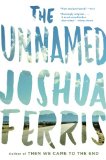
The Unnamed
Try:
The Astral
by Kate Christensen
Jeffrey Eugenides was born in Detroit, Michigan, in 1960. He graduated magna cum laude from Brown University, and received an M.A. in English and Creative Writing from Stanford University in 1986. His first ... (more)
If you enjoyed:
The Unnamed
Try:
The Marriage Plot
by Jeffrey Eugenides
We recommend 27 similar authors
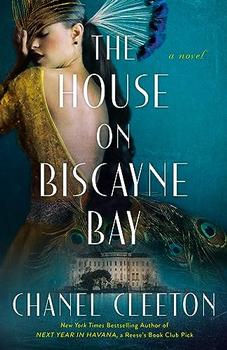
The House on Biscayne Bay
by Chanel Cleeton
As death stalks a gothic mansion in Miami, the lives of two women intertwine as the past and present collide.
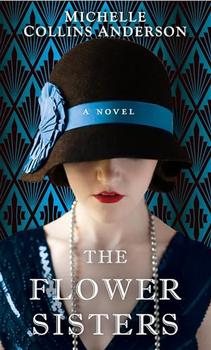
The Flower Sisters
by Michelle Collins Anderson
From the new Fannie Flagg of the Ozarks, a richly-woven story of family, forgiveness, and reinvention.
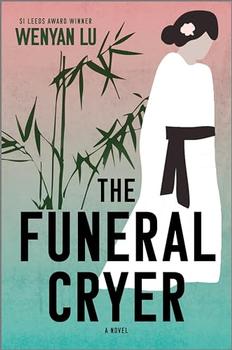
The Funeral Cryer by Wenyan Lu
Debut novelist Wenyan Lu brings us this witty yet profound story about one woman's midlife reawakening in contemporary rural China.
Your guide toexceptional books
BookBrowse seeks out and recommends the best in contemporary fiction and nonfiction—books that not only engage and entertain but also deepen our understanding of ourselves and the world around us.