Michael Cox discusses how, after thinking about writing The Meaning of Night for 30 years, he was spurred to start writing in earnest when he began to lose his sight as a result of a long-standing medical condition.
What were your major influences when writing The Meaning of Night?
David Copperfield (with the original
illustrations), quickly followed by Great Expectations, started my love
affair with mid-Victorian fiction when I was eleven or twelve years old. I've
been reading and researching Victorian fiction ever since, and constantly return
to my original favourites – Dickens (all), Wilkie Collins (all, but especially
The Woman in White, The Moonstone, and Armadale), J.S.
Le Fanu (Uncle Silas), Mary Elizabeth Braddon (Lady Audley's Secret)
– and to the shorter fiction with which the magazines from the mid 1850s, like
Temple Bar and Belgravia, are replete.
My literary taste has been shaped by these mid-Victorian authors, and by
later professional storytellers, such as Stevenson, Conan Doyle, Buchan, and
Rafael Sabatini, who followed them. Mix in a love of Victorian ghost stories,
together with nineteenth- and early twentieth-century detective stories, and you
have a pretty good idea of the novel's fictional foundations. Indeed, I rarely
read anything published post-1930 (though I am a great admirer of Sarah Waters,
the Flashman novels of George MacDonald Fraser, and of Tracy Chevalier's
Fallen Angels). As a result, The Meaning of Night is a resolutely
old-fashioned novel – not only because it tries to emulate some of the narrative
qualities of mid-Victorian fiction, but also because of its simple aim of
telling a good story as well as possible. I believe that the need to be told
stories is embedded deep within us all, and it's this primal cultural urge that
I've tried to satisfy in The Meaning of Night. If you asked me what the
best opening words of a story are, my answer would be simple: 'Once upon a time
there was . . .'
How long did it take to research and write the novel?
I began to think about The Meaning of Night
over thirty years ago, though its roots go back further, to my early love of
The Arabian Nights (I had – still have – an illustrated Victorian edition,
which I pored over constantly) and of Scheherazade's ability to spin a seemingly
endless skein of stories. When I started work on the novel, I built the plot
round three main elements:
(1) An anti-hero who was morally compromised, obsessive, and driven to commit
violence for what he believed to be a justified cause, and yet who possessed
great charm and intellectual ability and who remained sympathetic to the reader
throughout, despite his actions;
(2) The idea of a lost inheritance, in which a legitimate heir was denied his
birthright;
(3) An ancient country house – a house so wonderful and enchanting that it
becomes a symbol for everything we yearn for, but which can never be attained.
Over the years I would return to the book, draft sections, plan, research,
redraft, discard; but the novel as a whole remained a disorganized set of ideas
and possibilities. I simply could not charge the thing up, until 2004.
In the spring of that year I began to lose my sight as a result of a
long-standing medical condition. Surgery was necessary, as a preparation for
which I was prescribed some temporary steroidal medication. This, combined with
an overwhelming sense that if I didn't get the novel going now, blindness might
prevent me from ever doing so, seemed to unlock a door, and everything suddenly
fell into place.
From that point, the text began to flow continuously. The book was finally
finished at Christmas 2005. It had taken eighteen months finally to write down,
in a connected, linear narrative, what had been in my head for thirty years.
How did you decide on the title?
The piece of rather bad fictitious verse by
Phoebus Daunt in which it appears came first, and the phrase 'Death is the
meaning of night' then presented itself as a possible title. The more I thought
about it, the more appropriate it seemed in relation to the character of Edward
Glyver and to his story.
Night, of course, is a conventional metaphor for death and extinction – the
closing down of light and clarity, the transformation of the known into the
unknown. The associations of night and death also relate to Glyver's
metaphorical blindness: he is convinced that he sees things as they really are;
in fact, he is blind to their real meaning, enveloped as he is in misperception
and misapprehension, just as the certainties of day, and of life itself, are
enveloped and obscured by the shadows of night and death.
Were you ever concerned that the reader might not be able to sympathize with
Glyver after he murders an innocent man in the very first scene?
I certainly took a gamble by beginning the story
in the way I did: chronologically, the book begins at the end of the story, so
at this point we have no clear idea of why Glyver has felt it necessary to take
the life of a completely innocent man, other than as a vaguely described
preparation for the murder of his enemy. I hope by the end of the book however,
the reader will view the opening scene in a completely different light.
The shock value of the first sentence – 'After killing the red-haired man, I
took myself off to Quinn's for an oyster supper' – is all the greater as a
result of the reader being ignorant of why Glyver has been driven to commit such
an act; but its apparent glib and unfeeling assurance is modified dramatically
when we later realize Glyver's true state of mind at this time.
By this point in the narrative he is also physically and mentally exhausted,
and befuddled by drink and opium. Yet though this is all still to come, I hoped
that Glyver's voice – articulate, witty, confident – would immediately elicit
some degree of sympathy in the reader, and that the incident in Chapter One
concerning the woman and the baby on the bridge, and also the recollections of
his childhood, would convey something of his better nature, the nature that is
gradually subsumed by his tragic obsession to prove who he really is.
In a word, I wanted Glyver to be an attractive anti-hero, someone with whom
readers would sympathize (perhaps against their better judgement), without
necessarily approving of; for he is a victim too – not only of his own obsessive
and fractured nature, but also because of the selfish and misguided actions of
his birth mother, Laura Duport.
Are you pleased with the cover image? How much input did you have with this?
Is this how you envisaged the finished book looking as you were writing?
I think the cover image works very well indeed –
I particularly like the fact that the figure (meant, of course, to represent
Glyver) has his back turned towards the viewer, leaving his features to be
imagined. I had no preconceptions of how the finished book would look and was
involved in the design to the extent that I helped choose the clothes the actor
is wearing, and approved the general idea of having the figure hold a knife
behind his back, in readiness for the killing of Lucas Trendle in Cain-court
(which is, by the way, fictitious).
Who would you like to cast as the central characters if The Meaning of
Night was made into a film?
That's a difficult one. I hope very much that a
film, or TV adaptation, will eventually be forthcoming, but the casting of the
central characters will be crucial. I think I'd prefer to have relatively
unknown actors and actresses playing the lead roles of Glyver, Daunt, Miss
Carteret, Mr Tredgold, Lord Tansor etc., rather than well-known faces; but that
may not be possible. Glyver himself must have a strong physical presence, while
Miss Carteret needs someone who can convey a world of meaning in a single look.
Not easy. Johnny Depp does a good English accent . . . Hmmm, I wonder.
Do you have any plans to write another novel?
Most certainly. I didn't intend to do so
immediately, but I've started on a sequel to The Meaning of Night,
which I hope to work on over the summer of 2006. It is set twenty years later
and will feature a few characters from The Meaning of Night –
principally Emily Carteret, but not Glyver (at least not directly). If this
second book works out, I'd like to conclude with a third, taking the story up to
the early years of the twentieth century and the final demise of the Duport
dynasty and the breaking-up of its physical symbol – Evenwood.
Unless otherwise stated, this interview was conducted at the time the book was first published, and is reproduced with permission of the publisher. This interview may not be reproduced or reprinted without permission in writing from the copyright holder.

Novelist, biographer, and poet Peter Ackroyd was born in London on October 5, 1949.
He graduated from Clare College, Cambridge, and studied at Yale University as a Mellon Fellow, where he completed Notes for a New Culture: ...
(more)
If you enjoyed:
The Meaning of Night
Try:
The Casebook of Victor Frankenstein
by Peter Ackroyd
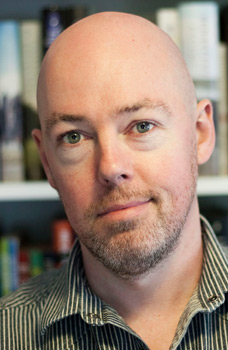
John Boyne was born in Ireland in 1971. He is the author of eleven novels for adults, five for younger readers and a collection of short stories. His 2006 novel The Boy In the Striped Pajamas sold 9 million copies worldwide ... (more)
If you enjoyed:
The Meaning of Night
Try:
A Ladder to the Sky
by John Boyne
We recommend 14 similar authors

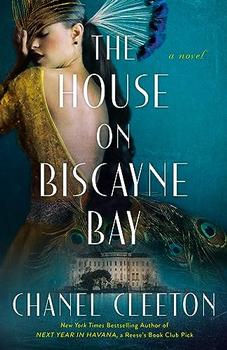
The House on Biscayne Bay
by Chanel Cleeton
As death stalks a gothic mansion in Miami, the lives of two women intertwine as the past and present collide.
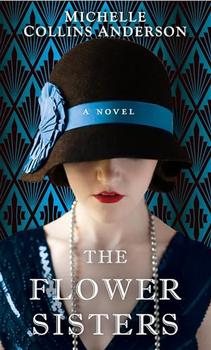
The Flower Sisters
by Michelle Collins Anderson
From the new Fannie Flagg of the Ozarks, a richly-woven story of family, forgiveness, and reinvention.
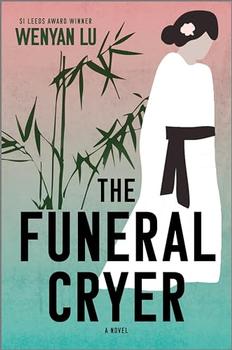
The Funeral Cryer by Wenyan Lu
Debut novelist Wenyan Lu brings us this witty yet profound story about one woman's midlife reawakening in contemporary rural China.
Your guide toexceptional books
BookBrowse seeks out and recommends the best in contemporary fiction and nonfiction—books that not only engage and entertain but also deepen our understanding of ourselves and the world around us.