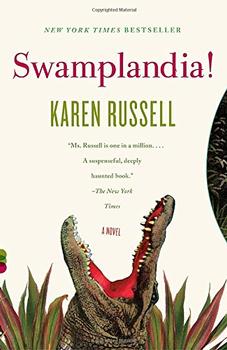
Karen Russell talks about her first book of short stories, St. Lucy's Home for Girls Raised by Wolves, and her first novel, Swamplandia!.
In two separate interviews Karen Russell talks about her first book of short stories, St. Lucy's Home for Girls Raised by Wolves, and her first novel, Swamplandia!
A Conversation with
Karen Russell about her first novel, Swamplandia!
Swamplandia! and your story collection, St. Lucy's Home for Girls Raised by Wolves, are both set in a sort of enchanted, Lewis Carroll-like version of North America. What draws you to these worlds and how do you create them?
Well, I think I owe a big debt to Lewis Carroll himself, probably, and other folks who I read as a kid like Ray Bradbury and Peter S. Beagle and Stephen King and Madeleine L'Engle. My favorite books were always the ones where I felt like an alternate world had been created in some star cradle by the author and, in an amazing feat of compression, shrunken down into a 200-page book (or, in the case of Ray Bradbury, a three page story about a country uncle with green wings). I think I wanted to create strange but familiar snow-globe worlds almost as soon as I started reading these books
I also think I'm drawn to imaginary places because it's an architecture that any reading consciousness can enter - as a kid I used to love talking to other readers who had visited the same nonexistent places as me - you know, Oz, Watership Down, Derry, Macondo. This kind of travel, to an invisible place created by the author, felt both exquisitely personal and also communal; anybody who could make it through the book could get from Kansas to Oz. At a time when nobody could drive and we were all child-hostages of our houses, when we could not even get to school by our own power, it made me so happy whenever I discovered that another kid and I had both gone to a wonderland or a dystopian England, and that, even more insanely, we'd done this inside of the same skin, merged with the same character. It still strikes me as an amazing thing to have in common with someone. Much better than discovering that you both bought jeans at the same GAP or ate shrimp flautas at the Chili's near the airport.
The world of Swamplandia! has been around since I first drafted "Ava Wrestles the Alligator" in graduate school, when I was 22. I can't pinpoint where exactly the idea came from, but it probably owes a great debt to my school's field trips to the Miccosukee Indian Village in the Everglades. I think these are still happening - a bunch of ten-year olds from "the mainland" of Miami stuff their ears with cotton balls and board an airboat; then, in my experience at least, you eat pinkish hamburgers with mayonnaise and watch a sweaty man in jeans perform a gator-wrestling demonstration. I remember feeling confused about who to root for in this battle - the man was more or less sitting on the alligator. My Ikea sofa puts up more of a fight than the alligator did that day. For reasons I can't perfectly explain, this day has become one of my favorite memories. It didn't start out that way, but it has stealthily crept up in the rankings. Now I think that gator wrestling demonstration, which I sort of snoozed through at the time, must have made a more lasting and dramatic impression than I realized.
I don't think it's a coincidence that so many authors are drawn to South Florida (Carl Hiaasen, Peter Matthiessen, Joy Williams). There is something absolutely haunting about the swamp. If you go to the Everglades, it does feel as if you're standing in a mythic and a real space at once. I wanted to explore the extreme, alien beauty of the Everglades - and also its extreme devastation, which we've managed to accomplish in just a few generations of Floridian settlement, from the plume-hunting of the nineteenth century to the more recent dyking and drainage and Big Sugar's phosphorus pollution.
Many of your narratives are seen through the eyes of children, and rather precocious ones at that. Do you believe there is something unique or meaningful about childhood, particularly the perspective and experience of youth, that makes you continuously return to them as protagonists?
For better or for worse, when I sit down to write I feel gravitationally pulled towards characters who are children and adolescents. I was joking with a friend that I can decide to write a story about the rabbits of the apocalypse, and it will undoubtedly being, "The world was ending. The bunny was fourteen-years old (in bunny years)."
I love the double optic that children possess - the way they can develop kid-theodicies and fantastic explanations, but also shift gears and have a nascent adult sense of the world, a more "realistic" vision. Ava, Ossie, and Kiwi are all poised at different thresholds, about to go through literal and figurative doors to reach new life stages, which is an exciting/terrifying period to get to dramatize in fiction. I heard Antonya Nelson say that all stories can be thought of as "coming of age" stories, since a character is confronted with a new event or new information that compels a change of status. And the child to adult transition - I don't think that's a one time affair. I think we're probably all struggling to suit up and be adults, every day.
Speaking of Lewis Carroll, your book's epigraph is a quote from his Through the Looking-Glass:
"I see nobody on the road," said Alice.
"I only wish that I had such eyes," the King remarked in a fretful tone. "To be able to see Nobody! And at that distance too! Why, it's as much as I can do to see real people, by this light!"
Why did you choose this particular quote? Does it hold special significance for you?
That epigraph is seared into my brain now - I think it performed a sort of lighthouse-function for me. Whenever I felt lost during the drafting process, I'd return to it. I love it because it so succinctly contains one of the central questions of the book - how can we find one another, how can we truly "see" one another, when so much of our lives are spent straining after phantoms?
To me, this bit of dialogue is hilarious and sad, and hope-filled, too, in its wry way; it acknowledges the extreme difficulty of seeing real people - seeing yourself, seeing anybody clearly. Finding the clean lines of another person, in spite of the warped glass of need and desire and terror and projection/fantasy that can fog up our lenses.
So much of the story of Swamplandia! is taken up with the girls' quest to find the ghost of their mother. Grief is a very private affair for these characters, and each member of the Bigtree family is so focused on the ghosts of the past, and their doomed, miraculous visions of the future, that they keep missing one another in the present.
It gets right to the heart of the problem; That's why I love that epigraph.
What is it like making your first big leap into novel-writing?
I think "leap" is the right word - I thought it was incredibly challenging, to be honest. You know, I heard Nicole Krauss recently compare novel-writing to something along the lines of, "breaking all of your bones and stitching them together again." Which I think suggests the incredible transformations that a book can go through from conception to the final draft.
In the case of Swamplandia!, the book that is being published contains material as old as 2006. At one point I had 500-plus pages, most of them terrible. I had to write the book straight through once and then pretty much start fresh, with a destination now in mind. There was a lot of joy and discovery in the process, but I'd be lying if I said the leap was 100% exhilarating. I'm sure it's a smoother transition for many authors moving from story writing to a novel, but I didn't exactly take to the ice and skate a perfect figure-eight. I was crashing all over the ice, yelling, "What the hell is a novel, does anybody know? Is spring here yet?"
Then at a certain point I turned some corner, and the writing was joy-filled again, and I could hear Ava's voice in my head, and I cannot describe the relief of that moment. But I have no idea how to do it again, write a novel, even though I look forward to trying. I have a respect that is huger than a Macy's day parade float for every novelist out there. It's such hard work and it also feels ridiculous to me sometimes, all the effort that it takes - like, why can't you get some imaginary people to do something interesting? You invented these fools, why can't you make them behave?
Do you see any of yourself or your family in the members of the Bigtree tribe?
I would not want any reader to mistake the Bigtrees for my flesh-and-blood family. I keep apologizing to my siblings and my parents for this book - I know some readers will assume there is a one-to-one correspondence between, say, Ossie and my real life sister, and I feel very badly about this, because my real life sister is beautiful and sane and "as smart as a planet," as my brother says, and nothing like Ossie Bigtree, who is a near-albino having sex with ghosts. Ditto my brother, who is not a ginger-haired dork - my brother is a genius, actually, but he would never claim to be one in the doofily aggrandizing way that Kiwi does.
I do feel that this book is much more personal than anything else I've written,
in part because the setting of Swamplandia! is a tweaked version of South Florida. And it does feel emotionally autobiographical in places - but only in the loose way that you're always creating stories out of your own set of experiences on this planet, extrapolating from these to build a character's mind. Only a few threads are directly lifted from life. Like Ava, I find alligators transfixing (for pets, my family had two inbred and obese miniature schnauzers, no Seths). Like Kiwi, I still really bungle the pronunciation of many basic words (just yesterday I pronounced "duet" so that it rhymed with "Monet"). And, at the risk of making everybody Hallmark-nauseous, I do think that the secret engine of this book is the strong love that exists in my own odd family.
You've been featured in The New Yorker's "20 under 40 Fiction Issue", New York magazine's list of twenty-five people to watch under the age of twenty-six, Granta's "Best of Young American Novelists" issue, and named a National Book Foundation "5 under 35" young writer nominee. How do you feel about all this attention and awe surrounding your talent at such a young age?
I feel extremely grateful and weirdly embarrassed, too. Very aware of my own mortality, thanks to all the emphasis on age. I'm buying those Oil of Olay products, ok, I have crow's feet! What I mean to say is that I don't feel quite young enough to merit any fuss, and I certainly don't feel like any kind of "Best Of" author, either, so these honors, while greatly appreciated, are also a little disorienting - you know, when my big writing victory of the day is deleting a louche joke about a starfish, it can be tough to feel like I'm making good on these votes of confidence from the New Yorker and Granta and the National Book Foundation.
That said, I cannot overstate how much that encouragement has meant to me, especially at this stage - it makes me want to write better, and has helped me to push on through big walls of self-doubt. I hope very much that I go on to write many more novels and stories, and that I can honor those lists. At the very least, I want to avoid the "Mistakes Were Made: 1 over 50 We Got Wrong" list!
What's next for you?
In what is probably a supreme over-correction for all that time I spent in the Florida swamp, I'm working on a new novel set in an imaginary town during the Dust Bowl drought. My sister was joking that it should be called "Drylandia." Bring on that dust! No more alligators, although who knows, maybe a gator should burst out of a silo in the surprise last chapter, a la "Jaws."
And I'm hoping to put together a new story collection by the year's end.
A Conversation with
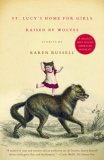
Karen Russell about her first book, St. Lucy's Home for Girls Raised by Wolves
Let's address the elephant in the room: you're twenty-four and Ben
Marcus hails you as a "literary mystic" and calls your book a "miracle." You
were in New York magazine's 25 Under 25 To Watch. What does that feel like?
GREAT! I mean, I should probably have a more mature and measured response
to that question. But really I am just bursting with joy and gratitude, of the
slack-jawed, awestruck variety. This book is a miracle to me - it's a miracle that
it has an ISBN number and a cover, that it exists as a book at all when for so
long it was just an ungainly word file on my computer. At this time last year, I
would have been happy to place a story with the Journal of Spotted Dogs. To have
found a home for the collection, it's the great miracle of my life to date. My
dream really did come true, which I think is a rare and wonderful thing to get
to say.
The focus on my age is a little funny to me; I mean, in some ways it seems
like I should have accomplished a lot more by now. When I was at the New York
magazine photo shoot, I was sitting next to fourteen year olds who had starred
in Broadway musicals and invented and patented molecules. I was really flattered
to be included with such an impressive group, but I also felt like a bit of a
fool. Did I play three instruments with the philharmonic? Had I invented an
incubator that ran on corn syrup and marbles? No, I had to inform people, no, I
just imagined stuff. Pretty humbling!
The ten stories in ST. LUCY'S HOME FOR GIRLS RAISED BY WOLVES
are mostly narrated by children. Was this a conscious choice?
It just sort of happened that way; I never sat down to write a collection
narrated by children and adolescents. But more often than not, those were the
voices I ended up taking dictation from.
Sometimes I'd consciously resist the child/adolescent perspective - in an earlier
draft, I tried to write "Children Remember Westward" from the point of view of
an older Minotaur named Jax, and thank God that didn't work out!
Maybe because adolescence is still green terrain for me, that's the place
that I kept wanting to return to. A lot of my protagonists are stuck between
worlds, I think, coming alive to certain adult truths but lacking the
perspective to make sense of them. There's something about that blend of adult
knowingness and innocence that I find incredibly compelling. For better or for
worse, that's the voice that I feel most drawn to at this moment. In future
collections, I'd love to try and channel different sorts of voices, older,
fainter, stranger voices.
In "The Star-Gazer's Log of Summer-Time Crime," the protagonist
muses, "I guess that's what growing up means, at least according to the
publishing industry: phosphorescence fades to black-and-white, and facts cease
to be fun." The title story, "St. Lucy's Home for Girls Raised by Wolves" is
about a pack of 15 girls, raised by wolves, who are taken away from their
parents and reeducated by nuns to enter civilized society. What are you saying
about the nature of growing up?
Uh-oh! These sorts of questions always make me nervous, because to be
honest I feel I'm lying a little bit, making up a story about my stories. For
starters, I don't want to sound like a dufus - anything that I'm trying to say
about the nature of growing up, I'm sure other writers before me have said with
greater insight and eloquence. Also, if I could just say the thing outright, I
probably wouldn't need to strand my young protagonists inside giant shells or
exile them from their wolf-parents. They could just play whiffle ball and eat
ham sandwiches for awhile, and then one day they'd wake up adults.
There's this line that I love from a Mark Jarman poem: "and like the joy of
being, and becoming." And I wanted some of that joy to come through in these
stories. But I also think the underbelly of that feeling is this dark and
ferocious sense of loss. In the title story, for example: who exactly are those
wolf-girls en route to becoming?
The parents in your collection are often absent or tragically
flawed: a proud Minotaur for a father, a mother who is always "draped over some
jowly older individual," a set of wolves for parents. Seems pretty tough to be a
kid these days, at least for your characters.
I think it's pretty tough to be a parent, too. I wouldn't judge the
parents in this collection too harshly; that Minotaur, for example, has to
struggle against prejudice and the prison of his own anatomy as well as, you
know, snakes. And also dysentery, and the impossible price of corn. Or the
wolf-parents, who wanted a better life for their children. That sort of fierce
parental love can warp into strange shapes when confronted with the outside
world and its dangers, I think.
And it is hard to be a kid these days! I don't know if it's like this for
everybody, but I felt like I was born with a deep and queasy suspicion that
something is awry. I think the hard part is that most kids have this sense that
they have to set this "something" right, despite a poor match between the
world's problems and their puny kid-resources.
On a side note, I should mention, just because I'm paranoid about readers
mistaking this, that these parents are not my parents. My parents are the most
wonderful people you will ever meet. My mother would only drape herself over a
jowly older individual if he required the Heimlich. My father is a deeply wise
and kind and humble man, and mercifully he's 100 percent human, no kind of
Minotaur.
How did you come to pick the title story? Is "St. Lucy's" your
favorite or did you just decide it was a good title?
"St. Lucy's" is my favorite story, most of the time, but all of these
stories have been my favorite at one point or another. Most recently it was
"Accident Brief," which was a "troubled" story that didn't look like it was
going to make it into the collection for awhile. It's like asking, who do you
love more, the straight-A, varsity athlete or your wall-eyed mulligan child? My
favorite story is often the one that nobody wants to take to the prom. Then I
just want to tamp down its cowlick and put it in orthopedic sneakers and set it
to dancing.
As for the title, it was originally going to be "Ava Wrestles the Alligator."
Then my brother strenuously vetoed this, on the grounds that it sounded like a
"Hooked on Phonics" story. I seriously considered all sorts of bad titles (see
below), some of which I can't even admit to here. At first, I thought "St.
Lucy's" was too long to be the title, but it really grew on me. My agent
suggested that I find a new saint's name (originally, St. Lucy was St. Augusta,
making the title even longer!). So I dug up my old "Catholic Picture Book of the
Saints" and did a lot of lame internal agonizing about the relative merits of
St. Ulrich (the patron saint of wolves, but too much like Skeet Ulrich?) and St.
Gertrude (too much of a hiccupy g sound in the title?). Finally I settled on
Lucy, always a favorite name of mine. Lucy is the patron saint of blindness,
which seemed to work thematically given the "blindness to vision" reformatory
promises made by the school. Also she's the patron saint of authors, and I'll
take whatever help I can get.
Other titles we considered include:
-Cheering for our Species (My agent suggested this one, from a phrase in the
"Ava" story. I liked this one a lot, actually, but I was also worried about the
cover art that such a title would inspire. I pictured a bear in a pleated
cheerleading skirt, doing a half split, the book's title coming out of her
megaphone in bubble letters. Like a Bernstein bear, but sluttier.)
-Swimming Past Extinction (Dave King wisely informed me that gerunds in
titles are so passe!)
-Children Remember the Westward Migration (My Dad said this sounded too much
like a History Channel snooze-fest.)
Many of the stories in ST. LUCY'S are set in the surreal marshes of
the Florida Everglades, which is an area you're familiar with. Why do you prefer
this setting? Do you think you'd be writing about the same places if you grew up
on a farm in Iowa?
Florida, if you haven't been, is a place that you should go. Southern
Florida is a separate universe from the rest of the country. The ocean and the
swamp offer all sorts of metaphoric seductions, I guess, but they are also
literally, unfathomably mysterious. The Everglades in particular must be one of
the strangest places in the world. Weird stuff washes ashore. Tiny, prehistoric
lizards live in your mailbox. I don't think you realize until you leave South
Florida how bizarre and wonderful it is. For example, the manatee. My family and
I would feed lettuce to this cow that lived under the water, a hundred feet from
the house. It wasn't until I went to college in the Midwest that I realized how
strange and special this transaction was.
It's also a community of Cuban exiles, and I'm sure that Miami's
second-generation sadness got into my bloodstream somehow. It's in the water
supply down there, this hereditary nostalgia. All those festivals in Little
Havana, old women shouting themselves hoarse with a sort of boisterous
homesickness.
As for Iowa, I think that setting gives rise to theme and meaning in a lot of
these stories, but it works the other way, too. I'm sure I'd have found a way to
graft my preoccupations onto Iowan farms. There'd be ghosts in cornfield and old
aeroplane hangars. Wallow and Timothy would find a supernatural horseshoe or
something. The Bigtrees would wrestle milk cows.
Who are your literary influences?
Flannery O'Connor, Kelly Link, Steven King, Gabriel Garcia Marquez, Mark
Richard, Wallace Stevens, Carson McCuller, Mary Gaitskill, Alexander Hemon,
Italo Calvino, Nabokov, Katherine Dunn, Ray Bradbury….yeesh, I could go on. I
had this private/public reading split when I was a kid, Austen and Dumas and
those Brontes for the adults, "Fear Street" and Frank Herbert in private.
What in your own life made you want to become a writer?
Reading, definitely. I loved reading so much; I mean, I still do, but not
with that sort of illicit midnight intensity. I was such an anxious kid, and
reading was a way out. At sleepovers, I would sneak away and lock myself in the
bathroom and read the other kids' books. Here was a way to step-out of your
child's body and into the mind of a Salem witch or a bunch of warring rabbits.
It's still amazing to me. It was spooky and intimate and totally intoxicating,
to step into an author's private rooms. I'd read the words and they became my
rooms. Then I wanted to be a writer myself, to do to others what these authors
were doing for me.
At the risk of sounding like a lameball, it's true magic. You can put three
letters on a page, "owl," and send an owl swooping through another person's
brain. Maybe "owl" is not the most compelling example here - picture a stranger
bird, or a bunch of birds. It's a weird semantic migration, writing and reading.
Picture a flock of birds alighting from the writer's brain and converging inside
the reader, this strange shuddering weight settling on the branches of the
reader's mind. Now I'm probably over-romanticizing a good bit - it doesn't always
feel that way, not if you're reading the classifieds or writing in your sweats.
But there is something bizarre and wonderful to me about the whole enterprise.
I'm also still at a stage where it feels a little embarrassing and fraudulent
to self-identify as a writer. Smarmy, even. I'm still trying to get used to
that.
Joan Didion has this quote about how writers tend to be anxious "keepers of
notebooks" afflicted with a "presentiment of loss," and I think that's as good a
hypothesis as any. I found one of my first-grade notebooks recently, and I see
that I had some early templates for plot. My first story, in its totality, was:
"Once upon the time there was a forest of peaceful unicorns. Then there was a
flood!"
I hear that this is your second encounter with book publishing. What
was your first?
I worked for Persea Books, this truly fantastic independent press that in
retrospect should probably never have hired me. When I said I was "proficient in
Excel," what I meant was that I'd seen Excel spreadsheets on other, smarter
people's computers. I'm pretty sure I only got the job because of my huge ugly
coat, this trash-man coat that could double as a life-saving tent in a blizzard.
My boss needed somebody who could walk through blinding snow to the post office,
and after pinching the fabric of my coat, he determined that somebody was me. I
could have sent that coat in on a hanger to my interview, and it would have
gotten me the job. At Persea, I worked "publicity;" in practice, I sent emails
and I sorted regular mail and on Thursday I took the trash out. I liked taking
the trash out because it was so frequently filled with my mistakes - reams of
misprints and upside-down letterhead. I can't tell you how many Jiffy bags
erupted because of my shoddy tape-jobs. Did you know there is a wrong way to
staple? It's true. I have thumb scars to prove it. I loved that job and the
folks at Persea, but it probably wasn't the best match with my skill set.
In an interview with the New Yorker after "Haunting Olivia" was
published in its annual Debut Fiction issue, you said that writing short stories
is like a string of first dates. What did you mean by that?
Stories are great for the commitment-shy. Whenever I begin a new story, I
have to fight down a rabid, bride-to-be hopefulness - is this story "the One?"
Will our casual fling blossom into a 600-page novel? Then, the initial thrill
wears off, and it's a struggle to keep the conversation moving forward.
Somewhere around the late-middle of most stories, I get a panicky, "check,
please!" feeling. And then it's over, and I get to exit the story with a misty
gratitude for our time together, and a deep relief that we never have to see
each other again.
Of course, I haven't gone on enough first dates or written nearly enough
stories to legitimately make this analogy. I'm basing this on a small group of
stories and one stupendously awkward night at an Ethiopian restaurant.
You're a recent graduate of the Columbia M.F.A. program. Are you
still involved in with a community of writers in New York and is that important
to you?
Well, technically I don't graduate until August, but many of my friends
from the program have already graduated and moved away. Which has been a tough
adjustment this year, after two blissful years of reading and writing and
hanging out. I met the most amazing people in my Columbia workshops, and I hope
that we will continue to be each others' friends and readers for life. I'm not
actively involved with any workshop group right now, but I definitely do still
feel hooked into a supportive community. And I live with my best friend, Carey
McHugh, the best poet this side of Jupiter - watch for her to win the National
Book Award. We "support each other's writing," by which I mean we curse like
sailors about not writing enough and watch a lot of "America's Next Top Model."
What are you working on right now?
I'm working on a coupla new stories and a novel, Swamplandia!, about the
Bigtree Family Wrestling Dynasty. (Ignore what I just said about "America's Next
Top Model.") It's set in the Florida swamp, and it picks up where "Ava Wrestles
the Alligator" leaves off.
Unless otherwise stated, this interview was conducted at the time the book was first published, and is reproduced with permission of the publisher. This interview may not be reproduced or reprinted without permission in writing from the copyright holder.

Chris Adrian was born in Washington, D.C. A graduate of the Iowa Writers' Workshop, he received his MD from East Virginia Medical School. "Every Night for a Thousand Years", the New Yorker story from which this ... (more)
If you enjoyed:
Swamplandia!
Try:
A Better Angel
by Chris Adrian
Nancy Au is a genderqueer, bisexual artist and teacher living in Oakland, California. She graduated from U.C. Berkeley with a degree in anthropology, and has an MFA from San Francisco State University where she teaches ... (more)
If you enjoyed:
Orange World and Other Stories
Try:
Spider Love Song and Other Stories
by Nancy Au
We recommend 50 similar authors
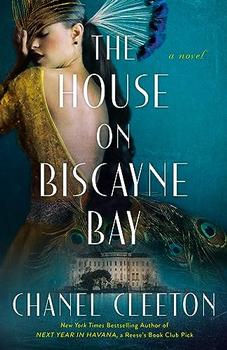
The House on Biscayne Bay
by Chanel Cleeton
As death stalks a gothic mansion in Miami, the lives of two women intertwine as the past and present collide.
The Flower Sisters
by Michelle Collins Anderson
From the new Fannie Flagg of the Ozarks, a richly-woven story of family, forgiveness, and reinvention.

The Funeral Cryer by Wenyan Lu
Debut novelist Wenyan Lu brings us this witty yet profound story about one woman's midlife reawakening in contemporary rural China.
Your guide toexceptional books
BookBrowse seeks out and recommends the best in contemporary fiction and nonfiction—books that not only engage and entertain but also deepen our understanding of ourselves and the world around us.