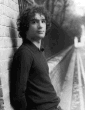
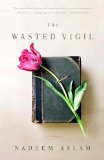
Nadeem Aslam discusses his latest book, The Wasted Vigil, explaining how he approached writing a book which tackles some of the most challenging issues today, such as global jihads, martyrdom, and terrorism.
What made you choose Afghanistan as a setting for The Wasted Vigil
In 1992, when I finished my first novel I more or less tossed a coin to determine what book I would write next: my Afghanistan novel or my British-immigrant novel. Both subjects seemed equally urgent—a bloody civil war had begun in Afghanistan, and the Pakistani immigrant community in Britain seemed well advanced on the path that would lead to the suicide bombings on July 7, 2005. I began to write Maps for Lost Lovers, my immigrant novel, and as soon as I finished it in spring 2003, I started work on The Wasted Vigil.
When in the 1980s, the USA and Saudi Arabia began funding and arming the Afghan mujahidin, my family and friends in Pakistan were among the people who warned about the dangers of giving billions of dollars’ worth of weapons to Islamic fundamentalists. The predicted horror was unleashed onto the people of Afghanistan soon enough, but it took decades for it to reach the wider world—on September 11, 2001 the consequences became apparent to everyone.
I wanted to explore and record all of that in The Wasted Vigil. Afghanistan—a crossroads of history—seemed an appropriate place to discuss the meeting of Islamic and Western culture, the ‘civilising missions’ and the ‘bringing of democracy,’ Napoleon arriving at Alexandria and proclaiming that the teachings of the Koran dovetailed with the principles of revolutionary France.
How did you go about researching the book? Did you travel to Afghanistan?
I traveled to Afghanistan and Pakistan during the writing of the book: talking to teahouse owners as well as professors, graveyard attendants as well as museum curators. And in Britain I interviewed almost 200 Afghan refugees about their memories of Afghanistan, about their grief at what had happened to their country.
I traveled with a historian friend which imparted a certain ‘depth’ to my gaze—looking at a landscape, I wasn’t thinking just of the battle that took place there in 1995, but also of Alexander who had crossed it centuries before.
Traveling in Afghanistan I felt something like Kim, having to conceal this or that side of identity, moving between my two nationalities: in some places I had to tell them I was a Pakistani because Pakistanis were liked there, and to be British would have been dangerous. In others I had to confess to being British because Pakistanis were loathed. A large bomb went off in Kabul while I was there and the city, suspecting Pakistani involvement, became filled with anti-Pakistan sentiment.
One of the key characters in The Wasted Vigil is a jihadist. How did you get into his head? Was it hard approaching him as a character?
I talked to boys and young men who had attended terrorist training camps in Afghanistan, Pakistan and Kashmir. It was easy to imagine a jihadist once I realized that they all thought Islam was under threat, that their countries were in danger. The breakthrough came when I thought about what happened on flight United 93 on September 11, 2001. Here is what my jihadist thinks at one point in The Wasted Vigil:
Does no one remember what happened on board flight United 93? A group of Americans—civilized people, not barbarians—discovered that their lives, their country, their land, their cities, their traditions, their customs, their religion, their families, their fellow-countrymen, their past, their present, their future, were under attack, and they decided to risk their lives – and eventually gave up their lives – to prevent the other side from succeeding. He could be wrong but to him that seems a lot like what the Muslim martyrdom bombers think they are doing.
Most of my anger is not directed at the boys who become terrorists, who become suicide bombers. It’d be like getting angry at steel or iron after you have been shot: the suicide bombers are just bullets, are just knives. My rage is aimed at the terrorist leaders, the people who lead the confused rudderless young men astray.
The Wasted Vigil seems to criticize the United States as much as it does the fundamentalists. Do you consider it a political novel?
I always say that I vote every time I write a sentence. Politics for me is about feeling a certain responsibility towards the world I live in. From my viewpoint, all writing is political—even nonpolitical writing is political. Coming from Pakistan, and belonging to the Islamic world, I can’t not be aware of how politics affects our daily lives, how it is not just dry legislations and laws and statements. It’s visceral. I lived a stone’s throw from the White House when I taught in Washington, DC earlier this year, and I couldn’t help thinking how certain decisions made in that place in the 1980s became fists as they traveled to Pakistan, fists and hammers that broke my journalist friends’ bodies.
None of this means that my work is composed of slogans. I am first and foremost a novelist. I am happiest when I write something that satisfies me aesthetically but which also repays some of the debt I feel I owe to the world.
Which writers do you admire and did anyone in particular inspire this novel?
Vasko Popa, Ivan Lalic, Czelaw Milosz, Wislawa Szymborska… I seem to be naming only poets. Among prose writers: Melville, John Berger, VS Naipaul, Michael Ondaatje, Bruno Schulz.
Unless otherwise stated, this interview was conducted at the time the book was first published, and is reproduced with permission of the publisher. This interview may not be reproduced or reprinted without permission in writing from the copyright holder.
Leila Aboulela won the first Caine Prize for African Writing and is the author of many novels. Minaret was longlisted for the 2006 Orange Prize. The Translator was one of The New York Times 100 Notable Books of the Year. ... (more)
If you enjoyed:
Maps For Lost Lovers
Try:
Minaret
by Leila Aboulela
Diana Abu-Jaber is the award-winning author of seven books of fiction and nonfiction, including Crescent and The Language of Baklava. She lives in Fort Lauderdale, Florida. (more)
If you enjoyed:
Maps For Lost Lovers
Try:
Crescent
by Diana Abu-Jaber
We recommend 10 similar authors


The House on Biscayne Bay
by Chanel Cleeton
As death stalks a gothic mansion in Miami, the lives of two women intertwine as the past and present collide.

The Flower Sisters
by Michelle Collins Anderson
From the new Fannie Flagg of the Ozarks, a richly-woven story of family, forgiveness, and reinvention.

The Funeral Cryer by Wenyan Lu
Debut novelist Wenyan Lu brings us this witty yet profound story about one woman's midlife reawakening in contemporary rural China.
Your guide toexceptional books
BookBrowse seeks out and recommends the best in contemporary fiction and nonfiction—books that not only engage and entertain but also deepen our understanding of ourselves and the world around us.