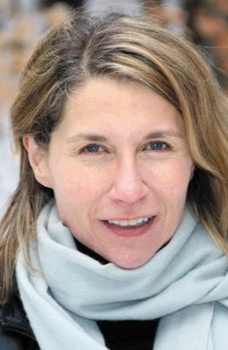
Jennifer Haigh talks about how she was inspired to write Baker Towers (set in a Pennsylvania coal mining tower after WWII) because of her own family history and the stories told to her by her parents and relatives.
Was Baker Towers inspired by your own family history?
Yes and no. The characters themselves are inventions; they don't resemble
anybody in my family. But the details about the town itself, what life was like
in the postwar years, definitely came from my parents and other relatives. Baker
Towers ends in the Vietnam era, right around the time I was born, so I
couldn't rely on my own memories of the period I was writing about. By the time
I came along, the coal mines were already in decline. The era of the company
town was past, and the region was on its way to become something else. But I
grew up hearing about how things used to be, and when I set out to write this
book I had a wonderful time interviewing family members about what life was like
when coal was king.
How did the characters evolve from the time you began imagining them?
The characters really did develop a generation at a time. When I began
writing, Rose and Stanley were clearest to me. I had a vivid mental picture of
what they looked like -- Rose very dark, southern Italian; Stanley a Slavic
type, big and blond -- and I was fascinated by how those two sets of physical
traits would combine and manifest in a large family. As far as developing the
characters, that happens in the process of writing. Each event in the
character's life changes her destiny in some way, and the writer makes these
discoveries over time. One of the pleasures of writing a novel is following the
characters over many years, from infancy to adulthood. When the story opens,
Lucy is two months old; by the end, she is a grown woman. It's important to me
that the reader recognizes the child in the adult, that the character
"turns out" in a way that seems organic and true.
The novel is packed with details that re-create a vanished world. What
were some of your best research sources?
I do my best research by talking to people. These conversations yield more
than simple facts; they give me a feel for how people talk, what they remember,
which events in their lives hold the greatest significance for them. Beyond
that, I spend a lot of time looking at old newspapers and magazines -- not just
the headlines, but the advertisements. I care what people were wearing, what
kinds of cars they drove, what groceries cost, what was playing on the radio.
Some of this information finds its way onto the page, but most of it doesn't.
It's my way of creating a world in my imagination, of making it real and vivid
for myself.
How did the experience of writing this novel compare to that of your
debut? What is life like now, as a full-time writer?
When I was writing Baker Towers, I felt a real sense of obligation
to the region and the people who live there. It's a part of the world that
doesn't get written about very often, and it was tremendously important to me
that I do it justice, that I get it right. I'd been thinking about this book for
many years, before I even wrote Mrs. Kimble; but I wasn't ready to
tackle it. I think I sensed that I didn't yet have the skills to write it.
Writing full time is monotonous and lonely, but it works for me. When I'm
deep into a novel, the characters are much more real to me than anybody in my
own life, and that's necessary for me as a writer. Years ago, when I was writing
mostly short stories, I could get by writing in the evenings or on weekends; but
when I'm working on a novel, I really benefit from being able to work in long
stretches. I write at home, in a quiet room with the curtains drawn. It sounds
boring, and it is; but I can't write unless the world in my head is more vivid
than my surroundings are. I'm amazed by writers who can compose on airplanes or
in coffee shops. Writing is hard for me, and it only works in a place where
nothing can distract me.
Copyright Harpercollins 2005
Unless otherwise stated, this interview was conducted at the time the book was first published, and is reproduced with permission of the publisher. This interview may not be reproduced or reprinted without permission in writing from the copyright holder.
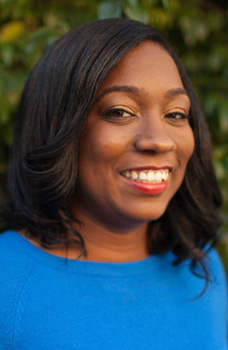
Born and raised in Southern California, Brit Bennett graduated from Stanford University and later earned her MFA in fiction at the University of Michigan, where she won a Hopwood Award in Graduate Short Fiction as well as the... (more)
If you enjoyed:
Mercy Street
Try:
The Mothers
by Brit Bennett
A graduate of the Johns Hopkins University and the University of Arizona writing programs, Ann Cummins is the author of Red Ant House, a San Francisco Chronicle bestseller and Best Book of the Year. She has had her stories ... (more)
If you enjoyed:
Baker Towers
Try:
Yellowcake
by Ann Cummins
We recommend 14 similar authors

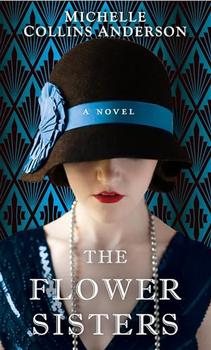
The Flower Sisters
by Michelle Collins Anderson
From the new Fannie Flagg of the Ozarks, a richly-woven story of family, forgiveness, and reinvention.
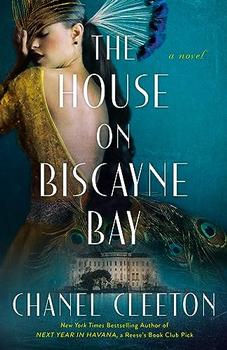
The House on Biscayne Bay
by Chanel Cleeton
As death stalks a gothic mansion in Miami, the lives of two women intertwine as the past and present collide.
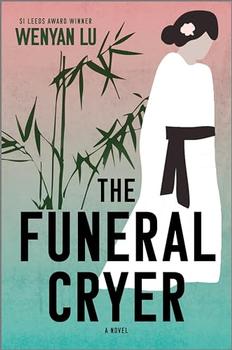
The Funeral Cryer by Wenyan Lu
Debut novelist Wenyan Lu brings us this witty yet profound story about one woman's midlife reawakening in contemporary rural China.
Your guide toexceptional books
BookBrowse seeks out and recommends the best in contemporary fiction and nonfiction—books that not only engage and entertain but also deepen our understanding of ourselves and the world around us.