
-
Your next favorite book
is waiting.

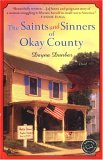
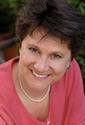
Dayna Dunbar discusses her first novel, The Saints and Sinners of Okay County, her degree in Spiritual Psychology (and what exactly this is), and whether life in small town America has changed since the '70s.
Question: There actually is a town called Okay, Oklahoma. Is Saints and
Sinners based on the place and its people? Did you grow up in Okay, or a
town like it? The novel has such authenticity to it that it seems you must have!
After I decided to name the town where the novel is set Okay, I
looked on a map and saw there actually was a town called Okay in Oklahoma.
I've never been to the real Okay, but the town where the novel takes place is
based on my hometown of Yukon, a small town near Oklahoma City.
Q: When did you know that you wanted to be a writer?
I wanted to be a writer after I read the wonderful children's book King
of the Wind when I was in the third grade. It took me more than twenty-five
years to believe I could write something that could be worthy of the authors who
had always moved me so deeply. When I finally began to write screenplays, it
simply was more painful to not write than to write something that might end up
being horrible. I began to write for myself, and because of the undeniable urge
within me to write....instead of thinking about who might read my work,
approve of it, buy it, and all that. I stopped comparing myself to other writers
(which was helpful because I always used Charles Dickens and Jane Austen) and
just did it because I needed to. I always knew I wanted to write novels, but I
was called to write screenplays first. I am grateful for this because a
screenplay is easier to write and actually finish. When I was ready, I moved on
to novels.
Out of the thousands of first novels submitted to agents and publishers
each year, only a few hundred are published. How did Saints and Sinners
become one of them?
I worked extensively with a fantastic freelance editor in Los Angeles,
Pamela Lane, before submitting my novel to an agent. By the time I met my agent
at a writer's conference in San Diego, the manuscript had been honed
significantly, which was crucial to its success. I met several agents at the
conference. Bob Tabian, who has had success with this genre of novel, decided to
represent me within a few weeks. He helped me with yet another rewrite, in which
I added thirty pages. This consisted almost exclusively of inner thoughts and
feelings of all of the characters, but mainly of Aletta. Bob told me that this
was what made a novel a novel. Since I had been writing screenplays in which
thoughts and feelings weren't involved in the writing process, this was a
learning process for me. When Bob sent out the novel to publishers, I was
fortunate enough that he had a relationship with Maureen O'Neal of Ballantine
Books. She read it and decided, with wonderful enthusiasm and praise, to pick it
up.
Tell us about your main character, Aletta Honor.
Aletta is a composite of all the women I grew up around, like my mother,
who raised children on their own. This was before women had the kinds of
opportunities they do now. As my mother says, "I went to college, and they
said I could either be a teacher or a nurse." She raised four children on
very, very little money. This kind of inner strength is such a gift that so many
women have. It is this gift that inspired me to write about Aletta. Also, a
friend of my mother's, who is a real Okie Christian character of a woman, told
me about having psychic abilities at times. This fascinated me because I would
have never guessed a woman like her would even believe in this type of thing,
let alone experience it.
It's been said that all first novels are autobiographical, and it seems
like that's true of this one, too. How much of your own history and personality
went into Aletta, her family, and friends?
This novel is somewhat autobiographical in that I have taken aspects of
my life, such as small town life and the characters that one finds there, and
I've woven this with fictional situations and people. My parents divorced when
I was a child, and this made it pretty easy to write about the kids and their
experiences in a broken home.
Aletta's psychic powers seem to be the real thing. She sees and speaks to
spirits from the past and has accurate visions of possible futures. Do you
personally believe in the existence of the paranormal or supernatural?
I do believe that everyone has intuitive abilities and that these are
particularly heightened in some individuals. I am not particularly interested in
the paranormal as something I study or pay a great deal of attention to, to be
honest. I am more interested in an individual, like Aletta, who has something
about her that creates such fear and prejudice from those around her, and in how
she deals with it. The supernatural aspects of the story I think are very
interesting and entertaining, but I believe the depth of the story comes from
Aletta overcoming self-doubt and judgment that result from being different. I
think we all experience this to one degree or another. I must say that the
existence of the supernatural is fun and exciting to me, taking me out of my
normal view of life, where the five senses rule, and into possibilities that go
beyond the mundane and into the magical. What fun is there without magic?
So many of the violent and tragic events of the novel seem rooted in
alcohol, from the hurtful actions of Aletta's husband, Jimmy, to the long-ago
crime of Johnny Redding, which casts its baleful shadow over Aletta's life.
Without giving any surprises away, can you expand on this aspect of the novel?
Was this something you purposefully set out to illustrate?
Alcoholism has affected my family on both sides, particularly the men
that I love. The pain and hardship it causes are very present to me, and this
has clearly informed my writing. I didn't set out to make a statement about
alcoholism necessarily, but there are many things I didn't set out to do in
the novel that came through very strongly. This is one of them. I hope that
people who are dealing with alcoholism in their lives are somehow inspired by
it, or at least feel that they are not alone.
Why did you set this story in 1976, the year of the bicentennial?
It was such a great year in American history. The ‘70's were such a
distinctive and interesting decade, and the bicentennial was the height of it.
In addition, the ‘70's were a much simpler time than now. There were no
psychics on TV or dial-a-psychic 900 numbers, so Aletta's decision to put out
her sign and reveal her gift would have been a bigger deal back then than
nowadays. I loved the pop culture of the time – the music, the clothing, the
American flag paraphernalia everywhere, including the wonderful custom van paint
jobs!
In what ways has small-town middle-America changed since 1976? What would
the fictional Okay of Saints and Sinners look like today?
I don't think that small-town life has changed that much since 1976.
The differences are more superficial, really. Wal-Mart has replaced the mom and
pop shops, but the conversations that take place in the aisles of Wal-Mart are
the same that took place in the small shops on Main Street – who's sick,
who's just had a baby, how's the football team doing, the weather and its
effects on life. Even though there's more access to the world via cable TV and
the internet, I don't believe these have a big impact on daily life. It's
still simpler living in a small town.
As far as the characters and how they'd look today, they would have less hair!
The seventies style, which was just as big in small-town America as it was in
the cities, would be replaced by whatever's in the malls now – much of it
looking a lot like the seventies style, ironically. There are some folks, like
the character Eugene, who would look exactly the same regardless of the decade -
just like my grandfather who wears overalls every day no matter what year or
season it happens to be.
As you've mentioned, in addition to being a novelist, you're a screenwriter
in Los Angeles. Did Saints and Sinners begin as a screenplay? What is the
difference between writing for the screen and for the page? And has there been
any interest from Hollywood in a movie based on the novel?
This novel was always a novel. Usually when I begin a new story, I have a
debate with myself whether I should write it as a screenplay or a novel. That
debate never occurred with this story because I wanted the freedom to fully
explore these characters and this story without the limitations of a screenplay.
Writing screenplays, I learned so much about story development, the three-act
structure, character development, and dialogue. I learned to tell a story with
pacing in which every scene adds to the telling of the story and the development
of the characters. These were all invaluable to me as I wrote this novel.
What I had to learn in order to become a novelist, however, was to write the
interiors of the characters, to write descriptions of people and places because
they would not be seen by a viewer but imagined by a reader. This was
challenging but was also incredibly rewarding. Screenwriting doesn't allow for
a writer to explore nuances of color and light and texture of a place or to dive
into a character's emotions and thoughts and reveal what can't be seen. Most
of my rewriting was fleshing out these aspects of the novel, layering in what I
hadn't normally worked with in writing the screenplays I have written.
As for bringing Saints and Sinners to the screen, I am currently working
with a wonderful producer in Hollywood. In fact, on the day I am writing this,
she and an equally fantastic director are meeting with a major production
company. My fingers are firmly crossed.
You have a Master's Degree in Spiritual Psychology. What is spiritual
psychology? Do you draw upon it in your writing?
Spiritual psychology recognizes that there is a spiritual reality and
purpose to human existence. It is the study and practice of the art and science
of human evolution in consciousness. Spiritual psychology is based on the
assumption that we are not human beings who have a soul; we are souls having a
human experience. It is the discovery, cultivation, and activation of the
healing relationship between the mental, behavioral, emotional, and spiritual
levels of consciousness. I graduated from the University of Santa Monica, which
teaches an experiential educational model, in which the student explores these
levels of consciousness through the counseling process from both client and
counselor perspectives. During the second year of the program, the student has
to complete a major project that entails fulfilling a heart-felt dream. Mine was
to write a novel, and Saints and Sinners was the result.
I draw upon this education in that, through the counseling process, I have been
able to see what motivates people, why they act the way they do, how their pasts
affect the present, emotional states, etc. In addition, because I believe we
live a spiritual existence, this is an important frame of reference for my work,
the stories I choose to tell, and the characters within them.
Do you have any advice for aspiring writers eager to follow your footsteps
to publication?
I have the same advice that I heard Maya Angelou give – read, read,
read. Also, I really suggest writers' conferences that focus on agents and
publishers once the aspiring author has a completed manuscript and is ready to
find an agent.
What can you tell us about your next novel?
Ballantine has asked me to write a sequel to Saints and Sinners,
so this is what I am doing. It begins very shortly after the end of the first
novel, telling the story of the Honors, including Jimmy and his battle with
alcohol. Aletta has a surprise visit from an unknown relative who reveals an
ancestor in her family who was said to have the same abilities as Aletta. Out of
necessity, Aletta, along with her loyal and wacky group of friends, begins a
search for the story of this woman, a Native American from New Mexico, and this
search takes her on a journey of self-discovery.
Unless otherwise stated, this interview was conducted at the time the book was first published, and is reproduced with permission of the publisher. This interview may not be reproduced or reprinted without permission in writing from the copyright holder.
Diane Hammond is the author of critically acclaimed novels including Going to Bend and Homesick Creek. A Bend resident, she is the recipient of an Oregon Arts Commission literary fellowship and served as a spokesperson for ... (more)
If you enjoyed:
The Saints and Sinners of Okay County
Try:
Going To Bend
by Diane Hammond

Writing and theater were Lorna Landvik's twin passions when she was growing up in her home town of Minneapolis, Minnesota. After graduating from high school, she and her best friend traveled in Europe, settling in Bavaria ... (more)
If you enjoyed:
The Saints and Sinners of Okay County
Try:
The View from Mount Joy
by Lorna Landvik
We recommend 6 similar authors



The low brow and the high brow
Click Here to find out who said this, as well as discovering other famous literary quotes!

Can you name the title?
Test your book knowledge with our daily trivia challenge!
Your guide toexceptional books
BookBrowse seeks out and recommends the best in contemporary fiction and nonfiction—books that not only engage and entertain but also deepen our understanding of ourselves and the world around us.
