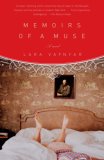
Lara Vapnyar discusses her first novel, Memoirs of a Muse, about a Russian immigrant determined to become the muse of a famous artist.
The protagonist of Memoirs of a Muse is a young
Russian immigrant named Tanya. Raised by her single mother, a professor,
Tanya escapes the drudgery of post-Cold War Moscow life by reading about
Apollinaria Suslova, Dostoevsky's mistress and muse. Tanya romanticizes
that she too one day will become a muse like Suslova. After graduating from
college, she immigrates to New York, but unlike her relatives before her, who
try in more conventional ways to assimilate to American culture, she holds on to
her ambition to be "special," to become the muse to a great American writer.
American readers might be
unfamiliar with an ambition like Tanya's, especially since the novel is set in
present-day New York City where most women define success quite differently, and
may initially misunderstand Tanya's idea of a muse as being intentionally
subservient to the man or artist. How does Tanya define the role of muse? Would
Tanya have wanted the same thing for herself in Russia? Does Tanya represent
something larger about young immigrant women?
First of all, Tanya has a very idealistic view of a role of
muse. She doesn't think that a muse is subservient to an artist, but that both
the muse and the artist serve Art as equals. The inspiration that a muse
provides is just as important as what the artist does with it. She would never
have consciously agreed to be subservient to a man, and, later in the novel, she
is horrified when she realizes that this is exactly what has happened.
Russian women are generally even more independent and
self-sufficient (money-wise, not happiness-wise) than American women. In the
Soviet era, being a housewife was practically unheard of. Tanya's mother has
always been independent and had a brilliant career. And Tanya really wants to
make something out of her life, too. But what makes her what she is is the
discrepancy between her ability to dream Big (too big) and her very realistic
assessment of her talents and her situation. She believes that the only talent
she has is to inspire.
Immigration plays a big role as well. One of the major shocks
of immigration is the loss of your social status. The class system wasn't as
pronounced in the Soviet Union;, it existed, but it was kind of a taboo subject.
But if it was as vivid as in the US, Tanya and her family (her uncle is a
doctor, her mother is a famous scholar) would have belonged to the upper-middle
class. In New York, she finds that upper-middle class life is absolutely
unobtainable for her and for her family. And no matter what Tanya does, she will
never get there. Some people accept it, others delude themselves, but Tanya with
her big dreams and realistic perception cannot do either. Being a "muse" becomes
her attempt to break through, to regain her social status. Which doesn't work of
course.
There is another aspect of the role that immigration plays in
Tanya's story. Most women tend to be blind to their lovers' flaws and
deficiencies. But Tanya is doubly blind because her lover is a foreigner. I
assume that if Mark were a Russian, she would have seen what he is, and what he
thinks of her, much faster.
The inspiration for this
novel came from your own graduate studies, specifically your investigations into
the life of Apollinaria Suslova, who was Dostoevsky's mistress. Please tell us a
little about Suslova's history and why it captivated you.
Apollinaria Suslova met Dostoevsky in 1861. She was 21,
striving to find a way, any way, to lead an interesting life, either by joining
the student movement, or becoming a writer or falling in love with a great man.
Unfortunately, she lacked the conviction for the first and literary talent for
the second. As for the third, she did manage to make one of the greatest men of
19th century fall madly in love with her, but it didn't leave her
feeling happy or fulfilled.
When I found out that one of the options for my PhD project
could be a translation into English of an important, but previously not
translated work, I immediately thought of Suslova's novella A Stranger and an
Intimate. Although A Stranger and an Intimate isn't a great work of
literature, its importance is immense, because the two characters are thinly
disguised Suslova and Dostoevsky, and because the plot is mainly biographical. A
woman in the novella informs her lover that she has fallen for another man, and
he proposes that they take journey abroad, remaining like "a brother and a
sister," which is exactly what happened with Suslova and Dostoevsky in the fall
of 1863. As I began my research for this project, I found out that Suslova kept
a diary throughout the journey, and that some scenes in the novellas come almost
verbatim from the diary, while others are apparently pure fiction. I had an
impression that even in the diary, Suslova wasn't completely truthful, although
there are some very candid scenes. And I became obsessed with an idea to imagine
what really happened during that journey.
Tanya eventually does meet
her own "Dostoevsky" of sorts, a writer named Mark. Your descriptions of Mark's
constrained bachelor life and attempts at posing as a Great Writer are
absolutely hilarious as well as right on the money. Can you talk a little bit
about how his character came about?
One of the first "Americans" I'd met was a boyfriend of my
cousin's former girlfriend. He was a writer (unlike Mark in my novel, an obscure
but very talented one) who lived in a tiny apartment overlooking Central Park.
My cousin's former girlfriend liked to take me there with her to show the guy
off. I'd lived in the US for a few years, but since I lived and worked in a
closed Russian community, I hardly encountered any other Americans. I thought
that he, his lifestyle, and his apartment were absolutely unique and
fascinating. I loved to visit him because he represented a perfectly exotic
world. But then he broke up with my cousin's former girlfriend and it became
awkward to visit. As my writing career began to happen I met many more
Americans, and to my great surprise, I found out that the first guy wasn't
unique or exotic at all, just a variation on a type, as was his lifestyle, and
his beautiful apartment.
Mark's social status more than anything else allows him to
enjoy the delusion of being a Great Writer.
Throughout the novel, Tanya
tries to discover exactly how artists make art and what role a muse should play
in an artist's life in order to ensure that the bestt art gets made. You
make great use of humor as well as pathos in portraying Tanya's efforts—she
applies every remedy she can think of to Mark's writer's block, from perfectly
brewed coffee to submitting to sex that makes her cringe. And indeed he does
start writing, but what he eventually creates is far from art. Does Tanya's and
Mark's "collaboration" and its product say anything about how you
I don't think that the role of a muse is a great as Tanya
believes. An artist has all the resources within herself. Sometimes outside
influences can create an impulse, something clicks with something that the
artist feels, but it is perfectly accidental. You can't plan a career of being a
muse, and you can't push a creative impulse on anybody. Even if Mark were a true
artist, Tanya's persistent muse activities wouldn't have helped.
Tanya discovers quite
accidentally that all the while she was living with Mark and, in her opinion,
failing as a muse, she was inspiring a different, far greater, artist. How does
this discovery change Tanya's perception of her years with Mark?
Before this "discovery" Tanya saw her years with Mark as the
lowest point of her life, as something so humiliating that the only way to come
to terms with her life was to forget it, to pretend that it didn't happen. The
discovery made her see everything in a different light. Her shame and
humiliation appeared to her in a new, meaningful, perhaps even inspiring way.
She saw that no matter how painful and embarrassing her past life was, it was
still her life, it belonged to her, it helped to shape her personality and to
determine her real needs. Or perhaps she simply grew up, and her perception of
life changed, and she was able to view her past in a different, constructive
way.
You do a great service to the reader at the close of the
novel—you let us know how Tanya's life after Mark has turned out. Without giving
away any of the story, I will say that things have certainly improved for her.
How did Apollinaria Suslova fare after her years with Dostoevsky? Why did you
choose to make Tanya's "ever after" so very different?
Suslova didn't achieve anything in her life. She ended up
alone and very bitter. Her contemporaries and even later historians and
biographers of Dostoevsky thought that was because she was a "spiteful bitch."
I've always thought of her fate as tragic, she loathed the 19th
century conventions, but lacked abilities (or talent) to oppose them in a
meaningful way.
I think if Tanya was born in 19th century, her
fate would have been the same as Suslova's.
As an immigrant yourself
from Russia, what do you think is the hardest part about starting over here?
It's different for different people. For many, it's the loss
of social status, and inability to find a new place in the society, where a
person would feel comfortable. For me, it was also inability to find a job that
I could do well. Not even prestigious, or lucrative, or even interesting, but
something that would give satisfaction.
What are you working on next
– another collection of short stories, or a second novel?
I'm almost finished with the collection of stories about
food, where people grapple with love and loss through different dishes that
don't necessarily taste good.
Unless otherwise stated, this interview was conducted at the time the book was first published, and is reproduced with permission of the publisher. This interview may not be reproduced or reprinted without permission in writing from the copyright holder.
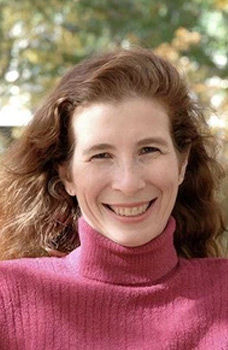
Alina Adams was born in Odessa, Ukraine, and immigrated with her parents to the U.S. in 1977 at age seven, where she learned English by watching American soap operas at their home in San Francisco.
Alina is a fiction ...
(more)
If you enjoyed:
Divide Me By Zero
Try:
The Nesting Dolls
by Alina Adams
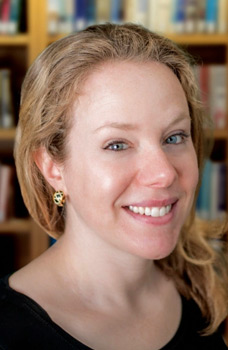
Rachel is a prolific writer and reviewer and her work has appeared in the LA Review of Books, the Tel Aviv Review of Books and DeadDarlings. She is an Honorary Research Associate at the Hadassah-Brandeis Institute at Brandeis... (more)
If you enjoyed:
Divide Me By Zero
Try:
Atomic Anna
by Rachel Barenbaum
We recommend 21 similar authors

The House on Biscayne Bay
by Chanel Cleeton
As death stalks a gothic mansion in Miami, the lives of two women intertwine as the past and present collide.

The Flower Sisters
by Michelle Collins Anderson
From the new Fannie Flagg of the Ozarks, a richly-woven story of family, forgiveness, and reinvention.

The Funeral Cryer by Wenyan Lu
Debut novelist Wenyan Lu brings us this witty yet profound story about one woman's midlife reawakening in contemporary rural China.
Your guide toexceptional books
BookBrowse seeks out and recommends the best in contemporary fiction and nonfiction—books that not only engage and entertain but also deepen our understanding of ourselves and the world around us.