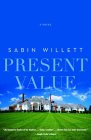
Sabin Willett discusses whether technology and all the trappings of modern life keep us from communicating in a meaningful way - which is a key theme of his new satirical novel, Present Value.
Your first two novels were thrillers. Why the leap to social satire?
Writing this book was, for me, like riding my sister-in-law’s horse. I
have been trying to do that lately, and I discovered that the enterprise goes
very well when I decide to go wherever and whenever Joker wants to go, but leads
to some painful dismounts when I try to mess with Joker’s agenda.
I wrote the first thriller because I thought it would be easiest for a
nobody to publish a thriller. I wrote the second thriller because the
first book was a thriller. I even wrote a third thriller (the God’s
honest truth was that this was in 2000 or so and the plot was about the secret
son of a bin Ladinesque figure who is discovered at a US school…), or part of
a third thriller, but by this time it was really starting to feel like the horse
didn't want to go where I was urging it.
So I thought I might be able to stay in the saddle if I just let the horse go
where it wanted to go. Which was to Present Value. I suppose I have
an ironic sensibility, and I think a lot, as a middle aged guy, about where
things have come from and where they’re headed, and I believe I have a knack
for humor in writing (although my kids will testify I have no skill at all
orally. Worst joke teller in America).
The horse was dying to go this way, and I feel more like a rider now.
Your protagonists, Fritz and Linda Brubaker, are portrayed as an uber-power
couple. Do people really live like this? Or did you exaggerate for
comic effect?
Heck if I know how those people live! Fritz, though, is a little
outside that. His wife has uberpower; he’s along for the ride, at first.
Actually I do know something about how those people live I guess, as I live in
a town not wholly unlike Dover, and see in big-firm urban law practice the
lifestyle of the rich and powerful. Poor Linda, I exaggerated the hell out
of her, of course, but there are both women and men — particularly lawyers — for
whom the combination of money hunger, nerves, and instant communications goads
into this perpetual state of anxiety. Also, the "I-must-not-be-subject-to-criticism" spirit definitely exists, and makes
some people crazy.
What does it mean to be a perfect family? And what is sacrificed in
maintaining this illusion?
Well, this is an interesting one! I don't know, but I do think there
are a lot of people in my generation who are spending too damn much time in
their children’s lives. You go to a sixth grade dance in Dover,
you’ll see as many parents as sixth graders. Ditto a little league game
or a hockey practice. And I do think the middle aged moneyed class spends
a lot of time trying to show off its exquisitely sensitive parenting.
But there is no illusion, and I would say no sacrifice, in a perfect
family. Perfection in a family is love, and if you have that, you don't
need to pretend to have anything else. But all the monetary, cultural, and
social expectations get in the way of that. Fritz and Linda work to get
there, each in his own way, and the omens look better at the end.
Technology, video games, cell phones, blackberries, SUVs--in other words,
all the trappings of modern life--keep the Brubakers from ever really
communicating or interacting in a meaningful way. Do these technologies
really keep us apart?
I certainly think so, but I’m a Luddite. The problem with instant
communication is that it is instant, and constant. People don't have time
to think. And, they're always distracted. Nobody under 20 ever
fully concentrates on anything. Under 30 for that matter. Suppose I
send an email to five associates that we need to meet in the Jones case next
week. The young ones will email me back within fifteen seconds.
Leaving me to think: Why? Were they poised for this message, the moment it
arrived? If they were thinking about something important, how could they
have time for this trivial email? Answer: everybody's distracted.
Multitasking. You never get more than about 20 percent of anybody’s
head.
And that applies at home, too, I fear. Everyone should try an experiment, at
least once a year, best done on a summer night. Rules: 1. Everyone
stays home. 2. No phones, no electricity except for the fridge.
It's remarkable what happens. And you may feel like that game of scrabble
or of charades or that conversation was among the best you’ve all had a in
quite a while.
There’s an old lawyer in my firm named Fran. You see him in the library
with a book, usually an old book, and a pencil, and a pad of paper. Thinking.
Making a few notes. He thinks a blackberry is something you eat in August.
You sent him an email today and you get back a message in two months.
But in a courtroom, he's the best communicator I know.
The collapse of big business is delightfully skewered by the bankruptcy of
Playtime in the novel. How realistic is your portrayal of bankruptcy and
liquidation as presented in Present Value? It seemed quite absurd to me.
It is a little stretched, I admit. The ingredients are real: the
emphasis on professional fees, the jitters over the first day hearings, the
carve outs, the efforts of management to protect themselves, the key
employee retention plans, the tension over the confirmation process, that's all
real. I stretched some of the characterization of people for laughs.
In the novel, you use skiing--in particular skiing down a particularly steep
trail--and later sailing as metaphors for Fritz Brubaker's life. Why those
metaphors?
Not really sailing, but yes definitely to one skiing metaphor. In
fact the manuscript was named "Skiing Paradise" before the publishers
stepped in. Skiing Paradise was my original metaphor for Fritz's
predicament. There really is a ski area on which Stark is modeled,
and there is a real trail called Paradise, and it is nasty. The
notion was that in midlife we find ourselves committed to the steeps of job,
marriage, kids’ adolescence, and there is no way out, and it is scary, and it
might actually kill you. But if you hang in there, it ends. It just
ends. But you have to get to the bottom to figure that out.
Not very deep, I guess, but I thought it worked.
By the end of Present Value, both Fritz and Linda have made tremendous
sacrifices for their children. Is this something they would have done
before their worlds got stripped away? Or is it a product of the journey
each has undertaken?
I think this a very insightful question. Each of them would have
thought that s/he would make any sacrifice for them before, but before,
each would have rationalized "sacrifice," and would have concluded that
maintenance of the status quo was in the kids’ best interest. I
think Fritz and Linda each needed to face risk and predicament to better
understand what should be done for the kids. We need to be shaken from
complacency to understand what children need, I think.
Even while Fritz and Linda were making mistakes, I found myself rooting for
them to make the right choices and succeed. Why is that, especially since
they are not particularly sympathetic at first glance?
Well, I always liked Fritz. I was just a little frustrated with him.
I suppose when you figure out the choice he’s made, one gains admiration
for him.
I’m glad you asked the question about Linda. I think it means I
succeeded. She started out as a mere cliché and source of humor, but that
didn't fully answer. So I worked to give her a little more depth, to explain how
she got to be so obsessive; how the culture fed into a naturally obsessive
nature, and how the predicament of having to accomplish all the external "successes" as a woman compounded the stress. I wanted the reader to
root for her, just a little, by the end.
Reproduced with the permission of the publisher, Villard, 2003
Unless otherwise stated, this interview was conducted at the time the book was first published, and is reproduced with permission of the publisher. This interview may not be reproduced or reprinted without permission in writing from the copyright holder.

Jonathan Franzen is the author of five novels, including The Corrections, Freedom, and Purity, and five works of nonfiction, most recently Farther Away and The End of the End of the Earth, all published by Farrar, Straus and ... (more)
If you enjoyed:
Present Value
Try:
The Corrections
by Jonathan Franzen

Jane Heller promoted dozens of bestselling authors before becoming one herself. She is the author of thirteen books including Confessions of a She-Fan, An Ex to Grind, Infernal Affairs, Name Dropping,Female Intelligence, and ... (more)
If you enjoyed:
Present Value
Try:
Female Intelligence
by Jane Heller
We recommend 5 similar authors


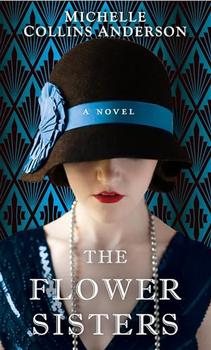
The Flower Sisters
by Michelle Collins Anderson
From the new Fannie Flagg of the Ozarks, a richly-woven story of family, forgiveness, and reinvention.
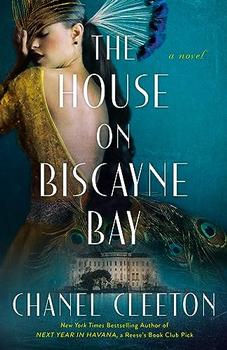
The House on Biscayne Bay
by Chanel Cleeton
As death stalks a gothic mansion in Miami, the lives of two women intertwine as the past and present collide.
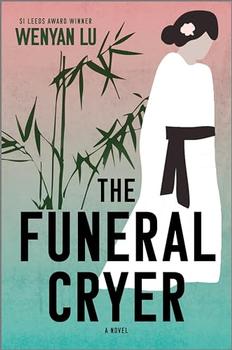
The Funeral Cryer by Wenyan Lu
Debut novelist Wenyan Lu brings us this witty yet profound story about one woman's midlife reawakening in contemporary rural China.
Your guide toexceptional books
BookBrowse seeks out and recommends the best in contemporary fiction and nonfiction—books that not only engage and entertain but also deepen our understanding of ourselves and the world around us.