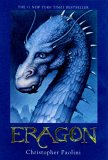
Christopher Paolini, who wrote Eragon when he was 15, talks about his writing, his love of fantasy and what single event triggered his love of reading.
Christopher
Paolini’s abiding love of fantasy and science fiction inspired him to begin
writing his debut novel, Eragon, when he graduated from high school at
15. Now 19, he lives with his family in Paradise Valley, Montana, where he is at
work on Eldest, the next volume in the Inheritance trilogy.
On writing
Writing is the
heart and soul of my being. It is the means through which I bring my stories to
life.
Eragon is
the first novel in the Inheritance trilogy. I started this book when I was
fifteen, after several failed attempts composing other stories. It has been an
incredible learning experience, and not only in writing. The greatest lesson it
taught me was that clear writing is a direct result of clear thinking. Without
one you cannot have the other.
Eragon is
an archetypal hero story, filled with exciting action, dangerous villains, and
fantastic locations. There are dragons and elves, sword fights and unexpected
revelations, and of course, a beautiful maiden who's more than capable of taking
care of herself.
Within the pages
of this book is a whole land, Alagaësia, for you explore. You may take fancy to
Tronjheim, the city-mountain the dwarves have built, or perhaps the mysterious
forest Du Weldenvarden. Either way, there are more than enough marvels here for
even the most accustomed reader of fantasy.
Eragon
is the culmination of several years of intense labor. When I graduated from high
school, I wanted to write a pure, dyed-in-the-wool hero story. So I immediately
plotted out a trilogy based on my ideals of the archetypal maturation plot. In
retrospect, it might not have been the wisest thing—undertaking such a huge
project as my first book—but as they say, you can only learn through doing.
For me, the time
I spend plotting out a novel is more important than the actual writing. If you
don’t have a good story, it’s exceedingly unlikely that a good book can be
pulled from the morass of ideas floating around in your brain. Typing out Eragon
was a rather straightforward affair once I had the plot firmly in hand—though
I did spend some time revising Eragon and Murtagh’s flight to the Varden
because of some fuzzy thinking before reaching that segment.
The real torture
with Eragon came in the editing. I discovered that editing is really
another word for someone ruthlessly tearing apart your work with a big smile,
all the while telling you that it will make the book so much better. And it did,
though it felt like splinters of hot bamboo being driven into my tender
eyeballs.
I’ve always
been fascinated with the sources of most modern fantasy that lie in Teutonic,
Scandinavian, and Old Norse history. This is disregarding a large chunk of
writing devoted to the myths from the British Isles. Because of this, I used Old
Norse as the basis for my Elven language in Eragon, as well as many
names. All the Dwarf and Urgal words, however, are of my own invention.
The character of
Angela the herbalist has an interesting story. I never intended to have anyone
like her in the book, but when Eragon and Brom got to Teirm, I decided to
include a lampoon of my sister, who coincidentally is also named Angela.
Fortunately for my bodily well being, she has an excellent sense of humor. When
Eragon is exploring Teirm, I thought that it would be wonderful to have his
fortune told by a witch in the marketplace. A better idea struck me, and I sent
him straight into Angela’s herb shop. She turned into such an interesting
person, along with Solembum, that I decided to include her in the other two
books of my trilogy.
I hope that Eragon
will leave you with the same sense of wonder that I had while writing it. I do
believe in magic—the magic of stories to give you wonder, awe, and
revelations. Such feelings can come from small things; in a fey vision of fairy
dust swirling in marble moonbeams, or at the end of an epic where a wave of
emotion washes over you, sweeping away the mundane world for a moment. Either
way, I hope that you find something special in Eragon, something from
the other side of the looking glass.
Enjoy the
journey!
Dragon Tales:
An Essay by Christopher Paolini on Becoming a Writer
I have visions of lizards. Not just little rock
lizards, or even something as big as an alligator—no, I see gigantic, majestic
flying dragons. I have visions of them all the time, whether in the shower,
sitting on the couch, or riding in the car. The problem with seeing dragons is
that they tend to take over your mind. And once that happens, you can go a
little crazy. Which is probably why I became a published author at eighteen.
My novel Eragon is a fantasy story, the
first in the trilogy Inheritance. It is the story of a young man who unwittingly
becomes linked with a brilliant-blue dragon, Saphira, and inherits the mantle of
the legendary Dragon Riders, who were once peacemakers in the land. The
tyrannical King Galbatorix, however, has no intention of letting a Rider
challenge his authority, and his dark servants murder Eragon’s family. Bereft
of his home, Eragon and Saphira embark on a quest for vengeance—one that soon
embroils them in an epic battle between good and evil.
It took me about a year to write the first
draft, then another to revise it properly—because I had absolutely no idea
what I was doing in the beginning—and finally, a third year to complete the
editing and prepare the book for publication. In addition to actually writing
the manuscript, for the original publication I also illustrated the book-cover
and drew the interior maps. That was possible only because I originally chose to
publish with print-on-demand, which gives authors more creative freedom to shape
the book’s "package" than they would otherwise have.
How was I able to accomplish all this? Let me
tell you a story:
"I hate to read!" cried the little boy obstinately. "I don’t
see why I have to learn this, I’m never going to use it." That’s what I
said nearly fifteen years ago when Mom was teaching me how to read. Back then I
knew that reading wasn’t part of my world and I knew that it was just a waste
of time. Mom was patient, though, and carefully guided me until I could read
simple words. Then she took me to the library.
It’s easy to write those words now, but they
cannot convey how that single event changed my life. In the library, hidden in
the children’s section, was a series of short mystery novels. Attracted by
their covers, I took one home and read it eagerly. I discovered another world,
peopled with interesting characters facing compelling situations. In fact, I
still remember what the book was about; it involved tomato sauce being mistaken
for blood! From then on, I’ve been in love with the written word. Instead of
toys, my room is filled with books. They’re piled under my bed, on the floor,
by my pillow, and overflow into the rest of the house. When we go into town, the
only places I want to visit are the libraries, bookstores, and occasionally an
art museum.
But it hasn’t stopped there. I enjoy stories so
much that I took the next step and started writing them myself. I read
college-level courses on the subject, teaching myself about everything from plot
structure to descriptions. All of this culminated four years ago, when I sat
down and outlined the plot for a trilogy of books. For weeks, I struggled to
figure out every detail. Then, with everything ready, I began to write.
Don’t let me make this sound too easy,
though. Everything I did was only possible because my parents were dedicated and
loving enough to homeschool my sister and me. My mother, a former Montessori
teacher and author of several children’s books, took the time to instruct us
every day. Aside from textbook lessons, she had us perform many exercises
designed to stimulate our creativity. Even at a young age I enjoyed writing
short stories and poems.
It’s strange; although I had a strong
interest in books and stories, it never occurred to me that I might actually be
a professional writer one day. All I really wanted to do was share the epics
floating around in my head with other people—writing was just something I had
to master in order to make those sagas reality.
Once my first draft of Eragon was
finished, I had to learn how to write properly. That may sound like an oxymoron,
but it’s not. The first step in writing my book was a purely creative phase.
After that, however, came the grind of editing the manuscript into readable
material. It was there that I learned how to produce graceful and grammatical
prose. Doing is the best way to learn, but it helps to read the rules first. In
my case, I wish I had learned more about grammar before writing Eragon—it
would have saved me an enormous amount of time spent fixing easily-avoidable
mistakes throughout a gigantic manuscript!
One of my favorite scenes from the book is when
my hero Eragon dives into a vast lake on his dragon Saphira. It always strikes
me as an enchanting moment. Here is a short excerpt from this section:
The water hit Eragon like an icy wall, knocking out his breath and almost tearing him off Saphira. He held on tightly as she swam to the surface. With three strokes of her feet, she breached it and sent a burst of shimmering water toward the sky. Eragon gasped and shook his hair as Saphira slithered across the lake, using her tail as a rudder.
Ready?
Eragon nodded and took a deep breath, tightening his arms. This time they slid gently under the water. They could see for yards through the unclouded liquid. Saphira twisted and turned in fantastic shapes, slipping through the water like an eel. Eragon felt as if he were riding a sea serpent of legend.
Just as his lungs started to cry for air, Saphira arched her back and pointed her head upward. An explosion of droplets haloed them as she leapt into the air, wings snapping open. With two powerful flaps she gained altitude.
When I graduated from high school at fifteen, I
had planned to go to college. I even applied to Reed College for entrance in
August 2001 and was accepted. However, if I had gone I wouldn’t have been able
to promote Eragon. Now I have the chance to share my book with the rest
of the world, and I hope that everyone can enjoy this story and its many
wonders. All I want to do is help you, the reader, experience the drama and
beauty contained within these pages.
Right now, I’m working full-time on
appearances and book signings for Eragon. It’s an exciting, new
experience, totally different from anything I’ve done before. Also, I’m
writing the screenplay for Eragon and I’ve started the next book in the
trilogy, Eldest, which promises to be even better than the first... .
If all goes well, I’ll still be seeing
dragons for many years.
Reproduced with the permission of the publisher, Random House,
2003
Unless otherwise stated, this interview was conducted at the time the book was first published, and is reproduced with permission of the publisher. This interview may not be reproduced or reprinted without permission in writing from the copyright holder.
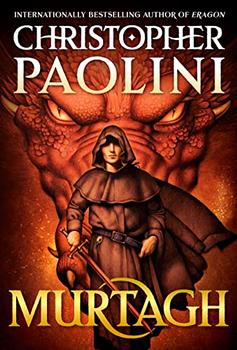
Kevin J. Anderson was born March 27, 1962, and raised in the small town of Oregon, Wisconsin. He wrote his first novel (of three pages) when he was 8, and sold his first story as a senior in high school.
He has written more ...
(more)
If you enjoyed:
Eragon
Try:
Dune: House Harkonnen
by Kevin J. Anderson

Frank Beddor had already had a couple of intense careers, a professional skier (two-time freestyle world champion) and filmmaker (producer of the 1998 hit There’s Something About Mary) before deciding to become an ... (more)
If you enjoyed:
Eldest
Try:
The Looking Glass Wars
by Frank Beddor
We recommend 11 similar authors
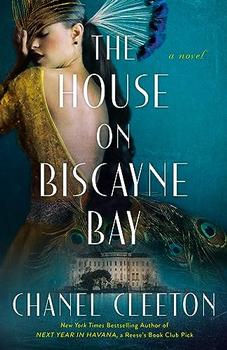
The House on Biscayne Bay
by Chanel Cleeton
As death stalks a gothic mansion in Miami, the lives of two women intertwine as the past and present collide.
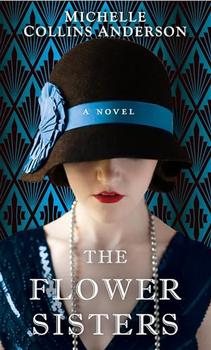
The Flower Sisters
by Michelle Collins Anderson
From the new Fannie Flagg of the Ozarks, a richly-woven story of family, forgiveness, and reinvention.
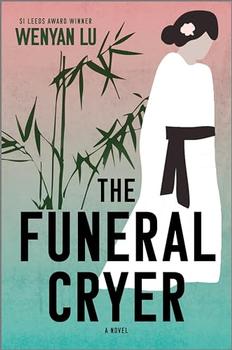
The Funeral Cryer by Wenyan Lu
Debut novelist Wenyan Lu brings us this witty yet profound story about one woman's midlife reawakening in contemporary rural China.
Your guide toexceptional books
BookBrowse seeks out and recommends the best in contemporary fiction and nonfiction—books that not only engage and entertain but also deepen our understanding of ourselves and the world around us.