
-
Your next favorite book
is waiting.
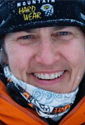
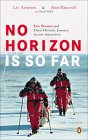
Ann Bancroft and Liv Arnesen discuss their historic trek across the Antarctic, what they hope the three million children who followed their trek via the web will learn from their experience, and much else.
What drove
you to write No Horizon Is So Far?
We wrote it because we believe in the power of
stories. Our Antarctic expedition reinforced this belief as millions
of people followed our trek. We received more than 20,000 messages
from people worldwide through the expedition Website. Many people
wrote about how the expedition inspired them to pursue their own
dreams. We hope that by sharing our story with a broader audience,
even more people will be inspired to consider their goals and dreams
and take action toward achieving them.
Why did you
want to cross Antarctica?
As young girls, we read Alfred Lansing's Endurance,
a recount of Sir Ernest Shackleton's legendary attempt to cross
Antarctica. It stirred our imaginations. Despite being completely
unaware of one another, we both declared the same childhood dream: to
ski across Antarctica. In 1998, we met for the first time,
discovered we were kindred spirits, and prepared to achieve that dream
together. But for us, even more important than crossing Antarctica was
to share the journey with others. Through the Website and satellite
phone calls, we were able to show people the power of passion and
fortitude.
What's the
significance of the book title?
Throughout our Antarctic trek, Ann kept a detailed
journal. In it, she scrawled one of her favorite quotes by Beryl
Markham, who in 1936 made history as the first pilot to fly solo from
east to west across the Atlantic: "I learned to wander. I learned what
every dreaming child needs to know—that no horizon is so far that you
cannot get above it or beyond it." Markham wrote this in her memoir
West With the Night, which was first published in 1942. The quote
provided us with inspiration as we pursued our childhood dream of
crossing Antarctica.
In what way
did you make history when you crossed Antarctica?
On February 11, 2001 we became the first women to
cross Antarctica's landmass, skiing and sailing across the frozen
continent. Prior to our crossing, only one team of two men had
completed the same trek. We're former schoolteachers, and during the
expedition we used the Internet and a satellite phone to communicate
with people in more than 150 countries, including more than three
million schoolchildren. The expedition Website, received more than
twenty-three million hits during the traverse.
What new
discoveries will people who followed the expedition find in this book?
The book is the first time we've publicly recounted
many of the intimate details of our literal and figurative journey—how
the expedition affected us physically and emotionally, how we overcame
extreme obstacles, and how we interacted with one another.
Any
parallels between writing a book and trekking across Antarctica?
Like crossing Antarctica, writing a book requires
great discipline. It was a long process, it required us to put one
foot in front of the other, and it had its highs and lows. In many
respects, writing a book was more difficult than crossing Antarctica
because we're both introverts. And, to help our readers get to know
us, we shared many intimate details about the journey and ourselves.
This was important to us so that the book doesn't simply recount the
expedition, but allows our readers to really get to know us.
Do you
think of yourself as women who crossed the Antarctic or people who
crossed the Antarctic?
We think of ourselves first as people, but we are
acutely aware of the fact that we were writing women into history. We
always wanted to make history in that way, but it was very
bittersweet. It frustrated us that in the year 2001, we were still
breaking barriers for women.
Was your
Antarctic expedition more grueling emotionally or physically? Did you
ever think you wouldn't make it?
The trek was definitely more grueling emotionally than
physically. We knew how to physically train for Antarctica, but we
couldn't have prepared ourselves for the enormous time pressure we
felt. Antarctica, known for its intense winds, had an abnormal lack of
wind that summer. Day after day of no wind was emotionally taxing
because we desperately needed wind to propel our sails so we could
reach our daily mileage goals. And, with every expedition there are
those fleeting moments of doubt; Antarctica was no exception.
How did
your family and friends react when you told them you were going to
attempt to cross Antarctica?
Our friends and families weren't surprised. At this
point in our careers they expect it from us. Instead they ask, "What's
next?"
How did you
prepare physically for your journey across Antarctica?
We had an intense training regime—up to six hours a
day—that some might consider, frankly, a little odd. We cross-country
skied on gravel roads while pulling three car tires harnessed to our
waists. This helped us simulate pulling 250-pound (113-kg) sleds over
rough Antarctic terrain and built our leg and back muscles. Another
unusual thing we did was run up and down steep bluffs while carrying
kitty litter in a backpack, which added the resistance needed to
simulate pulling heavy sleds. We also trained by doing activities we
enjoy that build strength and endurance, and utilize a full range of
body movements, such as running, hiking, and kayaking.
Because we live so far apart, most of our training was
done alone, which helped us mentally prepare for the solitude of
Antarctica. But we did take a couple of training trips together to
test the durability and reliability of our equipment, such as our
windsails, tent, and cooking gear.
Tell us
about the gear you used on your expedition. What did you bring, and how
much did it weigh—and how on earth did you carry it?
Deciding what to pack for our 94-day journey was
mind-boggling, but even more challenging was fitting all of our food,
gear, and technology equipment into a sled that couldn't weigh more
than 250 lbs (113 kg). Creativity was key in order to pack the things
we wanted. For example, Ann cut her toothbrush in half to reduce
weight so she could bring a family photo. We packed a three-person
pop-up tent (just big enough to live in and easy to set up) and used
gear that was "rigged," or easy to construct. We had to carry
everything—our camping gear, cooking supplies (including food), first
aid equipment, a repair kit, navigation, safety, and communications
equipment, skiing and sailing equipment, glacier equipment, and
personal items.
Just how
cold did it get on your journey?
We crossed the continent during the "summer" season
(November through the middle to end of February), so we experienced
twenty-four hours of daylight and temperatures that dipped to -35
degrees Fahrenheit (-37 degrees Celsius), and -70 degrees Fahrenheit
(-57 degrees Celsius) with windchill.
How did the
temperature influence what you wore?
Antarctica's high winds and frigid temperatures drove
all of our decisions related to what we wore. We wore protective
clothing that covered every inch of our bodies, and we either shed or
added layers depending on our level of activity. For example, while
windsailing, we wore mittens instead of gloves, an extra down vest,
another layer of wind clothes, and an extra jacket. During breaks, we
often added a down parka on top of our ski gear. We were also careful
of the sun's rays because the hole in the ozone is above Antarctica;
we wore forty-five level sunblock twenty-four hours a day.
What did
you eat?
To maintain high energy levels and keep warm, we ate
and drank foods that were high in nutrients, calories, and fat. We
also had to melt ice for water. It took about four hours to melt
enough ice for one day and prepare water for two. For breakfast, we
often ate oatmeal with lots of oil. Dinner consisted of a quick
dehydrated dinner, such as fish and potatoes. Because they're high in
calories and fat, we also ate vacuum-packed potato chips and lots of
Norwegian chocolate. Chocolate was the only food left toward the end
of our journey, so we actually got sick of it!
You both
live in chilly places, Ann in Minneapolis and Liv in Norway. Is there
something that draws you to the cold?
We both grew up pursuing cold-weather activities, like
skiing, because of where we live. But neither of us are big fans of
being cold; we've just learned to dress appropriately for it. More
than the cold, we're both drawn to remote, wide-open spaces that, in
Antarctica, are incomparable to anywhere else on earth.
The two of
you have been called "soul sisters." Will you attempt to make history
together again?
Definitely! At forty-eight (Ann) and fifty (Liv), we
share a very unique partnership in the explorer community. We've
remained close friends since the Antarctica expedition and work
extremely well together. We're passionate about pursuing many more
individual and shared dreams. So stay tuned!
What are
the two of you doing now?
We help lead Your Expedition, a thirteen-person company
sparked by our Antarctica expedition. It offers organizations and
individuals inspiration and guidance to succeed in life's expeditions
through multi-media presentations, short films, interactive tools,
workshops, and lectures. The company's offerings are designed around
our stories and include lessons on everything from self-motivation,
perseverance, and ingenuity to personal integrity, goal setting, and
calculated risk. You can find out more about it at
www.yourexpedition.com.
Unless otherwise stated, this interview was conducted at the time the book was first published, and is reproduced with permission of the publisher. This interview may not be reproduced or reprinted without permission in writing from the copyright holder.
Caroline Alexander was born in Florida to British parents and has lived in Europe, Africa, and the Caribbean. She studied philosophy and theology at Oxford as a Rhodes Scholar and has a doctorate in classics from Columbia ... (more)
If you enjoyed:
No Horizon Is So Far
Try:
The Endurance
by Caroline Alexander

Elizabeth Becker is an award winning author and former correspondent for The New York Times who reported from Europe, Asia, and South America. As the Senior Foreign Editor at National Public Radio, she oversaw all the network... (more)
If you enjoyed:
No Horizon Is So Far
Try:
Overbooked
by Elizabeth Becker
We recommend 8 similar authors





The only real blind person at Christmas-time is he who has not Christmas in his heart.
Click Here to find out who said this, as well as discovering other famous literary quotes!

Can you name the title?
Test your book knowledge with our daily trivia challenge!
Your guide toexceptional books
BookBrowse seeks out and recommends the best in contemporary fiction and nonfiction—books that not only engage and entertain but also deepen our understanding of ourselves and the world around us.
