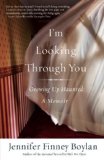
Jennifer Finney Boylan discusses her memoir "I'm Looking Through You", what it means to be haunted and how people can make peace with the 'ghosts' that dwell in their hearts.
I'm Looking Through You takes place in the atmospheric and very palpable
setting of Pennsylvania in what you describe as the Coffin House. In fact,
the house itself is one of your memoir's more prominent characters. Please explain.
I believe that people's characters are shaped, in part, by the houses in
which they live. Surely this house has left its mark on me. For a long time I
think I felt, in spite of my sense of humor, that I was a fundamentally
"haunted" person, and I wondered, for years, how I was going to make peace with
my many ghosts.
The Coffin House - named after its builder, Lemuel Coffin, was a three story
Victorian eyesore, in the suburbs of Philadelphia, on the Main Line. It had a
creepy lightless attic, in which we occasionally heard mysterious footsteps, and
a vast dusty basement, in one corner of which was a sign that said, "BILL HUNT:
LABOROTORY." In the deed to the house, Coffin had said that at no time in the
future could the property be used for "a glue factory, a tavern, a starch
factory, or other offensive purposes." At the time we worried that this meant we
couldn't even legally invite over my grandmother, a woman whose antics - believe
me - were right up there with "starch factory."
In fact, shortly after moving to the house with your family in 1972 you
realized the spirits that inhabited the place weren't the only ghosts beneath
its roof. The Coffin house chronicles a very chaotic time in
your life - your own sense of self, the relationship with your wild, unpredictable
sister, the bond with your mother, and your father's death. How have these
experiences shaped you?
You don't have to believe in ghosts to know what it means to be
"haunted." I think we all have ghosts of one kind or another. When we're young
we're haunted by the people we may become; when we're old we're haunted by the
children we used to be. In the Coffin House, there were all kinds of ghost,
including the Scooby Doo variety—the mysterious floating mist, the old woman who
appeared in the mirror, the entity we called "the conductor" because it walked
around with a baton—but it's the other kind of ghost that haunts me most.
There's the father that I lost. There's the sister that, at a certain point in
her life declared me "dead," making me a ghost to her, and she a ghost to me.
And finally there is the ghost of my younger self. How do we make peace with all
those spirits? In my own experience, I've found that love, and humor, and
forgiveness—the twin blessings of compassion and blarney-- are all pretty
effective at enabling a person to find a sense of solace.
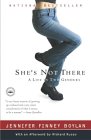
In your bestselling book She's Not There you describe your transition
from Jim - to Jenny. In this book you touch upon issues of gender and
the feminine self. Please elaborate.
In our culture it's become quite routine for gay and lesbian authors to
write about their experiences without having to explain or justify their
sexuality, or their identities. Until recently, trans people weren't so lucky;
if you came out as transgender, people would say, "You're what?"
Now, I'm hoping that we've finally gotten to the point where a transgender
person's story can be told in which those trans issues are part of the
exposition, without it having to be the whole damned story. And so, while the
book focuses on my younger life, which includes, of course, the story of being
trans at such a young age, this is, in the end, not a story primarily about
gender. In the end, I think it's a story in which readers will wholeheartedly
identify with some of the issues I wrestled with then. Like: What does it mean
to live an authentic life? What are the burdens of living with a secret? How is
it possible to love another when your primary sense of self remains hidden and
unknowable?
What does it mean to be haunted? And, do you believe in
Ghosts?
I am not sure I believe in ghosts, although I have seen them with my own
eyes. This isn't so strange, though. A lot of people feel the same way about
transsexuals.
To be haunted means that you've had an experience that you can never quite
forget. For some people it means that they live more in the past than in the
present, or that they can never quite make peace between their former and
present selves. The struggle, I think, is to integrate your life, so that the
whole arc of your experience is one story, not two. For a long time, I worried
that my experience as a trans person meant that I'd never be a woman; I'd only
be an Ex-Man. And while being an Ex-Man is not quite the same as being one of
the X-Men, in my heart I found out that it's less different than I'd hoped. And
so what I've tried to learn is that the person I've been, and the person I've
become, are one person. I think a lot of people try to do that, to make peace
with their many selves. In the end, it's something that's hardly unique to transgendered people. We all do it.
Your mother still lives in the Coffin House. How often do you go
back - and does it or the spirits there hold any power over you?
I confess to feeling a little edgy there; I always have the sense that
something is watching me. It doesn't help that my father's ghost woke up a
friend of mine in the Haunted Room a couple years ago. He was standing there at
the foot of the bed, wearing plaid pants, and smoking a cigarette. Personally, I
think it's a little odd that a ghost would be smoking a cigarette, but what the
heck. Maybe old habits are hard to break.
Music plays an important role throughout your book and in real life.
Tell us more.
I think most authors have to have some kind of musical ear, for language
if nothing else. I play in a not-so-terrible rock and roll band up here in
Maine, and I always played the piano when I was growing up. In some ways, that's
what I had instead of a sex life. I could sit down at those keys after school
and play. What's amazing for me is to sit down at that same piano in the Coffin
House, years later, and play some of those same old tunes; it's like having a
duet with your younger self. The piano, of course, belonged originally to my
father, so when I play it's also like having a conversation with him. Dad used
to order me around when I was playing—like he'd ask me to play a piece by
Schumann, for instance, in ragtime. I don't know, maybe this is all my father's
fault—the most important thing in the world, he felt, was to be open minded, to
be able to see things from a perspective other than your own.
How did you write this book?
Over the years I've found that whenever I talked about experiences with
ghosts, people tell me their own stories, and that it's be sort of like that
moment when people tell you their dreams; you have the sense that you're gaining
access to a very personal, fragile part of people's lives. It turns out that
almost half of Americans believe in ghosts - and the more education you have, the
more likely it is you believe in them. So I wanted to tell some of the ghost
stories from my own life in the Coffin House. As I wrote those tales down,
though, I found that I was more and more drawn to the idea of "haunting" as
metaphor. Everybody's haunted by something, even people who think the paranormal
is stupid.
I should note that, late in the writing of the book, I visited the Coffin
House, the house I grew up in, with a "paranormal investigator," who found all
sorts of spirits beneath the roof. When I told my mother about this, she just
gave me a look and said, "Now Jenny—when you say "paranormal" - do you mean
- other
transsexuals?" She had me there.
You've got a fantastic website that includes your own book trailers, a
blog, video, audio. How did the videos/audio come about?
The "music video" of the book was shot at the house last summer. I wanted to
give readers a chance to see what the house looked like, to hear some music, to
really give readers a sense of the atmosphere of the place The site also
includes a sample chapter from the book as well as a large community message
board; readers who find the site because they're curious about my work have also
found each other, and what we call the "Para / Normal" message board has become
its own self-sustaining community on the web. There's also lots of other goodies
on the site—video of me reading from my work, interviews, some files of me
playing rock and roll, and of course a blog that contains my work from the New York Times as well as a link to the video of my appearance
on "All My Children" last spring (where I played myself for a couple episodes).
I wanted the site to be fun and educational, and to bring people together.
What do you hope readers of I'm Looking Through You will take away from
your book? Do you want them to gain insight into their own family
dynamics/relationships?
I guess the main thing is, I want people to make peace with all their
ghosts; to learn how to integrate their lives so that when they think of their
younger selves and their older selves, they see one person, not two. In my own
case, I found that the best way to find a sense of wholeness in life is by
telling stories. As my mother says, "it's hard to hate anyone whose story you
know." I hope that people will be able to tell their own stories, so that, in
the words of Robert Hunter, "the things we've never seen will seem familiar,"
I know that my life was profoundly changed by the power of love and humor and
forgiveness, and I'm hoping that other people who are seeking to find peace in
their lives can find that too. As we say in Maine, You CAN get there from here.
Unless otherwise stated, this interview was conducted at the time the book was first published, and is reproduced with permission of the publisher. This interview may not be reproduced or reprinted without permission in writing from the copyright holder.

Cris Beam is the author of Transparent and has written for public radio's This American Life, as well as for several national magazines. She has an MFA in writing from Columbia and teaches creative writing at Columbia, NYU, ... (more)
If you enjoyed:
She's Not There
Try:
I Am J
by Cris Beam
Jeffrey Eugenides was born in Detroit, Michigan, in 1960. He graduated magna cum laude from Brown University, and received an M.A. in English and Creative Writing from Stanford University in 1986. His first ... (more)
If you enjoyed:
Long Black Veil
Try:
Middlesex
by Jeffrey Eugenides
We recommend 18 similar authors

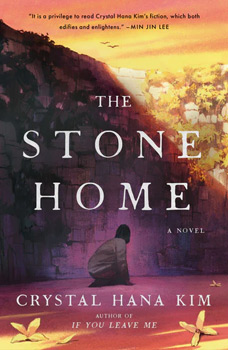
The Stone Home
by Crystal Hana Kim
A moving family drama and coming-of-age story revealing a dark corner of South Korean history.
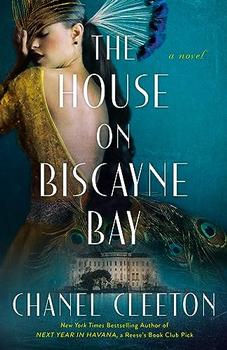
The House on Biscayne Bay
by Chanel Cleeton
As death stalks a gothic mansion in Miami, the lives of two women intertwine as the past and present collide.
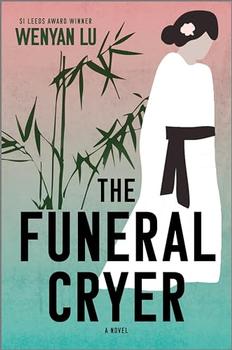
The Funeral Cryer by Wenyan Lu
Debut novelist Wenyan Lu brings us this witty yet profound story about one woman's midlife reawakening in contemporary rural China.
Your guide toexceptional books
BookBrowse seeks out and recommends the best in contemporary fiction and nonfiction—books that not only engage and entertain but also deepen our understanding of ourselves and the world around us.