
-
Your next favorite book
is waiting.
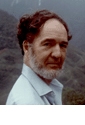
Jared Diamond discusses Collapse and Guns, Germs and Steel in detail, and says that his next book should be complete in about five years. However, when asked what it is about he would only reply 'the world is not yet ready for this story!' Read more....
What inspired you to write this book? Was there a single
"germ" or
eureka! moment? Did you conceive of Collapse and Guns, Germs, and Steel
as companion volumes from the start—or did the idea for Collapse surface
only after Guns was finished?
Ever since I was in my 20s and read Thor Heyerdahl's books about Easter
Island, I became intrigued by the collapse of great societies—as are
millions of other people. That interest has stayed with me over the last
forty years, stimulated by visits to Maya ruins and Anasazi sites and by
reading about other collapsed societies. I did not conceive of Guns,
Germs, and Steel and Collapse as companion volumes from the
start, but I had already written some magazine articles about collapses in
the 1980s, and the idea for Collapse was percolating below the
surface. After finishing Guns, Germs, and Steel, as soon as I came to
think about what would be the subject of my next book, the answer became
obvious: Collapse!
Both Guns, Germs, and Steel and Collapse are huge bestsellers—and yet
both are fairly demanding books. Have you been surprised by their success?
How do you account for it?
Was I surprised by their success?! All authors, including me, have
fantasies of achieving great success. However, by the time that I published
Collapse, I had already published three previous books for the public
to douse my fantasies with the cold water of reality. Hence I really was
surprised that Collapse jumped to near the top of the New York
Times bestseller list within a few days of its release. The explanation
is partly that many people who had already read my previous book Guns,
Germs, and Steel were looking out for my next book, but the other reason
is that the subject of Collapse really grabs people. Most Americans
today are troubled about our future and that of the world, and are concerned
that we might be (or already are) heading downhill.
If you suddenly found yourself with the power and the means to change
one thing in the world today, what would it be? Which country or region
would you choose to focus on?
If I had the power and means to change only one thing of the world today,
that one thing would be my being limited to change only one thing in the
world today: my one change would be to give myself the power to make many
changes. That's because, as I discuss in the last chapter of Collapse,
we face a dozen different major problems, all of which we must succeed in
solving, and any one of which alone could do us in even if we solved the
other eleven.
The scope and the breadth of Collapse is immense, encompassing
history, geography, politics, economics, environmental history, biography,
even baseball. Did you have any models that inspired you—other books you
admire that synthesize strands from so many different disciplines?
In effect, Guns, Germs, and Steel was my model. That is not
because I was consciously trying to imitate Guns, Germs, and Steel.
Instead, that previous book also wrestled with a wide range of problems, and
the experience that I gained through Guns, Germs, and Steel in
addressing them is what I drew on while writing Collapse.
Together Guns, Germs, and Steel and Collapse complete an arc, a vast
circle describing the rise and fall of world civilizations. What's next?
What's left? Do you plan to strike out in an entirely new direction?
Yes, there is something next, another big book about another big question
of human history and human societies. I hope to complete that new book in
about another five years. But, as Conan Doyle let Sherlock Holmes explain to
Dr. Watson in alluding to the mystery of the giant rat of Sumatra, "The
world is not yet ready for this story."
Some critics have compared Collapse with Paul Ehrlich's The Population
Bomb, pointing out that Ehrlich's predictions have not come true. How would
you answer the criticism that you are being too dire? How politically
motivated do you think your critics are? Do you think some critics are
indulging in the sort of willed blindness or wishful thinking that
contributed to the collapse of prior civilizations?
Many of Paul Ehrlich's predictions have come true, but his critics cite
only some that did not come true. All of us know that we live our personal
lives in an uncertain world, where we have to make the best predictions that
we can, in full knowledge that some of our best guesses will prove wrong. It
is impossible to live without continually making best guesses about the
future. Any critic who cites only a wrong prediction by Paul Ehrlich and not
his correct predictions, or who fails to cite the incorrect predictions of
Ehrlich's critics, is employing bad reasoning.
Have any of the criticisms of the book caused you to rethink aspects
of your argument?
Details, yes; main thrusts of my argument, no.
You write of the Norse in Greenland, "to them ... it was out of the
question to invest less in churches, to imitate or intermarry with the
Inuit, and thereby to face an eternity in Hell just in order to survive
another winter on Earth" (p. 247). Yet even today, religion guides the lives
and choices of many Americans. There are many who prefer, metaphorically if
not literally, to starve rather than face an eternity in Hell. Is this
likely to become as serious a problem for us as it was for the Norse in
Greenland? Do you think there is a fundamental clash between religious
values and material survival running through Western civilizations?
This already is a serious problem for us. But that's not to say that
religion is a negative force and an obstacle to be survived. Religion, like
other powerful human motivations and values, can be a force for either the
good or the bad.
In your discussion of Haiti and the Dominican Republic you dismiss the
usefulness of "environmental determinism" as an explanation of why these
countries have diverged so sharply. What exactly is environmental
determinism and who espouses it? How does your outlook depart from this
school of thought?
Environmental determinism in the strict sense is not a view that any
sensible person espouses today. Instead, historians who discuss
environmental influences on history at all are often caricatured by critics
as "environmental determinists," supposedly meaning someone who believes
that the environment strictly determines human history and that human
choices count for nothing. This caricature is counterproductive. Of course
the influence of the environment on human history is neither negligible nor
all-encompassing.
You make a distinction between top-down and bottom-up approaches to
environmental problems and discuss how both have worked, sometimes alone,
sometimes together, in past cultures. What about our own society? Do you
think our progress in environmental issues, to the extent we have made any,
is essentially bottom up, top down, or a combination of the two?
It's obvious that our progress in resolving environmental issues has been
a mixture of bottom-up and top-down. Things that each of us do as
individuals (recycling, saving water, buying a more fuel-efficient car),
plus efforts of local groups of people such as the Teller Wildlife Refuge in
Montana's Bitterroot Valley that I discuss in Chapter 1, are examples of
bottom-up progress. The improvement in air quality in the United States in
the last thirty years because of federal government standards and policies
is an example of top-down progress.
You write about your fondness and sense of connection to Australia,
New Guinea, and Montana. Did you visit all of the regions discussed in the
book? How many years did you spend traveling and researching? Of all the
places you visited in the course of your research, which moved you the most?
Which frightened you the most?
I visited most of the regions: all except the Pitcairn Islands, Rwanda,
and China. I worked on this book for six years and worked especially
intensely on it for the last two and a half years. All of the places that I
visited moved me, and all of them frightened me.
Unless otherwise stated, this interview was conducted at the time the book was first published, and is reproduced with permission of the publisher. This interview may not be reproduced or reprinted without permission in writing from the copyright holder.


Poet, essayist, and naturalist, Diane Ackerman is the author of many highly acclaimed works of nonfiction, including A Natural History of the Senses -- a book beloved by readers all over the world and the volumes Deep Play, A... (more)
If you enjoyed:
The World Until Yesterday
Try:
The Human Age
by Diane Ackerman

David Bellos is the director of the Program in Translation and Intercultural Communication at Princeton University, where he is also a professor of French and comparative literature. He has won many awards for his ... (more)
If you enjoyed:
The World Until Yesterday
Try:
Is That a Fish in Your Ear?
by David Bellos
We recommend 30 similar authors





From the moment I picked your book up...
Click Here to find out who said this, as well as discovering other famous literary quotes!

Can you name the title?
Test your book knowledge with our daily trivia challenge!
Your guide toexceptional books
BookBrowse seeks out and recommends the best in contemporary fiction and nonfiction—books that not only engage and entertain but also deepen our understanding of ourselves and the world around us.
