
-
Your next favorite book
is waiting.
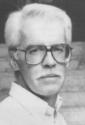
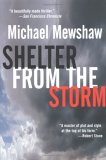
Michael Mewshaw shares his obsession with the wolf children of Midnapore, India, how other writing mediums influence his fiction and his fascination with the human situation in Central Asia.
Why did you choose Central Asia as the setting for Shelter from
the Storm?
I traveled to Central Asia and finished Shelter from the
Storm long before the events of September 11 and the attention that they
focused on that part of the world. The area interested me as a setting for a
variety of reasons. It's a dramatic landscape of mountains, desert, and rolling
steppes. Its architecture, especially what remains of its sixteenth century
splendor, is some of the most impressive I've ever seen. But it was the human
situation that fascinated me most, the collision of cultures, religions,
nations, and tribes. What would it be like, I wondered, to live where every
belief system had failed, where the local currency was worthless, the police and
army offered no protection, and there was no chance of escape? In short, what
was it like to be human in inhuman circumstances?
What interests you about the figure of the wolf-boy? Why did you
decide to make him a central character in the story?
More than twenty years ago I reviewed a book about the wolf
children of Midnapore, India. The subject interested me. No, I should say it
obsessed me, and I started reading the scientific literature and case studies.
So much of what is written about alleged feral children actually reveals more
about the observers and their presumptions than it does about the kids under
examination. This seemed to me to offer an intriguing fictional opportunity. By
moving a wild child to the center of a narrative, I could reveal the nature of
the characters around him by dramatizing their reactions to the boy. Some want
to study him. Some want to free him. Some want to kill him. Others want to
convert him. In the end, he remains the same, but everything and everybody
around him changes.
In your forthcoming memoir, Do I Owe You Something?, you
discuss writers who have been important for you, like William Styron and Graham
Greene. How have they influenced your development as a novelist? In what ways
does Shelter from the Storm bear their imprint?
My self-serving answer would be that the best way to learn how
Styron, Greene, Paul Bowles, Gore Vidal, and a host of other writers have
influenced me is to read the memoir, which will be published in the spring of
2003. In general I would say that any writer eventually comes to know other
writers, and especially when one is young one can't help being influenced. But
the greatest influence of older writers remains their published work, their
literary accomplishments, not what they say or do at cocktail parties.
How do you see your own work in relation to the thriller
tradition?
This question is related to the one previous, specifically to
Graham Greene, who showed that it's possible to use the thriller tradition for
serious purposes; a novel of action can also be a novel of ideas and character.
Having written five of my nine novels in what might be construed as the thriller
tradition, I would stress that I've tried to expand the genre, infusing it with
political, religious, and psychological insights.
How has your other writing—journalism, travel writing,
reviewing—influenced your fiction?
Fiction writing is an isolated occupation. To escape my desk,
I've often turned my hand to other kinds of writing. The hope is not just to get
up off the seat of my pants but to get out into the world where I'll meet
people, visit places, and confront situations that will in turn feed my fiction.
Travel writing, tennis reporting, and other forms of journalism have all served
this purpose for me, as I think anyone who has looked at the subject of my
novels will agree. A good case in point, Shelter from the Storm. I went
to Central Asia first to cover a tennis tournament in Tashkent. I returned the
next year to write travel articles on Samarkand and Bukhara for The New York
Times. Only afterward did I decide to write a novel set there.
You directed the creative writing program at the University of
Texas at Austin for a number of years. Was that a good experience for you?
What's your opinion of creative writing programs generally? What advice would
you give to young writers?
During the seventies, Austin was a lively town, full of amiable
people. My job at the University of Texas was a good one, as these things go,
and it paid the bills and allowed me free time to write. In the end, though, I
tired of the administrative duties and wanted to concentrate on my own fiction.
Still, I respect what teachers of creative writing attempt to do, and generally
I agree that creative writing programs can be appropriate training grounds for
young writers. Of course not everybody emerges from them a professional writer
or a published one. But as I used to point out at the University of Texas, not
every player on the Longhorn football team became a professional either.
What is your sense of the situation in Central Asia and the
Middle East now?
I cannot pretend to be a geopolitical expert and would have
little faith in anyone who made sweeping predictions about the situation in
Central Asia and the Middle East. But on the strictly personal level, I would
observe that the problems in both areas aren't likely to be solved unless or
until Americans come to a deeper understanding of Islam.
Unless otherwise stated, this interview was conducted at the time the book was first published, and is reproduced with permission of the publisher. This interview may not be reproduced or reprinted without permission in writing from the copyright holder.
Dan Fesperman first began writing about dangerous and mysterious people and places as a journalist, a newspaper career that culminated in his years as a foreign correspondent for the Baltimore Sun. Reporting from Europe and ... (more)
If you enjoyed:
Shelter From The Storm
Try:
The Warlord's Son
by Dan Fesperman

Alan Furst, widely recognized as the master of the historical spy novel, is the author of A Hero of France, Midnight in Europe, Mission to Paris, and many other bestsellers. Born in New York, he lived for many years in Paris,... (more)
If you enjoyed:
Shelter From The Storm
Try:
Blood of Victory
by Alan Furst
We recommend 4 similar authors





Idealism increases in direct proportion to one's distance from the problem.
Click Here to find out who said this, as well as discovering other famous literary quotes!

Can you name the title?
Test your book knowledge with our daily trivia challenge!
Your guide toexceptional books
BookBrowse seeks out and recommends the best in contemporary fiction and nonfiction—books that not only engage and entertain but also deepen our understanding of ourselves and the world around us.
