
-
Your next favorite book
is waiting.
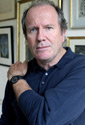
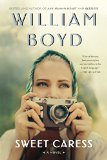
Sara Nelson talks with William Boyd about Sweet Caress, why he enjoys writing "full-life novels", and how he considers this book to be the third panel of a tryptich: New Confessions, Any Human Heart and Sweet Caress
One of the reasons I knew that my best friend Jessie was going to be my best friend, and that Sam was going to be my husband was because early on in both relationships, we shared a secret: we were both crazy about the British author William Boyd. Specifically, in the case of Sam, we bonded over Boyd's 2001 novel, Any Human Heart, the story of the 20th century through the eyes of an ordinary British man living through it.
So when Sweet Caress landed on my desk, and its editor told me that Boyd's latest novel was in "Any Human Heart" territory, I was especially motivated to read it. Like Any Human Heart – and like another of Boyd's great novels, The New Confessions – it is the story of a time and many places, as experienced by a specific character, in this case a female photographer named Amory Clay. Born in the first decade of the 20th century, Amory – whose father named her that because he'd really wanted a son -- grows up to be independent-minded and ambitious. She travels the world – from 1930s Germany to New York to the battlefields of WWII and ultimately Viet Nam – living her life, telling stories through her photos. An added element to this otherwise traditionally structured novel is the fact that Boyd illustrates his text with photos of characters and the documentable settings in which they find themselves. I asked Boyd about this and other things in a delightful, free ranging call to his home in London. Some of our conversation:
What was your thinking behind writing about a photographer?
I had the idea that Amory would be a photographer because in my research and study of photographers, I became aware that women photographers had a very egalitarian co existence with their male counterparts, pre WWI. It's a very unusual profession in the sense that there is no glass ceiling, that there were professional women photographers flourishing before the first World War and particularly between the wars. The lives of these women photographers, were pretty remarkable, in their roller coaster rackety nature. So it seemed to me that by choosing that profession, I could give her a kind of independence and independent spirit, and as a woman photographer she wouldn't be tied to the traditional roles and jobs women had in the early 20th century. She'd have a freedom to rove.
So which came first, the photos or the story?
I knew the story of Amory's life, and I knew where I wanted to take her and what I wanted her to do. It was the narrative that by and large organized or focused the search for the photographs. For example, the Fascist marches in the east end of London, I wanted to have her to witness them and participate in them..., so I went out to search for photographs of those marches....It was in that order, with the odd exception of when I came across a particular photograph and I thought this is perfect. I'll just give the narrative a bit of a swerve so I can use it.
This is one of what you call your "whole life" novels; like Any Human Heart and The New Confessions, it follows a character basically from birth to death. Is that your preferred way to write?
Yes, well, it's sort of an enterprise I've been working on since 1987, but with no program in mind. In a way you might say Sweet Caress is the third panel of a tryptich: New Confessions, Any Human Heart and now Sweet Caress, full-life novels. Most novels are a slice of life, but not many novels are cradle to grave. Something about that enterprise that appeals to me: it has the effect on a reader of giving them all the information about the central character; for the reader it kind of breeds a special relationship. In all these three novels, the reader-character relationship seems all the more intense You know the whole life, you've followed the character through infancy, childhood, adolescence, adulthood, et etc. So by the time you reach the end of their life, your acquaintance with the character is incredibly thorough. And the catharsis is more poignant, more telling.
Is it difficult to write from the point of view of a woman, especially a woman from a different time?
I did it for the first time in 1990 with my novel Brazzaville Beach which is written from the point of a view of a young woman scientist. Restless, too, my spy novel, is a woman's point of view. When I first started [doing this] I had a certain measure of trepidation, but my wife Susan read it and said, "No, this works." And then a lot of the first reviews were by women who said, "She comes off the page as a real woman and not some male fantasy version of a woman. The way I achieve it is by forgetting all questions of gender and sexual politics and received wisdom about the difference between men and women and just concentrate entirely on character and personality and all decisions that might seem to be gender orientated are solved by answering the question on a personality level: How would somebody who's like this react in this situation? And that would be true the other way around as well – a woman writing from a man's point of view. Just think about nature and personality and character and your narrative or dilemma will be resolved with plausibility and authenticity.
This interview was first published on Amazon's Omnivoracious, and is reproduced with permission of the publisher, Bloomsbury Publishing
Unless otherwise stated, this interview was conducted at the time the book was first published, and is reproduced with permission of the publisher. This interview may not be reproduced or reprinted without permission in writing from the copyright holder.


John Banville, the author of seventeen novels, has been the recipient of the Man Booker Prize, the James Tait Black Memorial Prize, the Guardian Fiction Award, the Franz Kafka Prize, a Lannan Literary Award for Fiction, and ... (more)
If you enjoyed:
Any Human Heart
Try:
The Sea
by John Banville
Saul Bellow was born in Lachine, Quebec on June 10, 1915, and was raised in Chicago. He attended the University of Chicago, received his Bachelor's degree from Northwestern University in 1937, with honors in sociology and ... (more)
If you enjoyed:
Any Human Heart
Try:
Ravelstein
by Saul Bellow
We recommend 9 similar authors
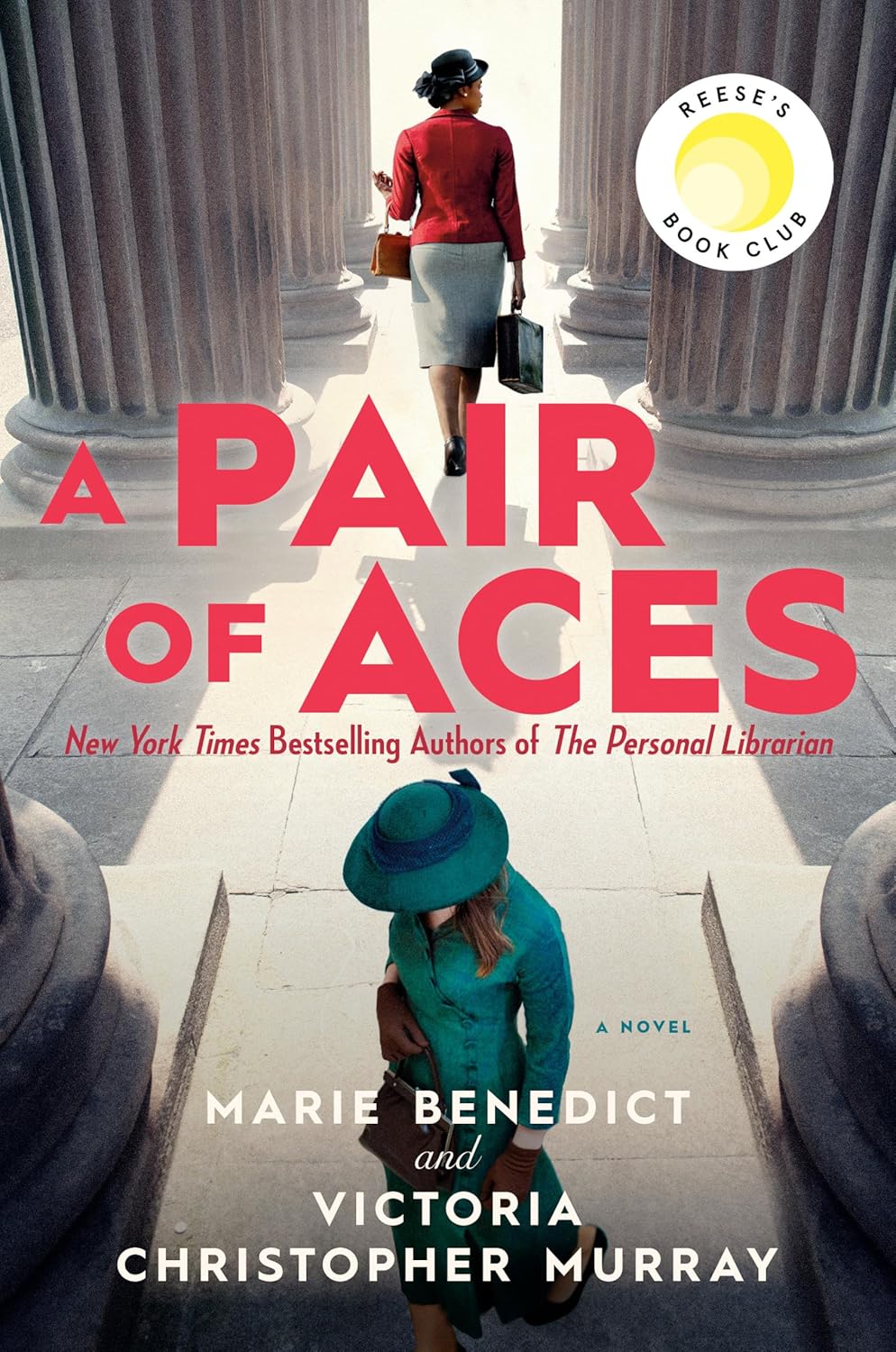


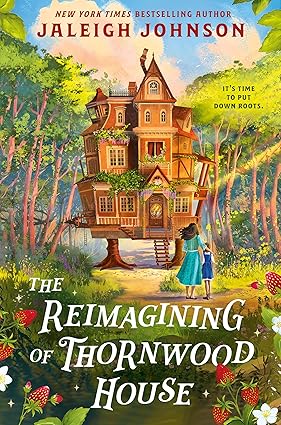
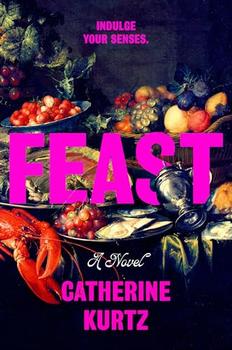

We've heard that a million monkeys at a million keyboards could produce the complete works of Shakespeare...
Click Here to find out who said this, as well as discovering other famous literary quotes!

Can you name the title?
Test your book knowledge with our daily trivia challenge!
Your guide toexceptional books
BookBrowse seeks out and recommends the best in contemporary fiction and nonfiction—books that not only engage and entertain but also deepen our understanding of ourselves and the world around us.
