
-
Your next favorite book
is waiting.
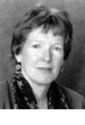
Margaret MacMillan discusses Dangerous Games: The Uses and Abuses of History, reviewing important themes such as the importance of history in our culture and lives, and how leaders use - and abuse - history to further their own agendas.
In your book, you make a compelling case for the importance of history in our daily lives. When did you realize that people made use of history as a tool?
There was no one Aha! Moment, but I really started to think about it in the 1990s when I was teaching a course on identities—what goes into making them—and it was clear that history was a key factor. Individuals and groups told themselves stories about where they and their ancestors had come from, including, for example, the great moments in their past and their progress toward the present. The stories were not always wrong, but they often included myths or chose facts very selectively. One of the main things we looked at was nationalism and the ways in which historians had helped to create the sense of a nation that was much bigger than its individual members, which predated them and which would endure long after they were dead. At the time, we had a terrifying example of the abuse of history right in front of us in the Balkans, where Yugoslavia was falling apart and all sides were using the past to stir up their own people against the others.
Dangerous Games draws much attention to the politicians, governments, and other entities that misuse history to bolster their specific messages. Are there any examples of people or groups that have consistently used history in an impartial way, and is that even possible?
If you are using history to do something else, then you are probably not going to be impartial. But, yes, it is possible to have impartial history looks at the past from different angles. A good history of the relations between France and Germany, for example, would not argue that one country was always right and the other always wrong; rather it would try to understand and explain. And good history does not ignore evidence that does not fit a particular theory or interpretation. Historians—if they are being true to their profession—can write objective history, and they do. It's hard to find examples of groups who are consistent in taking a detached view of their own past (human beings are not known for being consistent), but I would say that many countries look at their own pasts without flinching from the seamier side. It seems to happen more in democracies where varieties of viewpoints are expected and even welcomed. So Germans grapple with Nazism; Americans look at slavery; and the British explore the dark side of their empire.
You state that we should handle history with care, as even those individuals who do not mean to abuse it may do so inadvertently. How do you consciously avoid misusing history, and what advice do you have for others?
When we use history to help us think about the present and plan for the future, we should not treat it as a simple blueprint to be followed that will have predictable results. We should be aware that past events often have complex causes and unforeseen consequences. The best way to use history is as a guide to understanding and as an aid to thinking. Knowing something about the past of others helps us to know them better, and a general knowledge of history can alert us to the range of possibilities inherent in human affairs.
How do you think the general American public currently views history?
The American public, like most publics in my view, probably does not know enough history. One of the sad things that has happened in recent years is that the teaching of history in schools has been so watered down that students can graduate without knowing much about their own countries much less the world. I often found that my students reacted with surprise and interest to the fact that there had been two world wars and not just the more recent one.
In your book, you speak of people, particularly governments, that have made apologies for their histories, such as the German government to Israel, and the Australian government to the Aboriginal population. Are there any governments or other entities in the contemporary world that you think should be apologizing in a similar way, yet are not acknowledging their histories?
Turkey does not want to admit that dreadful things happened to Armenians during the First World War and Israel does not want to accept that an injustice was done to the Palestinians when Israel was established in 1948. Austria and Italy have both been reluctant and slow to deal with their fascist pasts. The Russian government is drawing back from accepting Stalin's crimes. The Chinese government has never dealt with Mao's ghastly mistakes such as the Great Leap Forward and the Cultural Revolution.
In what ways can our society become more aware of the importance of history? You cite several examples of individuals—business leaders and military leaders—consistently use history to predict results. In your opinion, what other individuals or groups might find it useful to consciously use history as a model?
It has to start in the schools. Students need to get a sense of the chronology and also of the ways in which the past can be interpreted in different ways. On the predicting of results, I am a skeptic. I can see why business schools and the military study the past to avoid mistakes in the future and I think we can all do the same—but what we ought not to do is assume that we can know for sure what will happen. Studying the past is like watching road signs: they can tell you where you are likely to encounter a change in the road or danger.
Many of your examples of leaders who have abused history, or leaders who have used it well, come from the middle of the twentieth century. How long do you think is a reasonable period to wait before current and recent events become history? When will we be able to use or misuse the events of the beginning of the twenty-first century as history?
Oh, that is a tricky one. Most historians regard the present and the recent past as current affairs and would argue that history only starts to be possible when we get enough perspective to pick out the key developments or events (which is not easy to do when you are living through them) and when the record is reasonably full. That means, for example, when government documents have been released, key participants have spoken frankly, and detailed studies have been done to obtain, for instance, reliable facts and figures. While most historians would not go so far as the Chinese Communist leader Zhou Enlai who said it was too soon to tell whether the French Revolution of 1789 was significant, I think we would agree that we won't be able to write reliable and accurate histories of the first part of the twenty-first century until the 2030s at the earliest.
Unless otherwise stated, this interview was conducted at the time the book was first published, and is reproduced with permission of the publisher. This interview may not be reproduced or reprinted without permission in writing from the copyright holder.

John M. Barry is a prize-winning and New York Times best-selling author whose books have won more than twenty awards.
In 2005 the National Academies of Science named The Great Influenza, a study of the 1918 pandemic, the ...
(more)
If you enjoyed:
Paris 1919
Try:
The Great Influenza
by John M. Barry

Born in France on November 30 1907, historian Jacques Barzun came to the United States in 1920. After graduating from Columbia College, he joined the faculty of the university, becoming Seth Low Professor of History and, for ... (more)
If you enjoyed:
Dangerous Games
Try:
From Dawn To Decadence
by Jacques Barzun
We recommend 13 similar authors







Don't join the book burners. Don't think you are going to conceal faults by concealing evidence that they ever ...
Click Here to find out who said this, as well as discovering other famous literary quotes!

Can you name the title?
Test your book knowledge with our daily trivia challenge!
Your guide toexceptional books
BookBrowse seeks out and recommends the best in contemporary fiction and nonfiction—books that not only engage and entertain but also deepen our understanding of ourselves and the world around us.
