In two separate pieces, Michel Faber's editor talks about The Book of Strange New Things (2014) and Faber talks about the book in a short video. In addition, in a Q&A from 2002 Faber discusses the challenges of writing The Crimson Petal and The White
In two separate pieces, Michel Faber's editor talks about The Book of Strange New Things (2014) and Faber talks about the book in a short video. In addition, in a Q&A from 2002 Faber discusses the challenges of writing The Crimson Petal and The White
Zachary Wagman on Michel Faber: A Boundless Imagination
Michel Faber has proven to be an electic and visionary writer. He has tackled Victorian England in The Crimson Petal and the White, followed an extraterrestrial with bad intentions through Scotland in Under The Skin and retold the Prometheus myth in The Fire Gospel. The Book of Strange New Things is Faber's most ambitious novel yet. It tells the story of Peter, a missionary to the planet Oasis, and his wife, Bea, back on Earth as the planet experiences catastrophic events. Shelf Awareness interviewed Hogarth/Crown senior editor Zachary Wagman about The Book of Strange New Things and his experience of working with Faber.
How long have you been working with Michel Faber as an editor? What was it about him and his writing that piqued your interest?
The Book of Strange New Things is the first book that we've worked on with Michel. I was aware of him, of course, from the phenomenal success of The Crimson Petal and the White. Because of that book, his reputation as an inventive and fluid storyteller who has a unique command of language preceded him. We started reading The Book of Strange New Things with that in mind and we weren't disappointed. It's such an ambitious premise--a pastor travels to another planet, but tries to stay connected to his wife on Earth--but he handles it so subtly, and with great emotion.
If you were trying to sell Michel Faber to a reader who has never read him before, what you say?
We would say you're in for a treat! He's a tremendously gifted writer. He's confident, methodical and utterly fearless. From the strange and thrilling Under the Skin to the sweeping bravado of The Crimson Petal and the White to haunting short stories and provocative essays, he's an innovative, curious and deeply creative writer.
Each book Faber writes is so different than the last. What are the rewards and challenges of working with him?
Michel is a thoughtful and serious writer, who wholly inhabits the worlds he creates--his imagination is boundless. The reward for any editor working with him is to be able to live in those worlds alongside him.
One essential aspect of The Book of Strange New Things is the love story between Peter and Bea. Because of the distance, their relationship is reduced to computer text exchanges. Do you think this was Michel's commentary on our own increasingly tech-centered communications in our own lives?
That's interesting. Peter and Bea's correspondence is so crucial to Peter's experience on Oasis--without it, he might have totally lost himself. So, actually, technology is extremely important in this case. It allows Peter to maintain his humanity, to remind him of the love he has at home. I can't speak for Michel's intentions, but we read it as a sort of tribute to how technology can keep us connected to those far away from us.
The novel works on so many levels--science fiction, love story, societal commentary. From a publisher's standpoint, does the sheer scope of the book present any challenges?
All books present their own set of challenges, but the scope of The Book of Strange New Things is, if anything, an asset to its publication. After The Crimson Petal and the White, readers know that Michel Faber writes long, immersive books. While The Book of Strange New Things is not set in Victorian England, it sets you firmly in its version of the future. Michel's great talent is in how he brings his novels to life, and this book is no exception.
The Oasans are a fully realized species, as is ecosystem of their planet. How did Faber develop the science fiction aspects of the book?
It seemed to me that Michel wanted to create a new world that would thoroughly disorient Peter, but also serve as a stark contrast to Earth and what Bea has to endure. I knew Michel was well versed in science fiction--his novel Under the Skin has SF elements as well--so this wasn't very surprising. However, we were pleasantly surprised by his acknowledgements, where he thanked the writers of Marvel Comics in the 1960s, like Steve Ditko and Jack Kirby. They were incredibly influential on him and their world-building influenced how he envisioned Oasis.
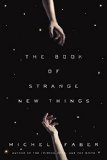
The cover of The Book of Strange New Things made its debut on a giant banner at BookExpo this year, along with ARCs featuring gilded edges that resemble a Bible. How did you decide on a direction for the artwork?
Our cover director, Chris Brand, started by looking for religious iconography to try and play off of. One of the things that inspired him was Michelangelo's Creation of Adam--the cover became a sort of cosmic version of that. The hands reaching out across stars speak to Peter's journey, but they also mirror the distance growing between him and Bea in their relationship.
This interview by Donald Powell first ran in Shelf Awareness in August 2014. It is reproduced with the permission of Shelf Awareness and Hogarth Books.
Interview with Michel Faber (2002)
The Crimson Petal and the White seems to begin with you, the
writer, personally addressing the reader and then leading him or her into the
intimate details of characters and events. The entire effect is somewhat like
voyeurism—in effect gazing into a crystal ball to view another's secrets. Did
using this technique help with character development as you, too, stepped back
to view their lives?
It's actually not so easy to figure out whose voice it is that's addressing
you at the start—whether it's the author, or a lady of the night, or the book
itself. Whatever it is, it lures you into the world of 1875 until you're in too
deep to pull out, and then leaves you to fend for yourself. I use the metaphor
of a novel being like a prostitute, promising the reader a good time, promising
intimacy and companionship. Ironically, even though you feel at first that
you're being strung along by this beguiling voice, you do end up getting
everything it promised you. And more, I hope.
I can't agree that the effect is one of 'voyeurism'. Voyeurism implies that
you're watching something from a safe distance, with no emotional involvement
required of you. The Crimson Petal is a very moral and humane book, not
in the least flippant or insincere. Voyeurism is spiritually cold and I try my
best to give all my work genuine warmth.
Q: Your written depictions of the environments, clothing, and social
activities of the people in this world are incredibly visual—graphic even. And
you conducted a great deal of research to achieve this. What sources of
historical material did you find most useful in creating the visual descriptions
of this era?
We're very lucky that the Victorian era was the first age of photography,
because photographs capture so much, including things that the photographer
never meant to capture. Victorian painting has also helped me enormously, plus
of course I've read hundreds of books. In the later rewrites of Petal, I
joined an online forum called VICTORIA, which was superbly helpful. In the end,
though, the Victorian London in my story is a vision from my imagination, in the
same way that the Scottish highlands in my earlier novel, Under The Skin, were a
personal vision. Every writer uses the "real" world as raw material
for creating his or her own universe.
Please explain the underlying meaning of the title of the book, The
Crimson Petal and the White.
It comes from a Tennyson poem that begins "Now sleeps the crimson
petal, now the white". But the poem has no particular relevance to my
story. I like the complexity of associations suggested by crimson and white—Sugar
is a "scarlet woman" but she is mistaken for an angel by Agnes Rackham,
and is also desperate to move into a new life that's respectable and innocent.
Agnes is, by birth and inclination, pure white, but is troubled by the
phenomenon of blood. William uses and destroys petals of both colours in his
profession of perfume manufacture.
The ending of this wonderfully written book is both happy and unhappy.
Does this add more reality to the story than a traditional happy ending or an
unexpected tragedy?
In its early versions, the story ended tragically. I was manipulating the
characters like prisoners, knowing full well what their fate would be. As I've
grown older I've come to the conclusion that life doesn't have to be a
deterministic nightmare. I gave Sugar a chance to rescue herself and she took
it.
In The Crimson Petal and the White, you generate remarkable empathy
between reader and character—and not just the main characters—Sugar's
prostitute friends, William's carefree writer friends, the maids, the carriage
drivers, the local elite, the pious. All can be pitied, admired, or at the very
least understood. The effect seems to inspire open-armed acceptance of all
creatures. And yet few of the book's characters feel this same "social
acceptance." Is this type of acceptance only possible in a book, or can it
exist outside of "fiction?"
I don't know. One of the most absurd tragedies about us as a species is that
each of us is convinced we're misunderstood, alone, a misfit. There doesn't seem
to be anybody in the world who feels they're what a standard-issue human being
ought to be. Literature reminds us of this paradox—our specialness and our
commonality.
Interview reproduced by permission of the publisher, Harcourt Books.
Unless otherwise stated, this interview was conducted at the time the book was first published, and is reproduced with permission of the publisher. This interview may not be reproduced or reprinted without permission in writing from the copyright holder.


Margaret Atwood was born in 1939 in Ottawa, and grew up in northern Ontario and Quebec, and in Toronto. She received her undergraduate degree from Victoria College at the University of Toronto and her master's degree ... (more)
If you enjoyed:
The Book of Strange New Things
Try:
Stone Mattress
by Margaret Atwood
Jillian Cantor has a BA in English from Penn State University and an MFA from the University of Arizona. She is the USA Today and internationally bestselling author of eleven novels for teens and adults, which have been ... (more)
If you enjoyed:
The Book of Strange New Things
Try:
The Hours Count
by Jillian Cantor
We recommend 25 similar authors


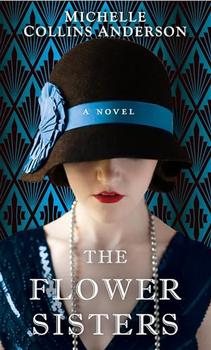
The Flower Sisters
by Michelle Collins Anderson
From the new Fannie Flagg of the Ozarks, a richly-woven story of family, forgiveness, and reinvention.

The Stone Home
by Crystal Hana Kim
A moving family drama and coming-of-age story revealing a dark corner of South Korean history.
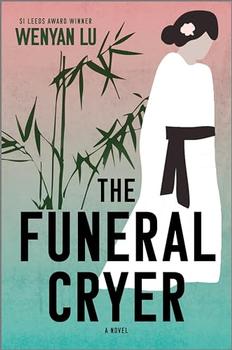
The Funeral Cryer by Wenyan Lu
Debut novelist Wenyan Lu brings us this witty yet profound story about one woman's midlife reawakening in contemporary rural China.
Your guide toexceptional books
BookBrowse seeks out and recommends the best in contemporary fiction and nonfiction—books that not only engage and entertain but also deepen our understanding of ourselves and the world around us.