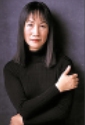
Tess Gerritsen talks about doctors, nightmares, food and the criminal mind
When Tess Gerritsen arrived at the Istanbul Book Fair last month, there were hundreds of fans lined up to greet her, plus an entourage of security guards. That was just for openers. The physician-turned-bestselling author, whose crime novels have been translated into some three dozen languages, is no stranger to fame. "Now I sort of understand what it's like to be a rock star," she says. "It was sort of overwhelming."
Back home in quiet, scenic Camden, Gerritsen reflects on the Rizzoli & Isles series that has propelled her career to Turkey and beyond, and from the page to the small screen. Along with her books, TNT's Rizzoli & Isles has made the duo of homicide detective Jane Rizzoli and medical examiner Maura Isles into household names – a sort of Cagney & Lacey for the new millennium.
In Gerritsen's new thriller, Die Again, Jane and Maura piece together links between the grisly murder of a big game hunter in Boston and the disappearance, years earlier, of a tourist group on safari. As usual, Gerritsen has created a nail-biter that's not for the squeamish, although she herself is unfazed by the graphic details that come with the territory. As she might say, it's all in a day's work.
Gerritsen spoke recently about doctors, nightmares, food and the criminal mind. This interview has been edited for length and clarity.
Q: Your books are available on several continents, which suggests there are universal elements at work.
A: I think people just find it so cool to see two women working together, being really competent at their jobs and being such good friends.
When I wrote the first book in the series, The Surgeon, it was supposed to be a standalone. Jane Rizzoli was a secondary character who was, in my mind, going to die at the end of the book. So she started off being really prickly and a little bitchy. As I was writing the story, I understood the character more and I began to like her because I saw an aspect of her that was very close to me. She's an outsider – she's not gorgeous, she doesn't really belong in this all-male homicide squad. That's the way I've gone through life, as the only Asian kid, or the only Asian woman in town. That is the part of me that got translated into Jane. I got to the end and thought, "Oh, I can't kill you now. I want to know what happens next."
Q: At what point do you start to feel that you have only so much control and the characters are pulling you along?
A: I always start off feeling like I have total control, but it never goes that way. It always changes. It really is a matter of spending time with them and hearing what they say. A lot of it comes out of dialogue. For me, the first draft is the outline; I'm figuring out the story as I write. So much of my stuff happens in the process, and my process is slow. That's why I would prefer to do a book every two years. And that's what publishers hate. For them it's business. If they don't have a novel with my name on it every year, their fear is that the audience will forget me. Before I felt like I had to do it, but now I have a grandkid. I have other interests, I'd love to travel – it all gets in the way of work.
Q: Can you travel and work at the same time?
A: No, I really am unable to work anywhere but at my desk, at home. I have my own little puttering routine: I like my desk and I like my view and I like my coffee the way I like it! It's a matter of feeling comfortable to get into the zone. If I turn in four pages, I feel really good that day.
Q: What are you working on now?
A: I'm working on a book that sort of popped into my head. I had this nightmare when I was in Venice where I was playing my violin, and there was a baby sitting next to me. Every time I played my violin, the baby's eyes would glow red and she'd turn into a monster. So I woke up, and thought, "Whoa, what the heck was that all about?" As I was walking the streets of Venice, the story just came together. It's really deeply about music and how music can haunt you.
Q: With the kinds of stories you write, don't you get creeped out a bit in the process?
A: You know, I don't, because I'm so busy thinking about the scientific details. I was a doctor. When you're standing in the operating room and things aren't going well, and there's blood flying all over the place, it's not horror so much as panic. Afterwards, you may think that was horrifying, but when you're in the battlefield, you have a job to do.
Q: What is it about the criminal mind, or the mind of a murderer, that intrigues you as an author?
A: I want to understand it. I'm such a pacifistic person – I would never hurt anybody. I don't understand people who do. The only way I can understand them is to think that they're a slightly different species. It's like wanting to visit an alien land and trying to get your bearings because it's so foreign.
You really never know somebody. Even people you think are heroes may end up being horrible – I mean, Bill Cosby, for God's sake.
Q: Why are we drawn to the things that scare us and also repelled by them?
A: When you go back in history, people have always been interested in things that scared them, things they felt could kill them. Look at the tale of Beowulf. Maybe it has to do with some Darwinian thing of being prepared. But I can't explain it. I just know that I've always enjoyed a good scary book.
Q: Is there a natural lifespan to a series?
A: I don't know. I think Sue Grafton (author of the Kinsey Millhone series) is still going strong. One of the keys is that your characters must change and evolve. It can't just be about two characters; it should be about a universe of characters, a whole community.
People always ask how long the series will continue and I tell them, "Until Jane and Maura are both happy." As long as they're still struggling, as long as there's something that's not quite right in their lives, the series can keep going.
Q: Let's say, just by chance, that they both stumble into happiness, what would be next on your docket?
A: There are topics that are really interesting to me. I am fascinated by botany. I would love to spend 20 years just living in the Amazon, cataloging all kinds of weird plants that you'd come across. One of the best books I ever read was The Botany of Desire. I just thought, "Oh my God, I will never be able to write a book as beautiful as that." I wish I could write like Michael Pollan!
There's so much to learn. And it takes more than one lifetime. I don't think I'll ever retire; it's just that I may decide to do something different.
Q: Is there possibly a memoir in your future?
A: No memoir because my life is really boring. I have such a 9-to-5 job. Nothing truly exciting has actually happened to me that has not been primarily imaginary.
There's this one topic that's really interesting to me, that I would love to spend the time to write, and it has to do with food – the history of pork. I know it sounds weird. But I don't understand the religious injunction against eating pork both in Islam and in the Jewish culture. Coming from the Chinese culture, where we ate everything, I don't understand the logic of why any religion would forbid pork. I think that's a fascinating topic.
Q: I see that you've taught a summer seminar for doctors who want to write fiction.
A: I had a really good time. It was a tough student group because they're all MDs, really smart, confident, and they weren't necessarily ready to hear that they had something to learn. It drives them up a wall that some 30-year-old editor in New York is turning them down.
Doctors have an advantage working in a hospital, which is a very dramatic place. But their scientific training works against them. They're taught to write in a passive voice. So when you write surgical notes, for instance, you would never say, "I cut the skin." You would say, "an incision was made." And that's a killer – everybody will tell you that you have to write active fiction. Plus, people with a background in science are trained to be logical and not too emotional, and that's where really good fiction comes from.
Q: Is there a stage in the writing of your books when you're so immersed in the process that real life becomes sort of secondary?
A: Oh, yes, toward the end, when I'm close to deadline, I stop changing my clothes! It's really weird. As I get to the last two weeks, I don't have the time or energy to think about what I'm going to wear. I usually end up writing my books in the winter, so I end up putting on the same old flannel shirt. Luckily my husband understands the process, and he realizes that I'm going through this stage of dishevelment. At the other end, when the book is turned in, I'll suddenly decide it's time to comb my hair.
Joan Silverman writes op-eds, essays and book reviews. Her work has appeared in The Christian Science Monitor, Chicago Tribune and Dallas Morning News in Feb 2014. This interview first ran at pressherald.com and is reproduced with permission of Joan Silverman. All rights reserved.
Unless otherwise stated, this interview was conducted at the time the book was first published, and is reproduced with permission of the publisher. This interview may not be reproduced or reprinted without permission in writing from the copyright holder.
New York Times bestselling novelist Patricia Daniels Cornwell is the only woman in the United States to receive England's coveted Gold Dagger, widely considered to be the most prestigious crime-writing award in the ... (more)
If you enjoyed:
The Apprentice
Try:
Blow Fly
by Patricia Cornwell

Jonathan Kellerman is one of the world's most popular authors. He has brought his expertise as a clinical psychologist to numerous bestselling tales of suspense (which have been translated into two dozen languages), including... (more)
If you enjoyed:
The Apprentice
Try:
Monster
by Jonathan Kellerman
We recommend 3 similar authors

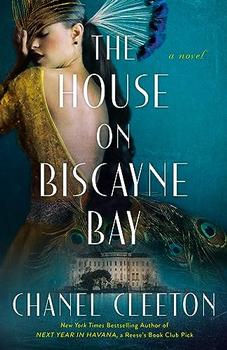
The House on Biscayne Bay
by Chanel Cleeton
As death stalks a gothic mansion in Miami, the lives of two women intertwine as the past and present collide.
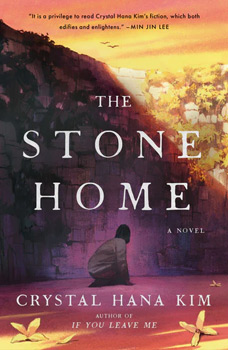
The Stone Home
by Crystal Hana Kim
A moving family drama and coming-of-age story revealing a dark corner of South Korean history.
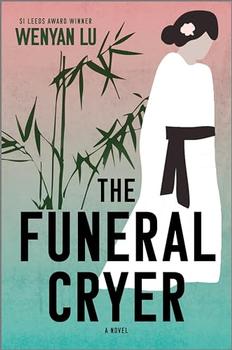
The Funeral Cryer by Wenyan Lu
Debut novelist Wenyan Lu brings us this witty yet profound story about one woman's midlife reawakening in contemporary rural China.
Your guide toexceptional books
BookBrowse seeks out and recommends the best in contemporary fiction and nonfiction—books that not only engage and entertain but also deepen our understanding of ourselves and the world around us.