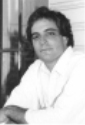
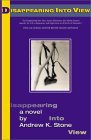
Andrew Stone talks about his novel, Disappearing Into View, his writing style and how working in television helped him advance his writing skills. He also shares with readers about his battle with Tourette Syndrome, how he dealt with it, and how he turned it into a positive influence on his writing.
Disappearing Into View is your second novel. Your
characters have been so realistic and your dialogue has been described as gritty
and street-wise. Has this always been your writing style or something you have
honed and perfected over the years?
I'm always working towards perfecting my ability to create
rich, believable characters. For me to get the most enjoyment from a book -
whether I'm reading or writing - the characters have to be real people. Often I
find that "beautiful starlets" and "handsome leading men"
can be too cartoonish, too one-dimensional. I'm more interested in the types of
people we meet everyday. A story is much more engaging when told by a real
person - for instance, the entire impact of the plot and theme will be much
stronger if the narrator reminds you of the guy next door rather than Arnold
Schwarzenegger. Schwarzenegger is superman and anything he does is automatically
going to be fantastic. However, if the everyday guy down the street can do the
same fantastic thing - tell the same story as Arnold Schwarzenegger -- the
implications of the story become much more vivid. This type of realism will
always bring the story to a higher level.
What would you say has been the biggest influence on your writing?
I have Tourette Syndrome (TS), which is a chemical imbalance that
causes various motor and vocal tics. The severity of TS varies from person to
person, and my case has always been in the middle. I grew up feeling very isolated
because I felt that my TS was never bad enough for people to come up and ask me
about it, but it was severe enough for people to keep their distance. I blamed
everyone else for not understanding what I was going through, and as a result, I
became emotionally numb. Over time, however, I understood how I had segregated
myself, and took responsibility for this. That really freed me up to understand
that we all have something in life -- something that, at one time or another,
makes us feel uncomfortable, different, even abnormal. This directly affected my
writing as it allowed me to explore the realities of the human condition.
I'm glad you discussed your battle with TS and how it affected your
writing. So many people are struggling with TS and I'm sure it helps to hear
when someone else who has TS has used their determination and a positive
attitude to create a successful career for themselves.
The title of your book is so fitting, what inspired you to write a
book about the homeless?
In Boston, where I live, there is an unfortunate large homeless
population. There use to be this one guy named Mr. Butch who hung out in Kenmore
Square (this is going back 15 years or so). He would always shake your hand as
you walked by, and he remembered everyone - he became quite an institution! I
used to wonder about the circumstances which put him on the street, because he
didn't fit the stereotypical "homeless profile" -- he wasn't a drunk
or mentally ill. I used to fantasize that he came from a very wealthy family,
and lived in a big white house on a hill - I could see it all vividly - and had,
for some reason, left it all behind. When I started writing the book, years
later, I remembered Mr. Butch, and began asking myself why someone might choose
to live homeless, and it all started there. My hope is that the novel has helped
give a human face to the homeless; its too easy to walk by them and forget that
they are people
I'm glad I've never eaten squab! Where did you get the idea for such
a food "business"?
An old urban myth from the same time as my acquaintance with Mr.
Butch. I used to hear about homeless people who would catch pigeons in the
Common and sell them to restaurants which would then pawn them off as squab. I
don't think it's true, but then again, I've never eaten squab, either! I found
the metaphor of the pigeon/squab really worked with the theme of the book. Colin
believes he has dropped out of society, but in reality, he has just moved from
one of its layers to another. He's the same basic person but because his
circumstances have changed, he's viewed differently. The same with the pigeon -
it's still a pigeon, but it's viewed differently when perceived as a squab.
Does your writing begin with a general plot or do you perceive a
character, such as Colin, and build the plot around him or her?
I begin with an idea/theme - what do I want to say? Then I figure out
the way to best convey this theme, which is the story, and finally, I come up
with the people who will best tell the story. I don't plot too much out
beforehand, other than ideas for the beginning, middle and end. This helps me
keep the writing really honest. I think of writing a novel as an exploration. My
theme always revolves around a question I want to explore and if I plot it out too much, I'm not finding my answers. With Colin, I was asking myself why a
man would consciously decide to live homeless, and the story developed from
there. During the writing, I saw that I was really exploring the layers of
society rather than homelessness. However, I wouldn't have gotten to that
realization had I plotted the whole book out beforehand.
Before writing your novels you worked in television and also wrote a
comedy script for The Golden Girls. Tell me a little about this experience.
It was a great time. I loved working on the show and I actually
learned a lot about fiction writing from the TV writers. I worked as a stage
page, which meant that I answered phones on the stage during the rehearsals.
This was great because the stage phone isn't listed - people couldn't just look
up the number and call Bea Arthur! So, I had a lot of free time, and I used this
time to write. I bought an old laptop and wrote every day, which taught me the
discipline of writing. Also, because TV writing is all dialogue, it really
helped in that respect. Finally, The Golden Girls was a really wonderfully
written show - the writing staff was topnotch, and I learned much from them. If
you watch the show, you'll notice that there are always two plots going on --
the A and B stories --at the same time. A lot of TV shows will dedicate the
first scene to the A story, then the second scene to the B story, then the third
scene back to the A story, and so on. But on GG, the writers really married the
plots wonderfully, and this is a skill that can be directly applied to fiction
writing. I owe a lot to those writers, and will always be grateful for their
guidance.
Do you plan to write more of these and if so will they be comedy or
will you stay with the fiction genre?
No, I have no more plans for comedy writing. It's really hard to stay
in that business if you're not in LA. You really have to be there and in the
scene to do it, and I truly prefer writing fiction.
What are the differences in television script writing and writing
fiction novels, and which gives you the most satisfaction?
TV is completely formula. You plot out - beat out, is the term they
use - each scene beforehand because you have stringent time constraints. Also,
it's all dialogue and the characters are already established. You just come up
with a story to fit the specific show, which isn't as easy as it sounds. I used
to think that if you took every script from a show and put them together, it
might read almost like a novel, because together, all the scripts would be
telling the story of the characters life. But that's as close as TV writing gets
to fiction, and as I said, I really prefer fiction. It was always my dream to go
to LA, make a million dollars and come back East to write fiction. That entire
dream came true with the one exception of making the million dollars!
What advice would you give novice writers about the publishing
process?
Don't write what you think will sell. Write honestly (truly, like
Hemingway would say). Readers will buy into a story if they make an emotional
connection with it. This can only occur if they believe in it, and for that to
happen, the writer must believe in it. When we start thinking in terms of what
will sell, we tend to move towards formulism, and this not only dilutes the
story, but decreases the chances of a reader making a real emotional connection.
So, don't think about selling the book until it's finished. There are dozens of
ways to publish a book, but only one way to really write it.
Who are your main literary influences?
Dickens, Salinger, John Irving, Roberston Davies. I also love the
Southern writers - Harper Lee, Faulkner, Flannery O'Conner, but my main
influences are those writers who are really concerned with what I think of as
the three big elements of literature - theme, plot and characters - and who give
equal weight to each.
Are you currently working on a new novel?
Yes, I'm about 60 pages into a first draft of a book that takes place
in Hollywood. But no gorgeous starlets. I promise!
Unless otherwise stated, this interview was conducted at the time the book was first published, and is reproduced with permission of the publisher. This interview may not be reproduced or reprinted without permission in writing from the copyright holder.

Dave King holds a BFA in painting and film from Cooper Union and an MFA in writing from Columbia University. King's debut novel, The Ha-Ha, was named one of the best books of 2005 by The Christian Science Monitor&#... (more)
If you enjoyed:
Disappearing Into View
Try:
The Ha-Ha
by Dave King
Janni Visman studied film at the London College of printing and mixed media at the Slade School of Fine Art. She is the author of two novels, Sex Education and Yellow. She lives in London. (more)
If you enjoyed:
Disappearing Into View
Try:
Yellow
by Janni Visman
We recommend 2 similar authors

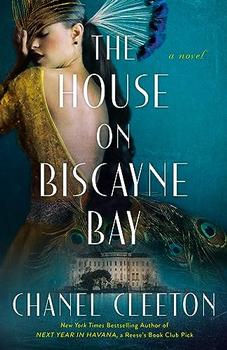
The House on Biscayne Bay
by Chanel Cleeton
As death stalks a gothic mansion in Miami, the lives of two women intertwine as the past and present collide.
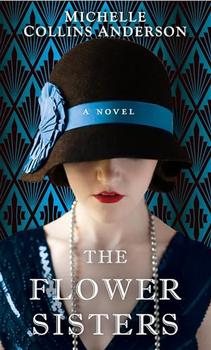
The Flower Sisters
by Michelle Collins Anderson
From the new Fannie Flagg of the Ozarks, a richly-woven story of family, forgiveness, and reinvention.
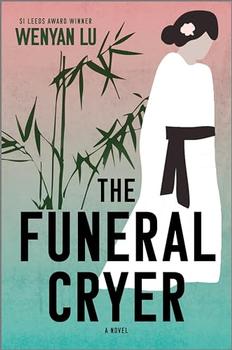
The Funeral Cryer by Wenyan Lu
Debut novelist Wenyan Lu brings us this witty yet profound story about one woman's midlife reawakening in contemporary rural China.
Your guide toexceptional books
BookBrowse seeks out and recommends the best in contemporary fiction and nonfiction—books that not only engage and entertain but also deepen our understanding of ourselves and the world around us.