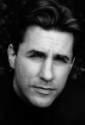
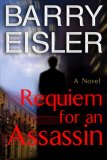
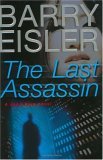
Barry Eisler answers questions about the lead character of his book, John Rain, a martial arts expert and assassin; and how he, Eisler, comes to know so much about both espionage and Japan.
Q. Why does Rain like single malt whiskey?
This is a tough one to answer -- why does someone like a certain
color? Or a certain way of making love? Beyond the idiosyncrasies of taste,
though, Rain's affinity for the single malts might be related to their
character, which is formed, more than that of any other spirit, by the
environment. Wood, water, air, soil. Barley and peat. The shape of the
pot-still. The location and length of maturation. The proximity of the sea.
Change one of these or a hundred other variables, and you will produce a
recognizably different malt.
And then there's the taste -- so many complex flavors and
smells, and yet, when done right, cohering in something harmonious and even
sublime.
In all this Rain might find a microcosm of human nature.
Rain also likes the mood of single malts (a case of synesthesia?),
something most perfectly expressed in Bar Satoh, a singular whiskey bar in Osaka
that, not coincidentally, plays nothing but jazz, and that makes a Tokyo
appearance in Rain Fall.
Q. Why does Rain like jazz?
This is another tough one, because musical tastes tend to be
idiosyncratic, and our stated reasons for liking something will, upon
examination, usually be revealed to have been built on a preexisting emotional
foundation.
Most fundamentally, Rain just likes jazz's moods. Romance and
playfulness and longing and elegy -- all these appeal to him. In jazz Rain hears
mono no aware, "the sadness of being human." And, because of
jazz's emphasis on improvisation, to a remarkable degree the music reveals the
character of the musician. No wonder Rain couldn't help falling for Midori...
Q. Why does Rain do judo?
Rain is experienced in many martial arts -- American boxing and
wrestling, and Japanese aikido, judo, and karate. In his mind, the grappling
arts -- wrestling, judo, jujitsu, sambo, submission fighting -- are the most
combat-relevant because, as the Gracies of Brazilian jujitsu fame have proven,
most fights go to the ground and it is difficult to stop a grappler from getting
hold of you if he wants to. Rain is also a proponent of Peyton Quinn's dictum
that "training is more important than technique," and grappling
training by its nature is more easily practiced "live" than other
forms of training.
This is not to say that other unarmed combat systems have no
value. In fact, Rain believes that you need to derive your own system from the
diligent study and application of multiple styles. But his view is that
grappling is fundamental to combat; thus, his personal system is based on
grappling.
More than anything else, Rain believes, as Marc
"Animal" MacYoung will tell you, that, for combat effectiveness,
awareness matters infinitely more than whatever style you practice. No style can
save you once you've wandered into a well-set ambush. But your awareness might
prevent you from walking into that ambush to begin with.
Q. Did any of the events in Rain Fall really happen?
Although the depth of Japanese political corruption detailed in
Rain Fall might seem so outrageous that it must be fictional, it is all real.
The names, numbers, and incidents that Midori and Franklin Bulfinch relate to
Rain during the course of the story are straight out of the headlines of
publications like The Economist and Forbes. In addition, over the course of the
last decade a number of would-be reforming politicians and bureaucrats have in
fact died under mysterious circumstances (suicides with no note left behind,
curtailed investigations, cremation without an autopsy despite requests by
family members, etc.), and there are rumors in Japan that there is a
"natural causes" assassin or assassins behind these events. The plot
of Rain Fall can therefore be thought of as a (not necessarily) fictional
explanation for true events that are taking place in Japan today.
Q. Are any of the characters in Rain Fall based on real
people?
I've been lucky enough to meet a number of remarkable people in
my life, some of whom have influenced the characters I've created.
Beyond that general statement, I'll add that anyone who has seen
the performances of jazz pianist might find herself thinking of Midori Kawamura...
Q. Where did you work in the US Government?
My paychecks came from the US State Department Foreign Service.
Q. Have you ever known a real assassin?
Can't answer that one. John Rain is a work of fiction...
although he may not realize that.
Q. How do you know so much about the spy stuff that appears
in the book?
Realism is important to me in my writing -- not just in
depictions of tradecraft, but also in my descriptions of martial arts and
unarmed combat, the layout and feel of Tokyo, and the nature of the political
corruption that drives the story forward. Everything I've written about in Rain
Fall is either derived from direct personal experience or researched through
extensive reading and interviews. The information behind the novel's spy
sequences can all be found in what the government calls 'open sources.'
Q. Will there be more books? A franchise?
The contracts in all ten countries in which publishing rights
were sold were for Rain Fall and a sequel. The sequel Hard Rain was published in the summer of 2003. Whether John
Rain wants to go on beyond that is hard to say today. He writes these books in
first person, so we know he's going to live, but will he want to go on killing?
He's conflicted about that. We'll see.
Unless otherwise stated, this interview was conducted at the time the book was first published, and is reproduced with permission of the publisher. This interview may not be reproduced or reprinted without permission in writing from the copyright holder.
John Burdett is a nonpracticing lawyer who worked in Hong Kong for a British firm until he found his true vocation as a writer. Since then, he has lived in France and Spain, and Thailand and is now back in Hong Kong. His ... (more)
If you enjoyed:
Rain Fall
Try:
Bangkok Tattoo
by John Burdett

Clive Cussler grew up in Alhambra, California. He attended Pasadena City College for two years, then enlisted in the Air Force during the Korean War and served as an aircraft mechanic and flight engineer in the Military Air ... (more)
If you enjoyed:
Rain Fall
Try:
Trojan Odyssey
by Clive Cussler
We recommend 11 similar authors

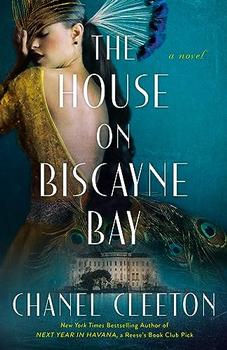
The House on Biscayne Bay
by Chanel Cleeton
As death stalks a gothic mansion in Miami, the lives of two women intertwine as the past and present collide.
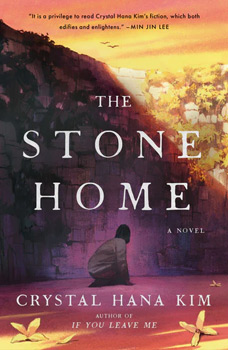
The Stone Home
by Crystal Hana Kim
A moving family drama and coming-of-age story revealing a dark corner of South Korean history.
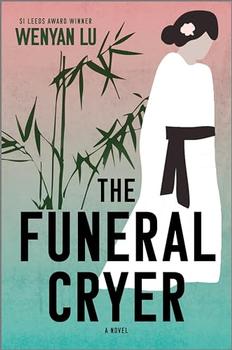
The Funeral Cryer by Wenyan Lu
Debut novelist Wenyan Lu brings us this witty yet profound story about one woman's midlife reawakening in contemporary rural China.
Your guide toexceptional books
BookBrowse seeks out and recommends the best in contemporary fiction and nonfiction—books that not only engage and entertain but also deepen our understanding of ourselves and the world around us.