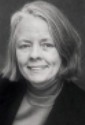
Barbara D'Amato explains the background to Death of a Thousand Cuts - a murder mystery set in a school for autistic children run by a charismatic director who is based on real life Bruno Bettelheim, the man who ran the Orthogenic School in Chicago and wrote many, now controversial, books about autism.
You have said in the past that "getting angry at
something" fuels your books. Is that true in Death of a Thousand Cuts?
One source of energy for me is a sense of trying to right a
wrong. Also, I think the villain’s character is enriched if there is more than
just personal hatred or greed going on. In Death of a Thousand Cuts, the murder
victim’s life was motivated by self-aggrandizement. But in a larger way he had
the arrogance of professional authority, the view that he was always right
because he had training and a degree. That kind of paternalism makes me angry.
What is Death of a Thousand Cuts about?
Hawthorne House, a residential treatment facility for autistic
children, is holding a reunion fifteen years after closing its doors. Jeffrey
Clifford, a young mildly autistic man, was a patient there for seven years.
Clifford, other patients, staff members, and therapists plan to spend the
reunion weekend at the old mansion. During the first night, Dr. Jay Schermerhorn,
the charismatic and authoritarian director, is murdered.
Why did you want to write this particular book?
I had heard for some years that Bruno Bettelheim told the parents of his
patients that they had caused their children's autism through cold parenting.
Even at the time he was running his school, most authorities did not believe
that was the case, or at any rate did not believe it was the whole explanation.
It seemed horribly cruel to me that he would destroy families on what was no
more than speculation. I had thought for several years that I would write a book
like this some day.
You use quotations from Sigmund Freud at the beginning of each
section. Why?
The loony notions of Sigmund Freud made it possible for all
sorts of people to make up explanations for illnesses like autism, tracing each
case to some early infant trauma. In actuality, the cause is physical and
probably partly genetic. These therapists then charged families huge sums for
talk therapy. You might as well try to talk somebody out of appendicitis.
The character of Dr. Jay Schermerhorn has many similarities to
Bruno Bettelheim, the man who ran the Orthogenic School in Chicago and wrote
many books about autism. Why did he attract your attention?
I had long been outraged that Bettelheim blamed parents for
their children’s autism. He said, "I state my belief that the
precipitating factor in infantile autism is the parent’s wish that the child
should not exist." [Infantile Autism and the Birth of the Self
1967] Bettelheim told the parents of his patients that they had caused their
child’s trouble. How cruel! No parent believes he or she has done everything
right. Bettelheim’s saying this destroyed lives. Although some of Bettelheim’s
students are alleging sexual improprieties, I chose not to do that with my
character.
Autism was little known thirty years ago. But it's becoming
talked about now, isn't it?
They didn’t know then, and it’s not clear now either.
Although even then people realized it was, in some sense, physical. Autism
wasn't discussed as much in the past, I think – partly because the
constellation of symptoms weren't clearly described. There are 500,000 people in
the United States today diagnosed with autism. It's four to ten times more
common in boys. If one twin is autistic, it's twelve times more likely than the
average rate that the other twin is autistic. This was known decades ago and was
the reason people, even back in Bettelheim's day, believed the condition was at
least partly genetic, not the result of bad child rearing. For reasons nobody
yet knows, the incidence of autism in California has doubled in four years, and
the experts don't think the increase is the result of better diagnosis.
What would you like people to take away from Death of a Thousand Cuts?
Well, I hope it's absorbing reading. But I would also like it if people came
away with the resolve not just to accept what "authorities" say at
face value. Some people who claim expertise really don't know what they're
talking about.
How do you schedule your work day?
For years I tried to get four pages written a day, even if it took until
evening. I'm a little easier on myself now, but I still feel guilty if I don't
get something done every day, seven days a week.
Q & A With Barbara D'Amato about White Male Infant
How does one go about legally adopting a child?
There are several options, including:
What is considered an 'illegal adoption'? What percentage of adoptions are
illegal?
No one really knows the number of illegal adoptions. Some are completely
informal - a relative taking over when the parent has died or disappeared. Some
are as horrible as a kidnapped children being passed off for as one's own, sometimes
for years. To adopt legally you have to qualify in a number of ways. You must be
not too young or too old. In most states you will need one or more home visits
to check out both you and the home environment. Various states have other
requirements. Two states - New Hampshire and Florida - do not permit gay persons
to adopt.
What kinds of scams surround adoptions that adopting parents should be on the
lookout for?
The most common scam is this: A woman puts an ad in the newspapers or on the
Net, saying she is pregnant and in exchange for living expenses and medical care
will sign her baby over to parents of her choice. She gets several couples to
provide her with money, and then she disappears. She may never have been
pregnant in the first place. Another scam involves facilitators who charge
"costs" but never come up with a baby.
What are some of the most reputable organizations that can facilitate an
adoption?
There are a few organizations now that vet adoption agencies. The Child
Welfare League of America is working to promulgate agency standards. Also, local
scam artists may be known to the police. But private adoptions are essentially
unregulated. Your safest bet in adopting is to go to a recognized agency with an
established reputation for ethical behavior. Unfortunately, they do not have
many babies available these days.
Why is there such a shortage of babies?
Lack of supply and not an increase in demand. In the 1950s, there was one
white baby available per couple wanting to adopt. Now, according to the National
Survey of Family Growth, it's six couples per one baby, and the National
Committee on Adoption believes the ratio is closer to twenty couples per
available baby. Back thirty or forty years ago, there was such stigma attached
to having a baby out of wedlock that most women, 80% or so, gave their babies up
for adoption, often having delivered them in a hospital far from home, later
hiding the fact that they had ever been pregnant. Now a majority of unmarried
women keep their babies. I believe the availability of contraception has made a
difference, too. In the 1950s contraception was less easy to use and in some
parts of the U.S., believe it or not, illegal!
We understand there is a broad price range when adopting a child. What is the
range, and why do prices differ so much?
Sadly, there is just more demand for some babies than others. As implied by
my title, a white infant "goes" for more money. Babies with health
problems and babies of color are less frequently adopted. The range is from a
few thousand to as much as $50,000.
How do domestic adoptions differ from foreign adoptions?
There is much more paperwork in foreign adoptions. You have to satisfy our
immigration laws and may have to stay in the foreign country several weeks. You
also have to provide all the basic adoption documents that your state requires,
like health and home studies, then satisfy the foreign country, and then satisfy
the U.S. when you bring the baby back to ensure that he or she was properly
adopted. However, foreign adoptions differ in positive ways as well. They take
less time, as there are many babies available in certain countries, and the age
of adopting parents is not as much a factor. You also have the satisfaction that
you have adopted a child who might have died otherwise.
From which countries is it easiest for an American family to adopt a child?
According to The Adoption Guide, currently it's China, with 4,000 adoptions a
year by United States families, and Russia, also with 4,000 a year. But
political situations change all the time.
How easy is it to adopt an American infant?
It isn't terribly difficult to adopt an older child, who is probably
currently in foster care, or a child with medical or psychological problems, or
a child of color. But if you want a white infant in good health, it can be very
difficult. That is the reason for the title of the book - White Male Infant.
How long does it normally take a person to adopt an American child?
Again, it depends on what kind of child. An older child, or one of color, or
one who has physical or mental disabilities may be available quickly. If you
want to adopt a healthy white infant, it may take two to seven years, and you
may also pass out of the optimal adopting-parent age range in the meantime.
How many children are adopted each year in the United States?
The numbers aren't definite. Nineteen thousand are adopted from abroad. If
you include private adoptions, family adoptions, informal adoptions, formal
adoptions and agency adoptions, the number seems to be well over 100,000.
What is the average age at which children are adopted?
Couples or individuals usually want to adopt infants and will wait for an
infant or go abroad. That is why so many children in foster homes just wait and
wait for a family. However, a large category of adoptions are in-family. These
are situations where a child, say a daughter with children, becomes
incapacitated or dies, and the grandparents or aunts and uncles adopt. This is a
large proportion of the annual adoptions.
What can adoptive parents do to check out the true background of the child
they are adopting?
In the United States, the best guarantee is going to a well-respected agency
with a track record. However, adoptions from such agencies are slow, may never
happen, and you may become too old to adopt while you're waiting. Private
adoption from birth mothers or facilitators is fraught with difficulties. I
would advise having an investigative agency - in other words - a private
detective agency with a track record do a parallel investigation. As far as
adoption from abroad is concerned, get a known religious organization involved,
or an established governmental organization, or get lots of testimonials and
net-searching done before you send money. In the United States, 28% of insured
adoptions fail.
How did you become interested in the adoption issue?
My husband is a professor of law, specializing in international law and
jurisprudence. For decades, he has been involved in cases of divided families
that is, cases such as those where a father takes the children to his homeland
and won't let them come back to their mother in the U.S. My husband recently
became an advocate for the development of better transnational adoptions. He
wants easier but more validated international adoption. All over the world there
are children dying from starvation and neglect, while childless people strive to
adopt and find themselves stymied at every turn.
You mention inconsistencies and confusion in American adoption policies.
Please elaborate.
In some states, a pregnant woman can advertise for prospective adoptive
parents, and can potentially interview them. In other states, certain
advertising is prohibited. In still other states, all advertising is illegal. Of
course, the Net is awash in ads. In some states a woman who has delivered a baby
and wants to give him or her up for adoption is given 24 hours to change her
mind. In some states it's a month. In some states it's a year. Twenty-four hours
is clearly too short for the mother. She is still suffering the hormonal changes
and damage of childbirth and shouldn't be making lifetime decisions. A year is
too long for the baby. He or she will have bonded to the birth parents long
before that.
If you could revamp American adoption policies, what would you like to see
happen?
I'd like to see some medical input on how long after birth a woman should
have to make a decision to give a child up for adoption. There should also be
more severe punishment for adoption scams and better federal surveillance of
potential scams. And much as I don't wish for more federal input in our lives,
I'd like a national vetting system for adoption agencies, so that people would
have an idea which agencies were borderline or unethical, a kind of "Good
Housekeeping Seal of Approval." There is a push now to some such approval
systems, but it is optional for the agencies. I would like the Immigration and
Naturalization Service to behave in a more uniform way across the country and to
move faster. Adoption processing can take years in some offices, while others
may be as short as a month to complete.
Unless otherwise stated, this interview was conducted at the time the book was first published, and is reproduced with permission of the publisher. This interview may not be reproduced or reprinted without permission in writing from the copyright holder.



Dan Akst is a writer whose work has appeared in the New York Times, Wall Street Journal, Los Angeles Times, Boston Globe, Slate and other leading publications. His most recent book is We Have Met the Enemy: Self-Control in an... (more)
If you enjoyed:
White Male Infant
Try:
The Webster Chronicle
by Daniel Akst

Bill Clegg is a literary agent in New York and the author of the bestselling memoirs Portrait of an Addict as a Young Man and Ninety Days. His first novel, Did You Ever Have a Family, hit the New York Times bestseller list ... (more)
If you enjoyed:
White Male Infant
Try:
Did You Ever Have A Family
by Bill Clegg
We recommend 9 similar authors




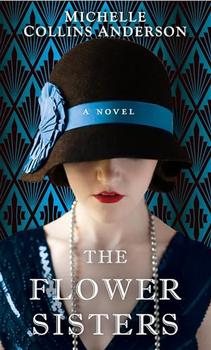
The Flower Sisters
by Michelle Collins Anderson
From the new Fannie Flagg of the Ozarks, a richly-woven story of family, forgiveness, and reinvention.
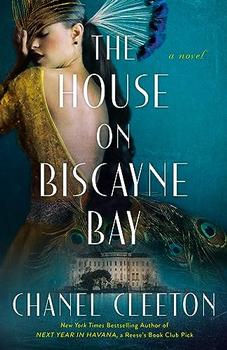
The House on Biscayne Bay
by Chanel Cleeton
As death stalks a gothic mansion in Miami, the lives of two women intertwine as the past and present collide.
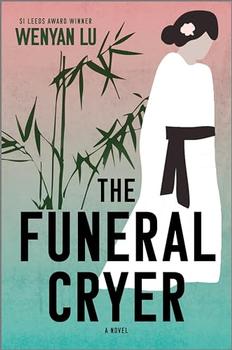
The Funeral Cryer by Wenyan Lu
Debut novelist Wenyan Lu brings us this witty yet profound story about one woman's midlife reawakening in contemporary rural China.
Your guide toexceptional books
BookBrowse seeks out and recommends the best in contemporary fiction and nonfiction—books that not only engage and entertain but also deepen our understanding of ourselves and the world around us.