Three Junes took Glass many years to write. Find out how it evolved and why she eventually divided it into three parts.
What led you to create Three Junes?
Sometimes it's hard for me to think of this novel as something I created,
because I never sat down and planned it out as a whole, the way you might cut
and piece together a suit from a bolt of cloth (as I'd always imagined a novel
gets written). Three Junes grew over several years, like a
tree--organically and at first in odd, sporadic bursts--starting out as a
short story called "Souvenirs," which was based on an experience I had
while traveling in Greece after college. One of the first stories I wrote as an
adult, it was your typical ingenue-abroad, loss-of-innocence tale with a
predictably idyllic setting, and I was hoping to sell it to Cosmopolitan
magazine, where I was working as a copy editor. (In those days, short
stories--some by wonderful writers like Laurie Colwin, Lorrie Moore, and Elinor
Lipman--were a fixture of the magazine. Often, there were two in a single
issue, just as there once were in the New Yorker.) Reportedly, Helen
Gurley Brown read my story but thought the heroine too "privileged"
for her readers--that is, not your good old "mouseburger" COSMO
Girl--so into a drawer it went. A few years later, I looked at the story again
and decided that Paul, who had been little more than a third wheel or a foil,
was much more interesting than Fern or Jack, and I decided to make the story his,
not Fern's. Suddenly, this character's whole world seemed to crack open before
my eyes--his dead wife, his waylaid ambitions, his country home, his sons--and
I found myself with an ungainly narrative of 40 pages plus. I actually had the
nerve to submit it to a couple of magazines and received a brief but kind
rejection from the Atlantic the gist of which was "Sorry, though
we'd love to see these characters inhabit a novel." Once again, into a
drawer it went.
Somehow, though, what was now called "Collies" refused to be
abandoned, and a couple years later, two things happened: First, I was intrigued
by a fiction competition that included a category for "best novella"
and decided to amplify the story yet further. Second, having by now published a
couple of stories in modest venues, I'd been contacted by two agents who
wondered if I had a novel. Somewhat stubbornly, I was writing only stories--you
couldn't really call them "short," since they were lengthy and
complex, bursting at the seams like pregnant women refusing to buy maternity
clothes--and when I wrote to a fellow writer how unfair it felt that these
agents wouldn't consider story collections, he wrote back something like
"Stop complaining, get off your duff, and just write a novel. If you want
to, you can." I was momentarily hurt, but I knew he was right. Sometimes I
wonder if I would ever have written Three Junes without that kick in the
pants.
Three Junes, teeming with its relationships and interconnected
lives, resembles a wonderfully dense nineteenth-century novel in a way, despite
its very modern characters and setting. Do you agree?
I am anything but a minimalist, and I don't say this proudly, because if
my work--visual as well as verbal--has one prominent weakness, it's a tendency
toward clutter. (I also have a tendency to talk too much and, I'm told by the
one adult who lives with me, to fill a room with too many objects and too much
pattern.) When it works, however--when it's disciplined--the clutter can yield
a magnificent richness, and that's what I aspire to. If this makes me a
Victorian of sorts, so be it.
I wouldn't flatter Three Junes by comparing it with anything by Hardy or
Eliot or Hawthorne, but they are all personal gods, so clearly I have such
ambitions. In the years after college, when I had ample time to read whatever I
wanted, I undertook to fill some of my literary gaps by going on reading binges
of certain authors: E.M. Forster, Jane Austen, and George Eliot among them. One
book I read then that impressed me above and beyond most of what I'd ever
read--and it may have been partially responsible for my starting to write
fiction--was Daniel Deronda. While I understand the criticism of its
flaws, I was astonished by its characters and structure (not to mention its
exquisite, masterly prose). Just the idea that you do not meet one of the two
protagonists for over a hundred pages seemed revolutionary, and though I didn't
write Three Junes till many years later, I know that its ultimate
structure was in some ways influenced by that impression. I'm not sure I could
have risked what I did with Fenno's character--making him the center of the
novel yet keeping him largely offstage for most of the beginning and much of the
end--without that example.
Why did you divide the book into three parts with only the second as a
first-person narrative? Why did you choose Fenno to set apart? In addition, why
does Fenno occasionally address the reader, "Feeling left out, you will
have noticed, is second nature to me" (p. 172)?
I mentioned earlier how essential character is to me in the creation of
story; well, Fenno is a character who basically hijacked my soul as a writer.
He's the one who chose me. Working on Three Junes, I had an
experience I'd never had before. In the past, my characters were largely
composed in a deliberate manner--under my thumb, you might say--although they
often seemed to make spontaneous choices that would surprise me. But Fenno (also
Mal, and to some extent Paul) seemed to spring up from my psyche fully formed,
like the goddess Athena from her father's head. Writing in Fenno's voice often
felt like conversing with a stowaway, continuing the journey and letting go of
anxieties about where in the world he came from.
One of the timeworn dictums laid down for first novelists is "Whatever you
do, steer clear of the first person!" "Collies" had always felt
completely natural in the third person, even though it was limited to Paul's
point of view, but when I started the second part of the novel, Fenno's story, I
couldn't help hearing it in his own voice--and I was petrified. I knew I was
embarking on the longest portion of the book and I thought, I can't do this!
Change time period, locale, point of view, and voice? Surely a big
mistake. So I did try to work on the story in third person, and I lasted only a
few pages. It felt like trying to bend steel pipe.
While writing "Boys," the third part, it hit me that what I was
writing, structurally, was a triptych--that is, a strong central image flanked
by two narrower, more modest images. I thought of the medieval Netherlandish
altarpieces I love so much: Sometimes the central panel--be it a picture of the
annunciation, the crucificion, or a martyrdom--is flanked by panels depicting
portraits of the altarpiece donors (often husband and wife, male and female).
While the central image is frontal, the donors are often shown in profile. And
suddenly I had this very clear picture of Three Junes. Here was Fenno's
large, rich story at the center, told directly to the reader, with Paul and Fern
portrayed in intimate detail to left and right but seen from the side and
that's what third person is: a kind of narrative profile view. From then on,
Fern's story flowed easily in the third person, mirroring Paul's.
Places figure crucially in the novel--for instance, a Greek island, a
Scottish village, Greenwich Village, and a Long Island town. Are these places
significant?
Certainly, all these places are places to which I've traveled (Paros and
Dumfries, for example) or know intimately, as I do the Greenwich Village, my
neighborhood for the past ten years. But beyond that, virtually all the locales
of Three Junes, even Fern's hometown, which figures only fleetingly,
share an ideal quality. They are places popular with tourists or people escaping
their everyday life. I made that choice intentionally, though it entailed
certain risks, the first, quite simply, that places of such celebrity may
upstage characters and events; the second, that they will make the story seem
superficial or glib, like the escapist fiction you buy at the airport to
distract yourself from the boredom and anxiety of flying. What I wanted,
however, was to make place underscore the deep, nearly insatiable longing felt
by the three major characters. Almost all these places are, in real life, places
where we hope to receive some kind of sublime, intangible gift, be it beauty or
peace or romance, and we often (though not always) come away unsatisfied.
Greece, for instance--as the characters themselves acknowledge--is a place
utterly steeped in the past. We go there as tourists to wander through ruins and
marvel at the eerieness of time and mortality; perhaps we want the Oracle to
make sense of our human lives. When he goes to Greece, Paul is torn between
wanting to remain in his perfectly ordered past and to somehow get free of its
grasp. He does receive a gift, but it's not the one he expected. Scotland, as I
mentioned before, brings to mind tradition and family loyalty (think of the
clans and the tartans), but by the same token it is a place where acts of great
barbarity and betrayal took place, where the land has been as tough and
unyielding as it is beautiful. That, of course, is the duplicitous landscape of
family itself: love and betrayal, war and peace. Paris, of course, represents
true, everlasting love, while Amagansett is a place where we imagine people
living perfect lives in perfect privacy…. And then there's June, the perfect
month: the month of blossoming, of weddings and conceptions, of--since our
childhood--being freed from obligations.
Unless otherwise stated, this interview was conducted at the time the book was first published, and is reproduced with permission of the publisher. This interview may not be reproduced or reprinted without permission in writing from the copyright holder.

Elizabeth Berg is the author of many bestselling novels, including Open House (an Oprah's Book Club selection), Talk Before Sleep, and The Year of Pleasures, as well as the short story collection The Day I Ate Whatever I... (more)
If you enjoyed:
Three Junes
Try:
The Year of Pleasures
by Elizabeth Berg

Emily Chenoweth is a former fiction editor of Publishers Weekly. Her work has appeared in Tin House, Bookforum, and People, among other publications. She lives in Portland, Oregon. (more)
If you enjoyed:
Three Junes
Try:
Hello Goodbye
by Emily Chenoweth
We recommend 13 similar authors

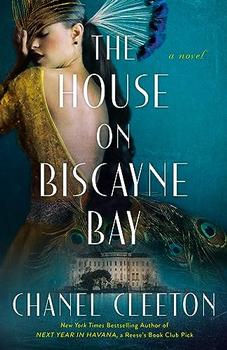
The House on Biscayne Bay
by Chanel Cleeton
As death stalks a gothic mansion in Miami, the lives of two women intertwine as the past and present collide.
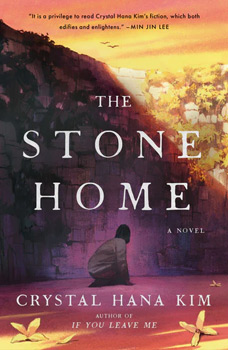
The Stone Home
by Crystal Hana Kim
A moving family drama and coming-of-age story revealing a dark corner of South Korean history.
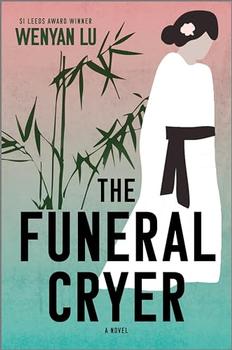
The Funeral Cryer by Wenyan Lu
Debut novelist Wenyan Lu brings us this witty yet profound story about one woman's midlife reawakening in contemporary rural China.
Your guide toexceptional books
BookBrowse seeks out and recommends the best in contemporary fiction and nonfiction—books that not only engage and entertain but also deepen our understanding of ourselves and the world around us.