Hari Kunzru discusses his first novel, The Impressionist, a black comedy about race and identity, that partially developed from his own experience as a child of an Indian father and English mother.
Described by The Observer as 'The most eagerly awaited British debut
of 2002,' Hari Kunzru's The Impressionist is an epic tale of adventure and
discovery. Here, we asked Hari about inspiration, identity and the cultural
legacy of the British Empire.
How would you describe the The Impressionist?
The Impressionist is a black comedy about race and identity. It goes from
India to England to Paris to Africa following one character, Pran, who assumes a
great deal of different identities and never quite fits into any of them.
Where did the idea for the book come from?
Part of the idea came from my own experience of being the child of an Indian
father and an English mother. I've grown up in England and feel pretty English
in my upbringing, but there's always been an aspect of my experience that hasn't
quite fitted. I wanted to write something about a character like that, only I've
reversed the polarities in a way. Pran is the child of an English father and an
Indian mother and I've set the book at a time (the 1920s) - maybe the last time
- when the Empire really mattered. It's at a crisis point in the story of the
British Empire, which of course is kind of why I m here. My father would never
have come to Britain if there wasn't the historical connection between the two
countries.
The book also looks at debates around cultural identity today, which makes
it a contemporary novel as well as an historical one.
I suppose it is a contemporary book as well. It's a coded way for me to unpick
all the weird debates about race and identity that are floating around at the
moment. People talk so much about multiculturalism, which is a term I have a
terrible problem with, already being multicultural in a way. The more I looked
at ideas of race with my own life the less stable it all became and so my
central character is somebody for whom all these categories are totally up in
the air.
Do you see yourself as part of a tradition of writers on British
colonialism?
Inevitably if you're going to write about India, especially somebody with Indian
heritage living in Britain, you re firstly faced with a wall in the video shop
of Merchant Ivory classics full of beautiful English ladies having cream teas
served by silent Indians in turbans. Behind that there's a much richer tradition
of English language writing about India, and also about the colonial experience
more generally, so my book has ended up being a dialogue with a really major
strand of British literary writing. Kipling's Kim is a figure that haunts
The Impressionist very much - the white boy who can pass as Indian among
the bazaars of India and see a side of this exotic location that the English can't. Conrad is an influence as well, there's a lot of the book set in Africa and
you can't do that without Heart of Darkness.
How consciously did you think about style when writing the book?
The style is very worked over. The central character in this book is in many
ways a cipher, he's an empty space trying to fill himself up with all the
material that's around him. Trying to find a point of view where I could tell
this so it didn't become a kind of existential tragedy or a kind of Carry on Up
the Khyber was very difficult.
How did you go about researching the book?
I'm lucky in that I really like libraries and I discovered the Indian and
Oriental collection in the British Library. It was a goldmine of odd information
about the texture of life in the British colonies, and so a lot of the book has
come out of that sort of reading. Also there are a lot of stories from the
Indian side of my family which are quite extraordinary, and while I haven't
really retold them in any straight way in The Impressionist, there are a
lot of echoes of things that have happened in my Indian family history. The
third source of material for the book is a much more immediate, personal source
of weird stuff that has happened to me over the years. Inevitably any book is a
big box into which you put all your odd material, and the character of Pran
going in this slightly quizzical way through life is very like some of my
experiences of trying to come to terms with my racial identity.
Were you surprised at the level of attention that you received from
publishers?
Of course I was surprised that there was so much excitement. Everybody hopes
that there'll be a response, but I was steeled for a small trickle of interest
and the interest I got was incredible, it's been very gratifying.
Who was the first person to read it?
I circulated the first section of the book to a few friends, including some who
work in publishing. The positive feedback I got from them was really important
in getting me to carry on.
Are there any writers that you particularly admire?
Currently I'm interested in W G Sebald whose Austerlitz I'm reading at
the moment. I adore his writing, and it's almost all in the gaps, everything's
in the silences between what he's telling you. In general I like a lot of
contemporary American writing, I've recently been reading Rick Moody who I think
is very good.
Do you think about writers differently now that you re published?
I suppose my nasty secret is that I've always been arrogant enough to think of
myself as a practitioner rather than just a reader. I've wanted to write fiction
since I was a teenager and I've been writing with varying degrees of success
since.
Was the transition from journalism to writing books difficult?
I was a journalist for quite a long time and I never wanted to be. I was the
original reluctant journalist. If somebody will pay you money to write then that
is a good thing, but I actually found that much more difficult than just writing
stories.
Unless otherwise stated, this interview was conducted at the time the book was first published, and is reproduced with permission of the publisher. This interview may not be reproduced or reprinted without permission in writing from the copyright holder.
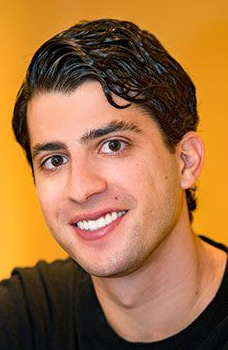
David Hopen is from Hollywood, Florida. He graduated from Yale College and earned his master's degree from the University of Oxford. The Orchard is his debut novel. (more)
If you enjoyed:
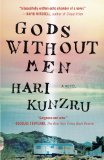
Gods Without Men
Try:
The Orchard
by David Hopen

Jonathan Evison is the author of the novels All About Lulu, West of Here, The Revised Fundamentals of Caregiving, This Is Your Life, Harriet Chance!, Lawn Boy, and Legends of the North Cascades. He lives with his wife and ... (more)
If you enjoyed:
Gods Without Men
Try:
The Revised Fundamentals of Caregiving
by Jonathan Evison
We recommend 14 similar authors
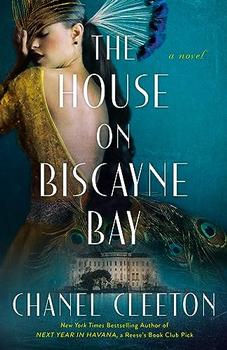
The House on Biscayne Bay
by Chanel Cleeton
As death stalks a gothic mansion in Miami, the lives of two women intertwine as the past and present collide.
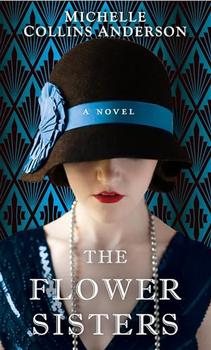
The Flower Sisters
by Michelle Collins Anderson
From the new Fannie Flagg of the Ozarks, a richly-woven story of family, forgiveness, and reinvention.
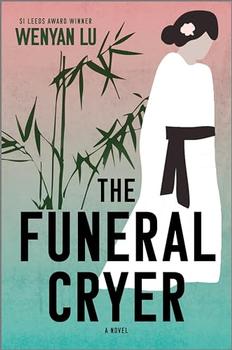
The Funeral Cryer by Wenyan Lu
Debut novelist Wenyan Lu brings us this witty yet profound story about one woman's midlife reawakening in contemporary rural China.
Your guide toexceptional books
BookBrowse seeks out and recommends the best in contemporary fiction and nonfiction—books that not only engage and entertain but also deepen our understanding of ourselves and the world around us.