Daniel Silva discusses his writing, why he is fascinated with the spy thriller genre, the research he undertook to write The English Assassin, and the inspiration for his lead character Gabriel Allon, who also appears in Silva's latest book The Confessor
How did you become interested in the subject of
Switzerland's Nazi collaboration as a topic for a book?
I've always been interested in WWII in general, and I've read a lot of
WWII history. The secret history of Switzerland during the war is mind blowing.
It's such a fascinating and strange country – there really is this national
preoccupation with secrecy at all levels. And I've always been interested in
art…. So the history of Nazi art looting, and of how all these paintings and
other works of art made their way into Switzerland, was a natural. It's just
something that I've always found engrossing, and at some point it became clear
that it would make excellent material for a thriller.
You quote Jean Ziegler's The Swiss, the Gold, and
the Dead at the beginning of this book. Was that book, which was about
looted gold, not art, of course, in any way an inspiration for this one? Did you
read any of the other books about Swiss banks and Nazi gold that came out around
the same time?
I decided on this topic – looted art – first, and the Swiss connection
came second. Yes, I think it was Nazi art first, Switzerland second. But
Ziegler's book was just such a lyrical and wonderfully scathing exposé, and I
found it very illuminating. I thought it was tremendously courageous – he's
Swiss himself, you know, and that kind of self examination is so frowned upon
there.
I did read all those books that came out, that whole crop of titles; Hitler's
Silent Partners is another that comes immediately to mind. But to actually
answer your question, no, that book didn't really inspire the story of The
English Assassin. It was very helpful and enlightening, though.
What other sorts of research went into writing The
English Assassin?
I read a number of books on Nazi art looting, of which there are quite a few.
I also read up on the Swiss banking system – just enough, really. This isn't
a novel on Swiss banking, but I did have to learn enough about it to set a book
in Zurich. I also read a good deal of general Swiss history, and more WWII
history. Then set it all aside and tried to write an interesting story that
conveyed some of the ideas I had knocking around in my head.
Beyond the reading, I did quite a lot of site research. Grueling and
demanding stuff, travelling all over Europe with my family….
What was the most shocking thing you discovered in your
research?
Everyone had talked about the gold laundering; about how the Swiss turned the
Nazi gold into hard currency. But what I found most shocking, I think, and what
I wrote about, was this idea that Swiss art dealers, and regular citizens, too
– and not just Swiss I should say – capitalized on the extermination of a
people in a way that is somehow unfathomable.
That someone's property was seized in Paris or Amsterdam, spirited away out
from under them even as they themselves were shipped off to a death camp, and
that there were people there to receive it and caress it and hang it on their
walls…. You know, you can wrap your hands around the idea that Nazi Germany
committed such horrific crimes against the Jews and others. It's this huge and
terrible and inescapable fact of human history. But somehow the idea that there
were all these other people there to profit from it, people all over Europe and
through all levels of society who weren't in any official way connected to
Hitler's planned genocide – that is in a way even more inconceivable to me.
And I'll tell you; it's my belief that there's a lot of art that
disappeared during the war that's still in Switzerland.
This is his second appearance of Gabriel Allon, after The
Kill Artist – will there be more? What was the genesis of the character?
A bolt of lightning really. I had decided on the topic of the fourth book –
targeted killings, as the Israeli's like to say. One evening my wife and I
happened to have dinner with a friend of ours who was an art restorer, and I
said hold it: a spy, a killer, an art restorer… one half a destroyer, one half
a healer. This is a great character. This guy has real internal conflict.
I created him for
The Kill Artist and then just couldn't put him
aside. He was a perfect fit for this book, clearly, with art being an essential
element of the story. He'll be in the next book, too – I'm not done with
Gabriel yet.
This novel has some major preoccupations: history, art,
music. You already talked about history; are these other things personal
preoccupations of yours as well?
Yes, very much so. It's a great thing to have to explore them so thoroughly
for my work. Thankfully I can reach out and touch friends who know a lot more
about these things than I do. A woman named Sadie DeWall was my music consultant
for this book, for instance, and she helped me a lot in understanding the
character Anna Rolfe, who is a world class violinist. I play some music, but
I'm not a real musician – to be able to hear what it feels like to make music
like that, and also to get some insight into the weird personality quirks that
go along with that kind of genius, was such a pleasure, and so indispensable. I
like telling stories, thrillers that don't necessarily have traditional
thriller-esque characters. You have the assassin here, of course, and the spy;
but you also have an art restorer and an art dealer and a musician – it's
fun this way. Fun for me, and hopefully for the reader.
Has the rise in the global visibility of terrorism
become material for you? Has any of what's been happening in Afghanistan and
the Middle East changed your perspective on your writing or informed it in any
way?
Not really, I'd have to say. I had one book on that subject I wanted to
write, that dealt tangentially with a Bin Laden-like character, who plots to
assassinate the president. It slipped way down on my list as something I'm
interested in doing.
Writing about that in a fictitious sense is not really something I want to
do. I'm deeply upset by what happened, and it wouldn't be fun for me to
write about it, and I don't think it would necessarily be so fun to read about
it, either. We hear more about Al Qaeda and terrorism and war right now than we
ever wanted to, know more about it now in a very real sense than we ever wanted
to know, and I don't think I need to take it on as a subject.
The idea behind my books is to escape, and to write now about that sort of
thing would not be escapism. I have plenty of ideas; plenty of topics lined up
that I want to write about, I think I can leave terrorism alone.
This story has a lot to do with redemption and
retribution. Would you say these are important themes in your writing in
general? What else might be?
Not so much in my writing in general, but very much so in this book. This one
could almost be titled the Day of Atonement or something like that. Redemption,
retribution, forgiveness – these things make up the spine of the novel, and
everything in the story revolves around that. I tried to make sure that all
scenes play to these themes in some way. Something happened to Gabriel in the
previous book that he has never been able to stop blaming himself for. At the
end of this book, he's able to forgive himself.
So yes, these themes were something I thought about a lot during the writing
of this book. On a personal level on a larger scale as well, with Switzerland as
a whole. Some of the most damning stuff about Switzerland's war record has
just come out recently – that they let their railroad lines be used to export
the Italian Jews, for instance. I think you can't start healing a wrong until
you admit and accept a wrong. That was in part what this was all about.
You have a great facility for keeping a story moving.
Was there any writer in particular that you feel you've learned the most from,
as far as plotting and pacing go?
No not really. I think I'm influenced by a wide range of writers, but
pacing is something I picked up more from working as a journalist. I don't try
to write in a fast pace, overheating ever scene, or to write tiny little
sentences or use other devices to make the reader read faster. I'm not
terribly verbose, and I write fairly carefully; but mainly I think it's that I
have a strong internal clock about when something has gone on too long. I'm
not a writer that thinks every chapter has to be three pages long, though.
Hitting the right pace is easy when you know the story you want to tell.
Did you like spy novels as a kid? Did you always want
to be this kind of writer?
Probably I did, yeah. I did love thrillers and espionage. I grew up in a very
small town in California, and as I look back on it now I can see that it was a
pretty nice, enchanted kind of place to grow up. But it was deeply boring to me.
Thrillers were pure escapism for me as a kid. And they're still escapism for
me now, though now I get to write them as well as read them. Lucky me!
Some of my favorite writers growing up were guys like Eric Ambler, Jack
Higgins, and John le Carré. The locales, the characters they had – it's
really what I liked to read then and it's the kind of stuff I like to write
now.
Unless otherwise stated, this interview was conducted at the time the book was first published, and is reproduced with permission of the publisher. This interview may not be reproduced or reprinted without permission in writing from the copyright holder.

John Altman is a musician and freelance writer living in New York City. A graduate of Harvard, he comes from an extended family of writers, including the novelists Karen Bender, Aimee Bender, and Robert Anthony Siegel.
In...
(more)
If you enjoyed:
The English Assassin
Try:
A Gathering of Spies
by John Altman

Charles Cumming is a British writer of spy fiction. He was educated at Eton College (1985-1989) and the University of Edinburgh (1990-1994), where he graduated with First Class Honours in English Literature. The Observer has ... (more)
If you enjoyed:
A Death In Vienna
Try:
The Trinity Six
by Charles Cumming
We recommend 25 similar authors
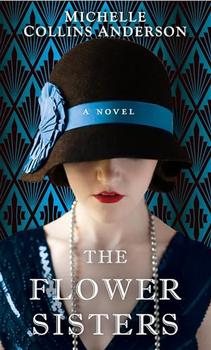
The Flower Sisters
by Michelle Collins Anderson
From the new Fannie Flagg of the Ozarks, a richly-woven story of family, forgiveness, and reinvention.
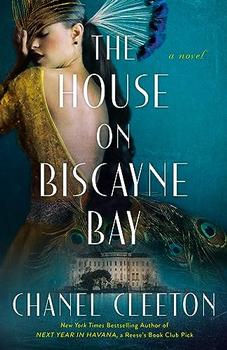
The House on Biscayne Bay
by Chanel Cleeton
As death stalks a gothic mansion in Miami, the lives of two women intertwine as the past and present collide.
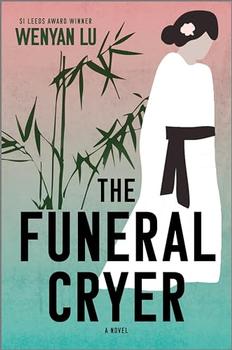
The Funeral Cryer by Wenyan Lu
Debut novelist Wenyan Lu brings us this witty yet profound story about one woman's midlife reawakening in contemporary rural China.
Your guide toexceptional books
BookBrowse seeks out and recommends the best in contemporary fiction and nonfiction—books that not only engage and entertain but also deepen our understanding of ourselves and the world around us.