Lucy Jago discusses The Northern Lights, Norwegian scientist Kristian Birkeland, and the history behind the scientific “hunch” that led Birkeland through years of tracking the aurora borealis.
When did you first learn about the Norwegian scientist Kristian Birkeland,
and what drew you to write a book about his life and discoveries?
While making a film about the sun for a BBC Science series called
"The Planets," I looked for ways to illustrate the influences our star has
on the earth besides providing heat and light. The aurora are the most dramatic,
mysterious phenomena caused by the sun so I contacted scientists at the Auroral
Observatory in Troms for advice on when and how to film them. They provided me
with the information I needed, and told me about an amazing machine they had
just restored which could recreate the aurora in miniature. The man who had
invented this machine, around 1905, was Kristian Birkeland. When I heard more
about this fascinating, brilliant, but tragic figure, I was hooked and began to
research more deeply into his life. I traveled to Norway during holidays to
spend time in archives and up on mountains.
In the winter of 1899/1900, in the most northerly part of Norway, well into the
Arctic Circle, Birkeland built an observatory to watch the aurora. I was lucky
enough to arrive on the only day they had ever allowed "skidoos" up
Haldde mountain and so I hitched a ride to the top where the little stone
observatory perches. It was incredible to stand on top of that peak and think
that Birkeland had spent a winter (often braving atrocious weather conditions)
with this breath-taking view stretching north to the Arctic Sea and south to the
mountain plateau that is the winter home of the Sabme (Lapp) reindeer herders.
That night the temperature was minus 20 degrees but the air was completely
still. I stood and watched the most brilliant display of aurora I had ever seen,
shooting over the mountain tops in the east like lava from a volcano, writhing
overhead to the opposite horizon, snaking into crowns and shooting towards the
ground like harpoons of light. I could quite see why, previous to Birkeland's
scientific explanation for the phenomenon, people assumed the aurora were the
Valkyries riding out of Valhalla to point out which soldiers would die in
battle, or that they were portents of war and disaster or messengers from the
spirit world. No rational or scientific explanation could be exciting enough to
equal the beauty of the Northern Lights. That night I understood for the first
time why Birkeland became so obsessed in his quest to unravel the mystery of the
aurora.
Can you briefly explain the scientific "hunch" that led Kristian
Birkeland through years of tracking the aurora borealis?
Birkeland was convinced that the aurora were created by charged
particles streaming from the sun, drawn towards the poles of the earth by the
magnetic field surrounding the planet and creating the lights as they collided
with atoms in the earth's atmosphere, about 100 kilometers above the surface of
the planet. Although he spent winters in Arctic conditions to gather evidence to
prove his theory, created complicated mathematical models to support his field
work and even built a machine in which to recreate the lights in his laboratory,
few scientists of his day believed Birkeland. His ideas were too far ahead of
their time to gain acceptance; he was not proven right until the late sixties,
when satellites could provide data to back Birkeland's theories.
In an early attempt to fund his Northern Lights research, Birkeland
invested much time and energy in experiments for the hydroelectric industry.
What were some of his successes and failures in this area?
His success was in developing switching mechanisms that allowed
engineers to easily start and stop the electric currents created by the
generators. His failure was that he nearly destroyed an entire hydroelectric
facility in the process! While doing experiments for his switches he noticed
that a strong electromagnetic field can attract or repel metal objects near it.
While most engineers had ignored this strange effect, Birkeland, with his
intuitive understanding of the forces at play, used the information to create an
"electromagnetic cannon" that he eventually developed into an electrically
powered torpedo for warships.
How and why did Birkeland end up building an electromagnetic furnace?
During an important demonstration of his cannon, at which were
gathered the great and the good of Christiania (Oslo) society, along with some
of Europe's major weapons manufacturers, his invention dramatically backfired,
spewing flames and arcs of electricity towards the audience, accompanied by a
tremendous bang. The ensuing panic diverted the audience from the fact that the
missile had successfully hit its target. Shares in Birkeland's cannon company
slumped dramatically. But, rather than become despondent, Birkeland used the
lessons learned from the cannon's faults to create another invention from
similar technology—an electromagnetic furnace. His design was the first
economically viable method to harness atmospheric nitrogen and thus manufacture
fertilizer. This was a huge achievement that helped all of Europe avoid a severe
agricultural crisis.
The Nobel Committee wanted to nominate Kristian Birkeland for the prize,
in recognition of the furnace he invented rather than the auroral theory he
devised. What factors thwarted his nomination?
The "factor" was Sam Eyde, Birkeland's business partner in the
fertilizer company. Eyde had found the money to fund Birkeland's development of
the prototype furnace into a design economically viable for large-scale
manufacture. It would seem that Eyde, with his excellent contacts in Sweden
(where the Nobel Committee sits) managed to scupper plans to nominate Birkeland
alone for the prize. Eyde wanted to be included in the nomination, but the prize
is designed to recognize the original idea, not its commercial application. At
the time, relations between Sweden and Norway were also very delicate and the
committee appears to have been reluctant to nominate Birkeland if his nomination
could have become contentious.
It might surprise some readers to learn that a scientist pursuing an
explanation of the Northern Lights spent years conducting research in equatorial
Africa. What did Birkeland hope to gain from his studies in Africa?
Birkeland traveled to Egypt and Sudan to study the Zodiacal Light—a
subtle light effect seen in night skies created by sunlight scattered off small
particles orbiting the sun. The Zodiacal Light is more easily seen at locations
near to the equator and Birkeland hoped his research in Africa might provide the
proof he needed for his auroral theories.
Referring to World War I, you write: "The declaration of war was the
start of [Birkeland's] own, inexorable slide into tragedy." How so?
War meant that Birkeland's assistants had to return to Norway, leaving
him to continue his research alone. It seems that Birkeland had fallen in love
in Egypt with a Greek pianist called Hella, who also returned to
Europe—leaving Birkeland lonely and isolated. Never a man skilled at
self-preservation, Birkeland began to drink too much whiskey, take large doses
of Veronal (a highly addictive and damaging barbiturate prescribed for insomnia)
and slide into a twilight of excessive work, paranoia and illness—with no one
to stop him. The war also distracted scientific attention away from Birkeland's
work and his achievements. His scientific legacy was forgotten or refuted before
it could be built upon. Birkeland's last treatise was lost at sea when the shop
carrying his effects from Japan to Norway sank. His published work was largely
ignored for fifty years after his death. But many of his ideas, considered crazy
at the time, were later accepted—in particular the existence of field-aligned
currents created by charged particles streaming from the sun, now called
Birkeland Currents.
Do you think Birkeland was a genius?
I have a rather pragmatic view of what "genius" is—Isaac Newton,
when questioned as to how he would arrive at an extraordinary discovery, replied
"by thinking constantly upon it." It would appear that a great number of
people we call geniuses have a better than average grasp of their subject,
combined with total dedication to their quest. Few people would sacrifice their
health, marriage, every moment of potentially free time—even their sleep—to
a single end. But this is just what Birkeland did. In the course of his life he
formed theories of such prophetic brilliance that I do think he could be called
a genius.
I often wonder how lonely and frustrated Birkeland must have been, met
repeatedly with misunderstanding or incomprehension. As he once said, "A very
few lonely pioneers make their way to high places never before visited ...
they create the living conditions of mankind and the majority are living on
their work."
Would you have liked him?
I think I would have loved to be in Birkeland's company—for short
periods! He appears to have been extremely intense, always challenging
convention in his social and work life. He would surely have been an excellent
conversationalist. He thought deeply beyond his subject about philosophical
questions, such as the existence of God and of genius. But he also loved to play
practical jokes on his students and to buy large sacks of confetti which he
would strew about liberally, with the slightest excuse. I think he would have
been a good person to know if you needed some difficult point explained—he
wasn’t patronizing, and was impatient only if you appeared not to be trying
hard enough to understand what he was saying. But I wouldn’t have wanted to be
romantically involved with him: any man able to arrange a lecture on his wedding
day is not what I’d call a good prospect!
Unless otherwise stated, this interview was conducted at the time the book was first published, and is reproduced with permission of the publisher. This interview may not be reproduced or reprinted without permission in writing from the copyright holder.
John M. Barry is a prize-winning and New York Times best-selling author whose books have won more than twenty awards.
In 2005 the National Academies of Science named The Great Influenza, a study of the 1918 pandemic, the ...
(more)
If you enjoyed:
The Northern Lights
Try:
The Great Influenza
by John M. Barry

Australian-born Geraldine Brooks is an author and journalist who grew up in the Western suburbs of Sydney, attending Bethlehem College Ashfield and the University of Sydney. She worked as a reporter for The Sydney Morning ... (more)
If you enjoyed:
A Net for Small Fishes
Try:
Year of Wonders
by Geraldine Brooks
We recommend 10 similar authors



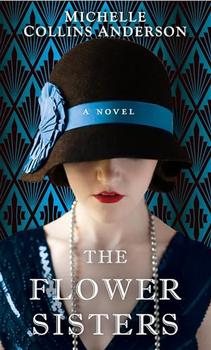
The Flower Sisters
by Michelle Collins Anderson
From the new Fannie Flagg of the Ozarks, a richly-woven story of family, forgiveness, and reinvention.
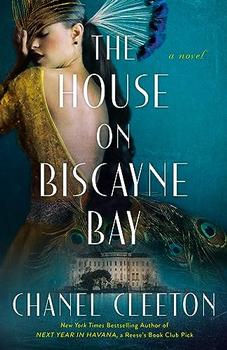
The House on Biscayne Bay
by Chanel Cleeton
As death stalks a gothic mansion in Miami, the lives of two women intertwine as the past and present collide.
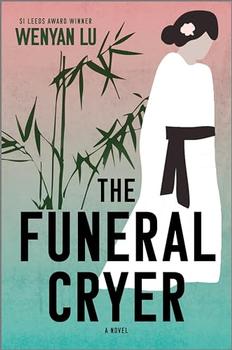
The Funeral Cryer by Wenyan Lu
Debut novelist Wenyan Lu brings us this witty yet profound story about one woman's midlife reawakening in contemporary rural China.
Your guide toexceptional books
BookBrowse seeks out and recommends the best in contemporary fiction and nonfiction—books that not only engage and entertain but also deepen our understanding of ourselves and the world around us.