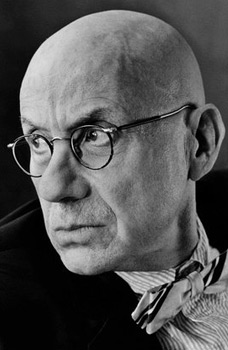
Join us for a conversation with Ellroy about his belief that 'America was never innocent' because, in his words, it was founded on a bedrock of land grabs, slavery, religious extremism, colonial ambition, and genocide.
In the opening paragraph of American Tabloid you write that
"America was never innocent." How does this theme further evolve in The
Cold Six Thousand?
America was founded on a bedrock of land grabs, slavery, religious extremism,
colonial ambition, and genocide. The notion that America was innocent prior to
Jack Kennedy's murder is preposterous; by the rules he lived by, Jack got what
he deserved. He took aid from organized crime during the 1960 election; he
repaid the debt by siccing his kid brother Bobby on the Mob at large. He
betrayed the Cuban exiles at the Bay of Pigs. He pissed off a hot-headed troika
of mobsters, exiles and renegade CIA men involved in the Cuban cause. They
whacked him for it. His death derived from the perennial motives of money and
turf. It was a gaudy homicide that set the stage for the out-of-control America
that I portray in The Cold Six Thousand.
So you really think the Mob called the hits on JFK, Martin Luther King Jr,
and Bobby Kennedy?
I'm convinced that the Mob, in cahoots with Cuban exiles and renegade CIA
elements, whacked Jack Kennedy. That said, I'm a novelist -- and my job is the
creation of verisimilitude, not the exposition of literal truth. There is no
evidence that the Mob whacked King -- and in The Cold Six Thousand, he
gets whacked by a cabal of racist provocateurs, ex-FBI men, and right-wing fat
cats. I suspect that something like this happened in reality. Again, however, my
design is to show the horrible power of like-minded men bent on repression at
any cost -- which is true to the flow of history in general and of the 1960s
especially. Thus I lie/fabricate/condense/extrapolate/guess/hyperbolize and
weave to give you that flow and make it convincing. As for Bobby -- I'm not
sure. Maybe Sirhan Sirhan was a lone wacko; maybe he was assisted in his
murderous obsession. It comes down to this: The Cold Six Thousand
plausibly exposits the time and the place and the mindset of the bad men who
made things happen then.
Why did you choose the events of the 1960's for a look at American
cultures? Why is this time period a point of reference and a point of departure
for you?
I lived through the '60s as a youth. I was not politically conscious or in
any recognizable way a kid of my time. I sensed, however, the human
infrastructure at the base of the great events transpiring. The Cold Six
Thousand covers late 1963 to mid 1968. It is the first time an epic-length
novel weaves the major strands of American public policy into a cohesive whole -
as seen through the eyes of the bad men implementing policy decisions at street
level. The JFK hit; the Klan; the FBI's war on the civil rights movement; CIA
men moving heroin out of Vietnam; Howard Hughes' conquest of Las Vegas; the
Martin Luther King and Bobby Kennedy hits. The Cold Six Thousand is a huge
canvas - it is the Sistine Chapel of American bad juju.
There's a fine line between the good guys and the bad guys in The Cold Six
Thousand -- cons are ex-cops, hit men are ex-FBI, the Justice Department is
virtually run by organized crime during J Edgar Hoover's tenure as FBI Director.
Do you truly believe that law enforcement is that corrupt? And at such a high
level?
Organized crime did not run the Justice Department during J. Edgar Hoover's
tenure. Hoover - the quintessential 20th-century American fiend -- was the
passive handmaid to the Mob's designs. Hoover disingenuously contended that the
Mob did not exist because he knew he could not prosecute the Mob and win.
Hoover's bete noire -- and the one man he could not break -- was Martin Luther
King. The FBI engaged in a campaign of terror and
employed criminal methods to discredit King and the civil rights movement. In
the '60s, there was a self-serving matrix of bad men in high places, pledged to
support a reactionary agenda. In that sense, the Mob, the FBI, the CIA, rogue
politicians and conquest-minded business moguls were all as one under the
sheets.
You blend fact and fiction, mingling names and faces of the time period
with your own characters. How much of the book is based on fact?
The Cold Six Thousand is both solidly factual and wholly fictional.
The book is scrupulously researched -- but utterly reimagined from the
standpoint of dramatic viability. My greatest assist I got in preparing the book
was the outrageousness of the 1960s itself. Times of great social change are
times of great backlash; hellish misadventures like the Vietnam War spawn
provocateurs with dark individual agendas. In The Cold Six Thousand, I
got to rewrite the 1960s to my own specifications and explicate the human
infrastructure I first glimpsed as a youth.
Everyone in The Cold Six Thousand is fatally flawed. Even Martin
Luther King, Jr. is portrayed as having a seedy side. Where are the heroes of
the 60s?
Martin Luther King, the greatest 20th-century American, was a true hero of
the 1960s. His promiscuity was directly related to, and served as a
counterbalance to, the terror he experienced during his 13-year tenure as a
marked man, from the Montgomery Bus Boycott to the time of his death. King's
social agenda expanded during the last 2 years of his life -- almost in the
manner of a kamikaze attack on American society. He was physically and morally
exhausted. His agenda was a shriek of self-martyrdom. He wanted to alienate as
much as he wanted to heal. His long transit of courage brought him to the point
of calling forth his own death. As for Robert Kennedy: he was the greatest
crimefighter of the American 20th century; his anti-Mob crusade was an Oedipal
drama once removed. RFK
was the only male Kennedy who admitted to himself what an evil son-of-a-bitch
his father was; he went at the Mob as Joseph P. Kennedy's proxy. The
spellbinding irony: RFK's Oedipal drama got his brother Jack killed.
What would you say to critics who argue that history shouldn't be the
subject of fiction, that making it so is revisionist, even unethical?
I would say, "You're wrong." I would say that all allegedly factual
historical tomes are filters that express the individual viewpoints and
prejudices of the author. There are emotional and moral truths to be taken from
history -- and fictional revisions get to the heart of the individual drama
inherent in all great events.
Time Magazine describes your writing style as "taut,
telegraphic sentences, subject-verb-kablooey!" How did you develop such
tight, graphic language?
I write novels about the lowest-level implementers of American public policy.
The violence in my language is a direct representation of the violence of their
lives. A novelist's style should serve his subject matter and transform it into
art. To be any less than wholly graphic would be demeaning and wrong. The
language of bad men is largely the language of racism; to flinch from using
racist invective in the actual narrative of a book would be dishonest and would
deny racism its true horrible due. Language, style, narrative drive and
characterization are a novelist's basic tools; they must always be deployed to
the limits of their power.
What was it like to watch one of your books, LA Confidential, made into a
movie?
It was a blast. It was a superb movie and it sold me a shitload of books.
Do you have any other books currently in movie production?
This July, my novel White Jazz will be filmed on location in Los
Angeles. I wrote the screenplay; the director is Robert Richardson; Nick Nolte
plays Dave "The Enforcer" Klein; John Cusack plays Junior Stemmons.
Originally, you had promised three books in this series. Is that still the
case? If so, can you tell us about the final installment?
Yes. American Tabloid is the first volume of my Underworld U.S.A.
Trilogy. The Cold Six Thousand is my second. I will soon begin work on
the epic third volume -- a ghastly tale of political malfeasance and
imperialistic bad juju from 1968-1972.
Unless otherwise stated, this interview was conducted at the time the book was first published, and is reproduced with permission of the publisher. This interview may not be reproduced or reprinted without permission in writing from the copyright holder.
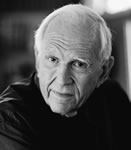
Joseph Nicholas Gores (1931-2011) was born in Rochester, Minnosota and educated at Notre Dame University and Stanford University. He also served in the US Army, where he wrote biographies of generals. After earning a master's... (more)
If you enjoyed:
The Cold Six Thousand
Try:
Spade & Archer
by Joe Gores
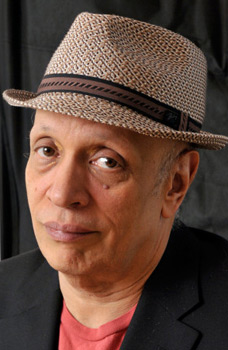
Walter Mosley is one of America's most celebrated and beloved writers. A Grand Master of the Mystery Writers of America, he has won numerous awards, including the Anisfield-Wolf Award, a Grammy, a PEN USA's Lifetime ... (more)
If you enjoyed:
The Cold Six Thousand
Try:
Fear Itself
by Walter Mosley
We recommend 5 similar authors

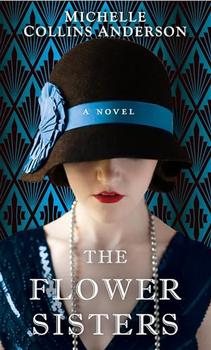
The Flower Sisters
by Michelle Collins Anderson
From the new Fannie Flagg of the Ozarks, a richly-woven story of family, forgiveness, and reinvention.

The House on Biscayne Bay
by Chanel Cleeton
As death stalks a gothic mansion in Miami, the lives of two women intertwine as the past and present collide.

The Funeral Cryer by Wenyan Lu
Debut novelist Wenyan Lu brings us this witty yet profound story about one woman's midlife reawakening in contemporary rural China.
Your guide toexceptional books
BookBrowse seeks out and recommends the best in contemporary fiction and nonfiction—books that not only engage and entertain but also deepen our understanding of ourselves and the world around us.