
-
Your next favorite book
is waiting.
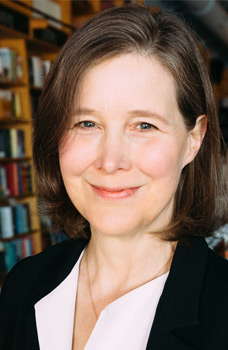
Discover how Ann Patchett, who knew nothing about opera, learned all she needed to know in order to develop the opera singing lead character in Bel Canto; and which operas are now her favorites.
What inspired you to write this novel?
Usually it's hard to pin down the exact point at which you come up
with an idea for a novel but this one is easy: December 17th, 1996, the night
that the terrorist organization Tupac Amaru took over the Japanese embassy in
Lima, Peru. I'm sure I didn't know that day that this story would turn into Bel
Canto, but I was completely focused on it from the start. It had so many
elements that were compelling to me: confinement, survival, the construction of
family. For a long time I'd wanted to find a way to experience the things I
read about in the paper, to grieve for disasters that had no immediate affect on
my life. Turning a tragedy I knew nothing about into this novel was part of that
process.
Were you an opera aficionado prior to writing Bel Canto?
I wasn't. I knew as much about opera as I did about baseball, which
is to say nothing. But once I came up with the character of Roxane Coss I threw
myself into learning about it whole-heartedly. The best thing I did was to buy a
book called Opera 101 by Fred Plotkin. It tells you how to listen and
what to listen to. It takes you through everything you need to know step by
step. It was my bible. Then I listened to a 28 hour lecture series called
"The History of Opera." I also started playing opera all the time and
attending operas whenever possible. I absolutely fell in love with opera. It's
been such a wonderful bonus of writing this book. I feel like I learned a second
language.
Roxane Coss is a fascinating character. Is she modeled on an actual
opera singer?
She's modeled on the only opera singer I know personally, a woman
named Karol Bennett. Karol and I were both fellows at the Bunting Institute at
Radcliffe College in 1990-91. Physically, Karol and Roxane are very similar,
small women with huge personalities. Karol commanded any room she walked into.
It was as if music surrounded her even when she wasn't singing. I admired her
greatly. The funny thing is that now I know Roxane so much better than I ever
knew Karol. For Roxane's singing I mostly listened to Rene Fleming. I didn't
have any recordings of Karol singing so I gave my character Rene Fleming's
voice.
The two love stories in the book are between Gen and Carmen and Roxane
and Mr. Hosokawa, and yet in the end it is Roxane and Gen who are married. Did
you envision the ending this way or did it evolve during the writing process?
Originally that book had a prologue that was written by Gen that said,
basically, "This is the story of how I met my wife." That was the
place from which I started the book. When I was finished, my friend Elizabeth
McCracken (The Giant's House, Niagra Falls All Over Again) said
that I should get rid of the prologue. Elizabeth is the only person who reads my
work while I'm writing it and I trust her judgement completely, so the
prologue went
Aside from the Epilogue, the entire story takes place in one setting --
the Vice President's mansion. Did you find it challenging to set the story
solely in this location?
It would have been a lot more challenging if I had included the
outside world. Things certainly got static keeping everybody inside. Most of the
book happens in the living room with a few brief trips to the kitchen and the
china closet, but it helped me since what I was trying to do was establish the
cessation of time. It's easier to stop time if you keep everyone in one place.
In one instance in Bel Canto, the character Fyodorov states,
"Some people are born to make great art and others are born to appreciate
it. Don't you think? It is a kind of talent in itself, to be an audience,
whether you are the spectator in the gallery or you are listening to the voice
of the world's greatest soprano. Not everyone can be the artist. There have to
be those who witness the art, who love and appreciate what they have been
privileged to see" (pgs. 218-219). How do you think this relates to writers
and readers?
I believe literature takes place between the writer and the reader.
You bring your imagination, they bring theirs, and together you make a book.
It's a kind of literary chemistry, and what's great about this is that the
book is going to be different for everyone who reads it. Fyodorov was
acknowledging the talent of the audience, the importance of the person who
listens, reads, sees. I believe this absolutely. He makes a case of the audience
member who has trained himself to understand, to more fully appreciate the art.
Fyodorov is the perfect reader.
Why did you choose to construct the novel with a narrator looking back
on the events that took place rather than as a straight narrative?
You can either write in the present tense, which isn't something
I'm interested in doing personally, or you can write in the past tense. If it
is two minutes past the action or two months or two years, it's still the
past. The narrative voice is always somewhat more informed than the characters
because it has gone before the characters. It makes sense to me to use that
voice to its fullest advantage. I think there's a level on which the reader
has to know how this story is going to end, even if they don't associate the
novel with the real events in Lima. It's a struggle between what we know is
going to happen and what we want to have happen, which is something most of us
encounter in our lives. I wanted the narrative structure to reflect this.
How does Bel Canto differ from the other novels you've written?
I could more easily tell you how it's similar to my other novels. I
think what's different is that Bel Canto is more heroic because the
circumstances are more dire. I'd like to believe that if you took the
characters from my other books and placed them in this novel they would have
been equally heroic, but I don't know. Also, the narrative structure in this
book is much more ambitious. I've always wanted to write a book with a truly
omniscient narrative voice that switched easily from character to character.
It's the thing I'm most proud of in this book and the thing that probably no
one will notice.
What were some of the challenges you faced in adapting Taft into
a screenplay? Would you like to see Bel Canto made into a movie?
The challenges of adapting Taft into a screenplay all had to do
with working with the production company of the film. Novels are written alone,
screenplays are written by committee. I am a novelist. The work was easy but
extremely frustrating and I hope I have the sense not to do it again. I don't
think Bel Canto is a logical choice for film because of the language
issues, the oversized cast, and the suffocating location. It would take someone
with a great deal of passion for the project to get it right. I would, however,
love to see this book made into an opera.
What writers do you admire? Have any of them influenced your work?
I'm sure everyone has influenced my work. What about a list of
writers I wish would influence my work more? I would put Nabokov on the top of
that list along with Gabriel Garcia-Marquez and Alice Munro. I don't see any
of their brilliance in my work and I wish I did. When I think of the people who
did influence me, Chekhov, Welty, Updike, I only wish they would hurry up and
influence me some more. I think the single book that influenced me the most was
Thomas Mann's The Magic Mountain. In fact, Bel Canto is really a
homage to The Magic Mountain. I've learned so much about plot from
Raymond Chandler, how to be literary and keep the story clipping right along at
the same time. I love that about Chandler. I learned about characterization from
Chekhov and description from Joan Didion. Everything else I know about writing I
learned from Elizabeth McCracken.
Patchett's list of favorite operas in no particular order (sure to change
next week)
I'm also a huge fan of aria collections, especially the Callas La Divina series.
Unless otherwise stated, this interview was conducted at the time the book was first published, and is reproduced with permission of the publisher. This interview may not be reproduced or reprinted without permission in writing from the copyright holder.


Katherine Arden is the New York Times bestselling author of the Winternight trilogy and the Small Spaces quartet. In addition to writing novels, she enjoys aimless travel, growing vegetables, and running wild through the ... (more)
If you enjoyed:
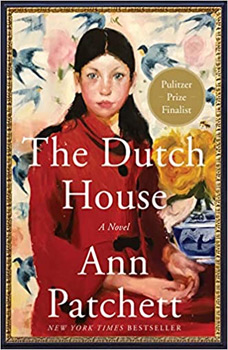
The Dutch House
Try:
The Warm Hands of Ghosts
by Katherine Arden
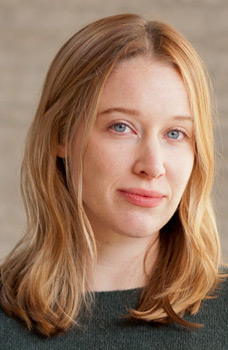
Chloe is a writer from San Francisco, CA. She is the author of The Immortalists, a New York Times bestseller, and The Anatomy of Dreams, which received the 2014 Edna Ferber Fiction Book Award. Chloe is a graduate of Vassar ... (more)
If you enjoyed:
Commonwealth
Try:
The Immortalists
by Chloe Benjamin
We recommend 52 similar authors



Every good journalist has a novel in him - which is an excellent place for it.
Click Here to find out who said this, as well as discovering other famous literary quotes!

Can you name the title?
Test your book knowledge with our daily trivia challenge!
Your guide toexceptional books
BookBrowse seeks out and recommends the best in contemporary fiction and nonfiction—books that not only engage and entertain but also deepen our understanding of ourselves and the world around us.
