Michael Chabon discusses his life-long interest in comic books which inspired him to write The Amazing Adventures of Kavalier and Clay.
What
was your inspiration for
writing The Amazing Adventures of Kavalier and Clay? Did you start
with a character, a concept, a plot?
I started writing this book
because of a box of comic books that I had been carrying around with me for
fifteen years. It was the sole remnant of my once-vast childhood collection.
For fifteen years I just lugged it around my life, never opening it. It was
all taped up and I left it that way. Then one day, not long after I finished
Wonder Boys, I came upon it during a move, and slit open all the
layers of packing tape and dust. The smell that emerged was rich and
evocative of the vanished world of my four-color childhood imaginings. And I
thought, there's a book in this box somewhere.
Where did Josef and Sammy come from? And your decision to set the
story against the backdrop of the war--which itself quickly becomes one of
the main characters?
Joseph and Sammy grew very quickly out of my initial decision to write a
book set during the so-called Golden Age of Comics. Actually I have no idea
where they came from. I suppose they initially took form, in the primordial
soup of the first hours of the book's composition, as a vague, Mutt-and-Jeff
pair, a big guy and a little guy, a Quixote and a Sancho... and then rapidly
began to coalesce. They weren't really based on any actual people, in any
way that I'm aware of, at least.
As far as the war, that was both the natural product of the period in
comics history that I decided to focus on, and the result of my own lifelong
interest in the history of the middle part of the 20th century, especially
in America.
Can you explain your life-long interest in that time period? And the
simultaneously growing popularity of comic books during that time? What were
comic books a medium that enabled readers to "escape" the difficult era more
than other mediums?
My father really made the middle years of the twentieth century in
America come alive for me when I was a kid. He was full of lore about the
radio shows, politicians, movies, music, athletes, and so forth, of that
era. And since he was from Brooklyn, his memories and his view of that time
had a very New York slant to them. The main thing that I was trying to do in
this book, I think, was simply transport myself into that time and that
place the way my father had done for me when I was a little boy.
I don't know what the connection is to comic books, exactly, except that
this was also a world my father introduced me to, and he himself had been a
voracious reader of comics as a kid. At the time I was reading a lot of
comics--the early 1970s--the comics published by National (DC) were giant
things, 80 and 100 pages in length, and typically they were filled out with
reprinted stories from the forties and fifties. So it was very easy for me
to access and connect with at least this one aspect of my dad's own
childhood.
I guess it's no wonder the book is dedicated to my father, Robert Chabon.
What do you think of the comic book industry today? Is there still
room for it with all the other forms of media and entertainment that exist?
I can't really answer this, mostly because I don't have enough
information. But it's pretty clear that readership of comics has been
declining for some time... since about 1945, really, but precipitously since
the mid-eighties or so.
I'm not sure anyone knows the answer for sure.
How much research did you do into the historical context of the novel?
I did fairly extensive research--maybe not by James Michener's standards,
but for me it was new and very absorbing approach to writing a novel. I read
sort of broadly in the literature of comics history, New York history, the
history of the US during the war years, etc, and then I did all kinds of
special research into escape artistry and Houdini, golems, etc. It was a lot
of fun--often, seductively, more fun than writing itself!
Does the novelist have complete artistic license to invent historical
details, as you did in some places?
Yes, as long as doing so serves the purposes of the story and is not
simply gratuitous. Hell, maybe even if it is gratuitous. I'm a big believer
generally in artistic license ... I still remember that marvelous day when
I got my license...my mother was so proud!
Are your characters modeled after people that you know?
Not this time around. I guess the only thing in the book that I drew
freely from my own life is the portrait, toward the end, of the working
partnership, the creative freeflow in the marriage of Sammy and Rosa--the
way they bounce ideas off of each other, criticize each other's work without
rancor, discomfort, or hesitation. That's a lot like the way things work
with me and my wife, Ayelet Waldman, who's also a novelist.
Are you interested in this being adapted as a screenplay? Following
Wonderboys, do you write with that in mind?
There is some early talk of a movie version, but nothing at all definite.
I think it could make a pretty cool movie. I can honestly say, however, that
I wrote this book without giving a moment's thought to an eventual film. The
movie rights had been sold before I even started to write! I took this as
total license to write whatever I wanted, without worrying at all about
whether it would be filmable ... because it was already spoken for, the
problem would be the producer's, not mine.
Do you plot out that which you leave to the reader's imagination, such
as the meaning of the "look" that Sammy's mother give on page 313, the
details of what happened to Joe's family?
Interesting question. Actually in the case of Sammy's mother, I think the
implication is pretty clear that she knows or at least suspects that he's
queer, and is even offering a chance of her acceptance of this, if he could
have the courage to take it, which he doesn't. But I did actually write some
later scenes between them where her attitude toward his sexuality is
addressed more clearly--too clearly, I decided. And the same goes for the
fate of Joe's family, which I again decided, after toying with some scenes
in the DP camps of Europe, was better left undoubted but unspoken. What
matters to this story is how Joe responds.
What's next for you?
I'm working on a pilot script for a TV series. I'm writing it for TNT
network. It's called Telegraph Avenue and tells the story of two
families, white and black, in Oakland and Berkeley, CA. It's an hourlong
family comedy-drama.
Interview by Laura Buchwald, 2001. First published in Bold Type. Reproduced by permission of Random House publishing.
Unless otherwise stated, this interview was conducted at the time the book was first published, and is reproduced with permission of the publisher. This interview may not be reproduced or reprinted without permission in writing from the copyright holder.
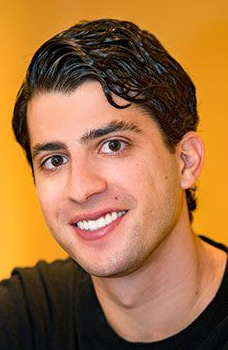
David Hopen is from Hollywood, Florida. He graduated from Yale College and earned his master's degree from the University of Oxford. The Orchard is his debut novel. (more)
If you enjoyed:
The Amazing Adventures of Kavalier and Clay
Try:
The Orchard
by David Hopen
Born in Peru and raised in Chile, Isabel Allende is the author of a number of bestselling and critically acclaimed books, including The House of the Spirits, Of Love and Shadows, Eva Luna, Paula, and In the Midst of Winter. ... (more)
If you enjoyed:
Gentlemen of the Road
Try:
Zorro
by Isabel Allende
We recommend 58 similar authors

The House on Biscayne Bay
by Chanel Cleeton
As death stalks a gothic mansion in Miami, the lives of two women intertwine as the past and present collide.
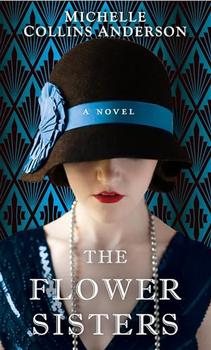
The Flower Sisters
by Michelle Collins Anderson
From the new Fannie Flagg of the Ozarks, a richly-woven story of family, forgiveness, and reinvention.

The Funeral Cryer by Wenyan Lu
Debut novelist Wenyan Lu brings us this witty yet profound story about one woman's midlife reawakening in contemporary rural China.
Your guide toexceptional books
BookBrowse seeks out and recommends the best in contemporary fiction and nonfiction—books that not only engage and entertain but also deepen our understanding of ourselves and the world around us.