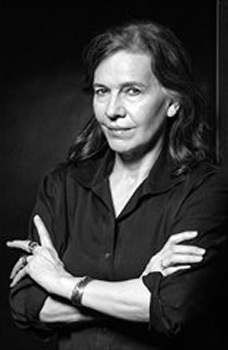
Louise Erdrich discusses The Last Report on the Miracles at Little No Horse, how she was able to develop a character that vacillates between the male and the female so organically, and many other thought-provoking elements.
Q. Your novel The Last Report on the Miracles at Little No Horse
is the story of Father Damien Modeste and it spans from 1912 to the present.
A. 1911 or 1912, yes. It then moves forward to nearly the present. But it
also includes some history of characters and those histories occur before the
turn of the last century. It spans the emotional and historical landscape of my
previous books as well and, I hope, brings them into some sort of focus or sheds
new light on some of the characters's secrets. And of course it brings one
character, Father Damien, who was a minor contributor to the book Tracks, into
his/her own.
Q. Everything in the novel -- from people to places to the very landscapes --
seems to exist between two extremes. Damien is Agnes. Leopolda is somewhere
between sainthood and acts of cavalier cruelty. Even the bank robber is called
The Actor. There is almost a Manichaean split between things. And rather than
being an expose on hypocrisy, it's more that these are the necessary tools of
survival in a way.
A. I don't interpret what I write so it's interesting to hear it put in a
way that makes it seem planned and intelligent. I write so much on instinct that
I'm enthralled when I hear the word Manichaean to describe what my characters
just do. Agnes becomes a priest through an act of revelation. She doesn't become
a priest out of calculation. For her it's a revolution of the spirit. It is
meant to be. For her, everything that has happened to her up to that point has
drawn her toward the moment in which she makes the decision to go into the
priesthood. She's carried by the flood of her being into this priest's garments.
From then on, she makes the choice every day. She grows in a spiritual way --
but she also inhabits almost another body and it becomes natural to her. By the
end, she doesn't think of herself as anything else in the outside world but a
priest and yet within herself, continues to exist in her own persona. And there
is always that question: are the personae that we deliver to the world intrinsic
to us or have we assumed them the way The Actor assumes his roles in the first
chapter of the book?
Q. There is almost no difference in the book between the sacred and the
profane. You know Agnes, before she's even Agnes, while she's a young novitiate.
And she plays the piano. And she's transported by Chopin who you describe, I
must say at one point, as being a "pierogi snarfer," which I think is
a first for a description of Chopin.
A. Yes, but that's much later and the devil is describing him in that way.
In the beginning, Chopin is her angelic lover. She is physically initiated by
the marvel of the emotion that he has hidden in his music for her to discover.
Later, she loses her musical ability and forgets why her hands move. Then it
comes back to her. Chopin's music returns to her with all the solace of an
internal caretaker and a lover. Which I think music is for many of us. It is
something that we can return to again and again throughout our lives and it
never ceases to comfort.
Q. It's what carries her away from the absolute desolation of her old life,
she climbs on top of her piano and she floats away to her new life.
A. That was the image that first started me writing the book. It was this
picture of a woman in a billowing white nightgown moving off into the flood. She
was captured on the lid of a piano. She was wearing the treble clef of a
nightgown and riding into the flood. The first part of this book was actually
written during a tremendous flood that occurred in North Dakota, and, I think,
captured the attention of many people because it was so devastating and so
unexpected. The river along which I grew up is rather innocuous most of the time
but then it can suddenly swell to immense proportions. That's what happens in
the beginning of this book.
Q. You've written, in many ways, a book about faith. But it is also a very
erotic book.
A. I believe that faith is erotic in the sense that our yearning is toward
union, toward the absolute. Toward a transcendence -- not of the body -- but of
all of the concerns that grab us from every side from day to day. Transcendence
of the ordinary or an acceptance -- a love of the ordinary part of faith. So I
interpret erotic to be a much more inclusive and embracing word than say purely
sexual.
Q. In terms of writing a character that vacillates between the male and the
female so organically, how was that for you as a writer?
A. I'm surprised to say that it was not a difficulty. Maybe that is because
I think we all do vacillate between male and female in some ways. I have no idea
how it affects the reader. But for me the only difficulty was that for a while
in the writing of it I had Agnes change dramatically. First she was Agnes and
then she was Father Damien and there was a great divide in the book. But it
didn't seem to work and I couldn't admit to Agnes being lost. It didn't seem
realistic. It seemed as though a person who was able to be this consummate actor
-- so skilled that she inhabited entirely the role that she was playing -- that
did not mean changing oneself. It would mean incorporating every skill in order
to enlarge oneself so that she became two people. She became twice the person
she was.
Q. Near the very end of the book there is a sly reference about a local
writer who has been intercepting Father Damien's reports to the Pope.
A. All of these reports that have been sent off to Rome -- because Father
Damien doesn't want to talk too frankly to the local bishop because of course
that would blow everything. And someone has been sending these reports up for
years to the Pope -- really being the closest person to God. Originally the
whole purpose of the book was different. I wanted to somehow explain how this
writer, me, came into the possession of all these first person accounts
belonging to all these other people. These outrageous voices, the confessions in
Love Medicine and Tracks. It's a way of explaining to myself where
the books originated because I don't understand it. I don't understand why
suddenly I begin to think in a certain voice and the writing comes out in a
certain voice. And some little flare of an image suggests a certain story. It's
a process that is mysterious to me. I originally began forming the idea of this
novel as a way of explaining my role as a writer -- I must have somehow
appropriated dozens of confessions of people I've never met or known.
Q. That's not some kind of admission that you've been jimmying the lock on
the archdiocese mailbox all these years.
A. That too perhaps. Why don't I just leave this as a question mark?
Unless otherwise stated, this interview was conducted at the time the book was first published, and is reproduced with permission of the publisher. This interview may not be reproduced or reprinted without permission in writing from the copyright holder.
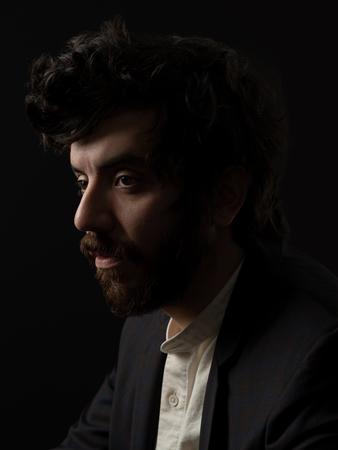
Kaveh Akbar's poems appear in The New Yorker, The New York Times, The Paris Review, The Best American Poetry, and elsewhere. He is the author of two poetry collections: Pilgrim Bell and Calling a Wolf a Wolf, in addition to a... (more)
If you enjoyed:
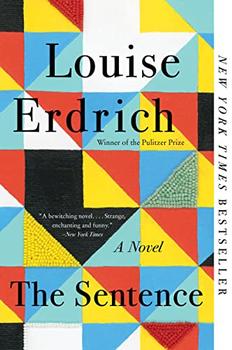
The Sentence
Try:
Martyr!
by Kaveh Akbar
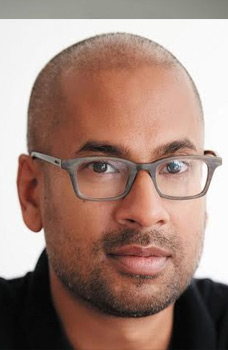
Rumaan Alam is the author of Leave the World Behind, Rich and Pretty, and That Kind of Mother. His writing has appeared in The New York Times, Elle, New York Magazine, The Los Angeles Review of Books, The Wall Street Journal,... (more)
If you enjoyed:
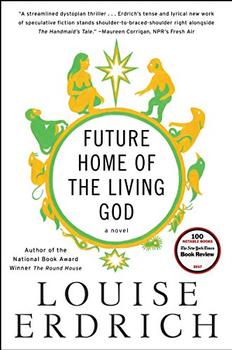
Future Home of the Living God
Try:
Leave the World Behind
by Rumaan Alam
We recommend 63 similar authors

The Flower Sisters
by Michelle Collins Anderson
From the new Fannie Flagg of the Ozarks, a richly-woven story of family, forgiveness, and reinvention.

The House on Biscayne Bay
by Chanel Cleeton
As death stalks a gothic mansion in Miami, the lives of two women intertwine as the past and present collide.

The Funeral Cryer by Wenyan Lu
Debut novelist Wenyan Lu brings us this witty yet profound story about one woman's midlife reawakening in contemporary rural China.
Your guide toexceptional books
BookBrowse seeks out and recommends the best in contemporary fiction and nonfiction—books that not only engage and entertain but also deepen our understanding of ourselves and the world around us.