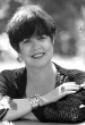
Sandra Benitez talks about how, after taking a writing class at age 39, she quit her job to pursue her writing dreams, her favorite authors and procrastination techniques.
You were 52 when your first novel, A Place Where the Sea Remembers, was
published. Have you been writing all your life, or did you come to it later?
I came to writing late. When I was 39, almost as a lark, I took a class in
writing and all the stories that had impressed my heart began to bubble up. I
was hooked and began to think of being a writer. I quit my job and began writing
full time. It was an especially big risk because I was writing stories about
"the other America," Latino stories that had not yet found a place in mainstream
American literature. It took me 13 years to get my first book published.
You grew up between two cultures—Latin American and North American. How do
you think this affects your writing?
I'm the daughter of a Puerto Rican mother and a father from rural Missouri. I
spent my first 15 years living outside the U.S.; then five more years moving
back and forth between them; then finally moved to Missouri and Minnesota where
I live now. As a result, I feel comfortable writing about either culture, and I
think I benefit from understanding how the people in each culture think about
the other.
Who are some of your favorite authors?
Among those who have influenced my writing are Louise Erdrich and Isabel
Allende for the richness of their storytelling skills. I like Ernest Hemingway
for the deceptive simplicity of his language and Tim O'Brien for teaching me to
go beyond what seems to have happened and explore what might have really
happened.
What do you read for fun and relaxation?
Murder mysteries are a favorite. In particular, I love the Ed McBain 47th
precinct novels. I also like the work of Anita Shreve and Elizabeth Berg and
Carol Shields. But by the way, all reading is enjoyable as far as I'm concerned.
How often do you write?
Five days a week, five hours a day or five pages a day, whichever comes
first. When I'm heavy into a novel, I'll write every day and until I reach
exhaustion, which usually happens after about 10 hours.
What are your favorite forms of procrastination?
The usual, except maybe for doing crossword puzzles. I'm a crossword nut.
Other than that, I can get into room-straightening whether it needs it or not.
Or I'll do a load of laundry or iron some clothes. Sometimes I convince myself
that watching Oprah will make it easier for me to relax and then write.
Where do you write?
We live in a two-bedroom plus den condominium and for a long time my writing
space was simply a small chunk of the den. But about three years ago a small
one-bedroom unit right next door to ours became available. I had just gotten
some advance money and I figured the universe was speaking me on how to spend
it. We snatched the place up, knocked out space for a doorway to link the two
places and voila! I had a studio. So now, I get out of bed at the old place and
pad over to the new place. I call my studio "mi cueva," my cave. It contains
everything I love, lots of books, paintings, photographs, art objects I've
collected over the years, a big desk and an old hutch I've converted into a
personal altar. It's covered with candles and religious artifacts of all kinds
and photos of those I love, living and dead. I've crowned the hutch with tiny
Christmas lights and the whole thing glows all day long. I find it comforting
and encouraging and inspiring.
How do you feel about reviews of your books?
I read reviews with trepidation. Of course, I want the reviewer to have liked
the book or, better yet, loved it. But once a book is out of my heart and onto
the page, I have no control over what someone thinks of it. I've done my best,
and the book is on its own. If I get a bad review (and fortunately this has been
rare), I allow myself one day of misery, only one day.
What other titles were you considering for The Weight of All
Things?
Because of one of the real events in the book, the massacre at the Sumpul
River in El Salvador, I used "Sumpul" as a working title for a long time. Then
it became "A River to Cross." Then "The Roar of the Lamb." Which make sense once
you've read the book. But none of these were totally satisfying. Then I came
across the quotation from a poem by Rilke, "Life is heavier than the weight of
all things." That, in my mind, captured the essence of the novel and I knew in
my gut that I had my title.
What has been your biggest surprise of being a published author?
That my readers sometime find significant meanings in my stories that I
never, until they told me about them, realized were there.
Copyright © 2001 by Sandra Benítez. All Rights
Reserved.
Unless otherwise stated, this interview was conducted at the time the book was first published, and is reproduced with permission of the publisher. This interview may not be reproduced or reprinted without permission in writing from the copyright holder.
Niccolò Ammaniti was born in Rome in 1966. He is the author of three novels, as well as a collection of short stories. At thirty-four, he was the youngest ever winner of the prestigious Viareggio-Repaci prize for I'm Not... (more)
If you enjoyed:
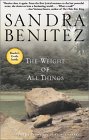
The Weight of All Things
Try:
I'm Not Scared
by Niccolò Ammaniti
Monique Charlesworth was born in Birkenhead, England. She trained as a journalist and spent ten years working for IPC as a trade and technical feature writer and then editor of trade journals before moving to Hong Kong. There... (more)
If you enjoyed:
The Weight of All Things
Try:
The Children's War
by Monique Charlesworth
We recommend 5 similar authors

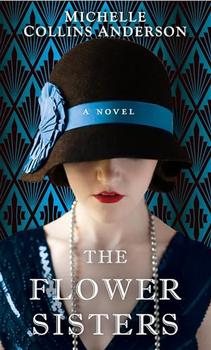
The Flower Sisters
by Michelle Collins Anderson
From the new Fannie Flagg of the Ozarks, a richly-woven story of family, forgiveness, and reinvention.
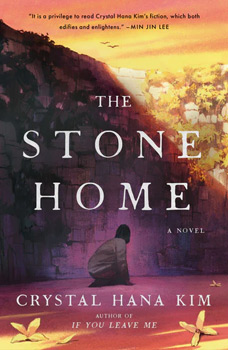
The Stone Home
by Crystal Hana Kim
A moving family drama and coming-of-age story revealing a dark corner of South Korean history.

The Funeral Cryer by Wenyan Lu
Debut novelist Wenyan Lu brings us this witty yet profound story about one woman's midlife reawakening in contemporary rural China.
Your guide toexceptional books
BookBrowse seeks out and recommends the best in contemporary fiction and nonfiction—books that not only engage and entertain but also deepen our understanding of ourselves and the world around us.