
-
Your next favorite book
is waiting.

How to pronounce George Pelecanos: pele-CAH-nos
George Pelecanos discussed his book Hard Revolution, and gives a glimpse into his personal motivators.
Q & A with George Pelecanos
You have indicated that Hard Revolution may be the best book you have ever
written. Why do you think this is true?
I'm certainly pleased with it. Hard Revolution is big in terms of scope and
ambition but doesn't lose sight of its characters. It's the book I've always
wanted to write.
Journalists have commented that crime fiction is one of the only genres that
provides a setting in which writers can deal with social issues. Hard Revolution
is set during one of the most difficult times in the history of Washington D.C.
Why was it so important for you to write this particular novel and what are the
issues you hope will come across to readers?
I was eleven years old in 1968. Two months after the riots, I took a bus
every day down to my father's lunch counter, where I worked as a delivery boy.
The D.C. Transit passed through parts of town that had been completely
destroyed. Some of the people on the bus had lost entire neighborhoods, but
clearly they had won something too. I could see it in their posture, style of
dress, and attitude. But it registered with me on a gut rather than an
intellectual level. Since then, I have always wanted to find out "what
happened." Writing a novel set during the riots afforded me the opportunity.
Know the past and maybe the present starts to make some sense, right? I hope
readers will find some interesting parallels between our country in '68 and
America today.
For the past three years you have worked your way up from writer to story editor
and now producer on the hit HBO series "The Wire." "The Wire" seems to be more
like a novel made for TV than most episodic television-what are your thoughts
about how "The Wire" stands out from most shows on television?
We are, in fact, taking a novelistic approach to a television series. The
episodes are chapters. We can stretch out in terms of detail and character. We
are very interested in presenting a true, full-bodied world, rather than a
television world. And each season is "about" something. It's really exciting to
be a part of it.
In a Newsweek interview you talked about how you have reached a point in your
career as a novelist and as a screenwriter/producer where you have "access" to
people and places you never had before. How has this affected your work?
Many doors have opened for me as my career has progressed. To put it another
way, my phone calls are returned more often these days. That means access. In
the research phases of my books, I routinely ride with police, private
investigators, humane society officers, and parole officers. For Hard
Revolution, people who had participated in the riots, both police and rioters
alike, were eager to speak with me. On "The Wire," we have shot on the docks, in
prison, and in the projects in the middle of the night. I recently went out with
the undercover narcotics squad to do jump-out busts. These experiences are
essential to my writing, given the subject matter and milieu I am attempting to
describe. It's part of the job. Also, undeniably, I'm having fun.
Many reviewers and interviewers have remarked on your uncanny ability to create
atmosphere with musical references in your books. How do you do it? And, if you
could choose which decade or genre you would live in musically, which would it
be and why?
Each period novel I write affords me the opportunity to explore that era's
music. It is one of the perks of my job. With Hard Revolution, for example, I
immersed myself in Deep Soul of the Stax/Volt variety. I discovered a bounty of
beautiful, passionate music.
I would of course live in the music of the 1970s if I had to make a choice. The
rock, soul and funk movement of the '70s will never be duplicated and never be
equaled. And don't even talk to me about disco or ELP. There was so much more to
that decade. We had big fun. Why the '70s? I was a teenager, and music has
meaning when the hormones start to rage. I remember watching the older sister of
a friend dancing in her lingerie at the top of the stairs to "Whole Lotta Love."
She was dancing with abandon, and the music was turned up loud. At that moment,
my life changed.
© 2006 by Hachette Book Group USA
Unless otherwise stated, this interview was conducted at the time the book was first published, and is reproduced with permission of the publisher. This interview may not be reproduced or reprinted without permission in writing from the copyright holder.
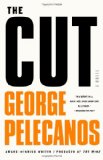
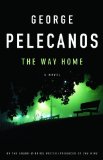
Russell Banks was raised in New Hampshire and eastern Massachusetts. The
eldest of four children, he grew up in a working-class environment, which has
played a major role in his writing.
Mr. Banks (who was the first in his...
(more)
If you enjoyed:
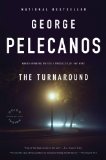
The Turnaround
Try:
Lost Memory of Skin
by Russell Banks
James Lee Burke is a New York Times bestselling author, two-time winner of the Edgar Award, winner of the CWA Gold Dagger and the Grand Prix de Littérature Policière, and the recipient of the Guggenheim Fellowship ... (more)
If you enjoyed:
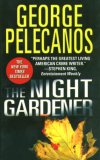
The Night Gardener
Try:
Jolie Blon's Bounce
by James Lee Burke
We recommend 22 similar authors



The low brow and the high brow
Click Here to find out who said this, as well as discovering other famous literary quotes!

Can you name the title?
Test your book knowledge with our daily trivia challenge!
Your guide toexceptional books
BookBrowse seeks out and recommends the best in contemporary fiction and nonfiction—books that not only engage and entertain but also deepen our understanding of ourselves and the world around us.
