
-
Your next favorite book
is waiting.
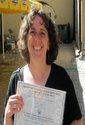
Simone Zelitch discusses the influences of Hungary on her writing, how and why she writes, and what draws her to the subject matters of her books.
Simone
Zelitch (Peace Corp volunteer in Hungary 1991–92 ) is the author of The Confession of Jack
Straw, published in 1991 by Black Heron Press. This novel won the
University of Michigan’s Hopwood Award for Major Fiction. Next month Moses
in Sinai will be published by Black Heron Press, and in September,
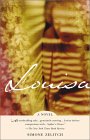
G.P. Putnam will publish Louisa, a novel that draws upon her
experiences as a Peace Corps Volunteer in Hungary. With two books coming
out in 2000, we decided to interview Simone about how her Peace Corps
experience influenced her novels.
The topics of your novels
are wide and diverse. What draws you to the subject matter?
It’s hard to generalize. If
I was going to name something that my three novels have in common, it
would probably be “revolution betrayed.” It's an old story. Peasants
storm London, and within the week, their king breaks every promise, and
the heads of their leaders are piked on London Bridge. Moses leads the
Hebrews out of Egypt, only to create a stratified society of conquerors.
In my latest novel, Zionism itself is presented as a kind of failed
revolution. It all comes down to a distrust of absolute answers and, by
extension, centralized authority.
When The Confession of Jack Straw
came out some years ago, a group of Philadelphia anarchists adopted the
novel, and I couldn’t have been happier, although I once went into Saint
Marks Books and found a copy in the Anarchism section, and I made them
move it into Literature.
Still, as time goes on, I had to admit that
my work has become less pointedly political. If Jack Straw
is a political fable, and Moses is a kind of allegory, Louisa
is really a novel about human relationships. I started with the
characters, and only slowly put them in Hungary during the
Second World War.
Even early on, I found my interest in my
characters was what drove the work. Frankly, I wrote to find out what
they’d do next. My work is always going to be shaped by my politics, but
it’s always really been more about failed relationships than failed
revolutions, perhaps even how a kind of personal idealism breaks down.
I also tend to be drawn to stories that
don't get told. In the case of Moses in Sinai, I started
thinking about the novel back in high school — a Jewish high school by
the way — when a rabbi warned us not to be like the infamous Korah who
led a rebellion against Moses and was swallowed alive.
Being an alienated 17-year-old, I
immediately read and reread Korah’s story, as well as rabbinic
commentary, and fifteen years later, I finally figured out how to make
that story a central part of a novel.
A final note: as time goes on, my work seems
to have become increasingly Jewish. Perhaps those years of Akiba Hebrew
Academy had some effect after all.
What was your Peace Corps
assignment?
I was a TEFL (Teacher of English as a Foreign Language) with the second
group to Hungary. I taught English to teachers in training at the
University of Veszprem. I was also involved in planning the first regional
Central European Peace Corps conference. Perhaps my most lasting
contribution was the development of a songbook designed to teach U.S.
History and Culture as well as grammar. I even put together an
accompanying cassette which contains a very embarrassing rendition of
“Over the River and Through the Woods.”
Did you go to Hungary
thinking that you would write about the country or did that experience
grow into a novel?
I actually did go knowing
that Louisa, the main character of my novel, would go to Hungary. To be
more specific, early on in the process of research and writing, when I was
also in the process of applying to Peace Corps, I knew the novel would
take place in some Central European country, and had just about decided on
Hungary when my assignment came. I went there knowing that I would
probably feel too uprooted to get much serious writing done, and I was
right. I didn’t finish a full draft until I returned. Without a doubt,
the novel would have been close to impossible to write without my years in
Hungary. I’m grateful that my site wasn’t Budapest, and that many of
my PCV friends lived in villages near the Romanian and Ukrainian border. I
spent a lot of time on trains, staring into space, and being stared at by
Hungarians. I’d never felt more vulnerable, or more American. I think my
experience of displacement had an enormous impact on the way I wrote about
Louisa’s central characters, who are all, essentially,
displaced, Louisa herself, who is a German in Hungary, and many other
characters who are Hungarians in Israel.
What Peace Corps writers
have you read?
I like Paul
Theroux’'s travel writing, and I enjoyed Bob Shacochis’ Easy in
the Islands, but it wasn’t until I read Living on the
Edge: Fiction by Peace Corps Writers that I realized that these
writers had been Volunteers. At the same time, given the nature of the
work, it didn’t surprise me. On the other hand, one wouldn’t
automatically assume that Kent Hanuf was an RPCV. It makes me wonder what
we mean by a Peace Corps writer. Is it someone whose writing is shaped by
living and working abroad, or simply someone who, at some point was a
Volunteer? When it comes to the work itself, do we RPCV writers have
anything in common?
Give us some idea of how
you write, and how long it takes you to write a book?
Because I teach,
I tend to begin long projects during the summer, when I have a block of
time, and then I build up a head of steam and work my way through a draft.
The rest of the year is spent making sense of what I’d written, which,
at least initially, is a mess. This pattern used to produce a novel every
two or three years, but my most recent novel, Louisa, took
considerably longer, in part because of my time in the Peace Corps, and in
part because the novel was more ambitious, and needed four full summers
for radical beginning-to-end revisions. I always tell my students to write
every day, and I tend to be most productive when I follow my own advice
and devote a few hours to at least trying to get something down on paper,
even if none of it ends up as part of something lasting.
Why do you write in the
first place, since it is so difficult to get published?
I write to be
read. Wanting to be read is not the same thing as wanting to be famous. It
may not even be the same thing as wanting to be published. I get real
pleasure out of holding an audience, making them care about people or
circumstances I invent, and making them anxious to find out what happens
next. My boyfriend’s daughter recently discovered that I like to tell
stories, and I’m not sure she realizes that half the time I have no idea
what’s going to happen next until it comes out of my mouth. What drives
me on is knowing that she’s listening. When I write rather than speak, I
have that same sense of a story’s audience urgently pulling me forward,
and, better yet, I can take the time to shape the language, literally
build a world out of words. I also really love the idea that what I write
can have some impact on total strangers. That's where publication comes
in.
In some respects, these days, it’s easier
than ever to find an audience. For example, you could post on-line, or you
could take part in an open reading. You could even design a respectable
book on your computer and self-publish, an honorable tradition. Then there
are small presses, which are often as selective as big houses but are also
more open to unknown writers, and many of them, my own press, Black Heron,
included, have a commitment to keeping their books in print, something
that’s true of very few commercial publishers.
On the other hand, to have fiction accepted
by a commercial press, and to actually be paid cash-money - that’s
another matter entirely. It’s a question of luck, of course, and also of
persistence. I know quite a few writers who spend as much time sending out
their work and establishing connections with agents and editors as they do
writing. I’m not a good role model there, but I get occasional bursts of
energy. After I finished Louisa, I sent out forty query
letters to agents before I got letters of interest from three. I ended up
with Gail Hochman, a gem of an agent, who placed Louisa with
Laura Mathews at Putnam, a gem of an editor. I don’t think I would have
gotten that far if Louisa had been a bad novel, but there are plenty of
good novels that simply don’t find a home at a commercial press.
I suppose it comes back down to deciding why
you write. If you’re doing it to become famous or to become fabulously
wealthy, you’re bound to feel as though you’re knocking your head
against a wall. If that had been the only way I measured success, I would
have stopped writing fifteen years ago.
What's next for
you in the way of writing?
I began a new
novel that takes place in Jerusalem. So far, I’ve had a number of false
starts, but I do know that the main character is an American girl who is
going to make her way through all three monotheistic religions. Once
again, I seem to be writing about a displaced person, and once again, I
have a wonderful excuse to read about things that interest me. I hope it
gives me a reason to spend some time in Israel. During my research trips
there, I found I literally couldn’t stop writing.
Unless otherwise stated, this interview was conducted at the time the book was first published, and is reproduced with permission of the publisher. This interview may not be reproduced or reprinted without permission in writing from the copyright holder.
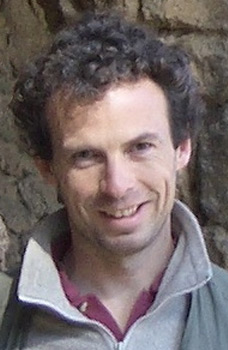
Richard Askwith is a Northamptonshire-based journalist and author whose passions include running, outdoor adventure and the traditions and ordinary people of the English countryside.
Richard Askwith is the author of Feet ...
(more)
If you enjoyed:
Louisa
Try:
Unbreakable
by Richard Askwith
Carole Cadwalladr is a British author. Her first novel, The Family Tree, was shortlisted for the 2006 Commonwealth Writers' Prize, the Author's Club First Novel Award, theWaverton Good Read Award, and the Wales Book of the ... (more)
If you enjoyed:
Louisa
Try:
The Family Tree
by Carole Cadwalladr
We recommend 7 similar authors



The worth of a book is to be measured by what you can carry away from it.
Click Here to find out who said this, as well as discovering other famous literary quotes!

Can you name the title?
Test your book knowledge with our daily trivia challenge!
Your guide toexceptional books
BookBrowse seeks out and recommends the best in contemporary fiction and nonfiction—books that not only engage and entertain but also deepen our understanding of ourselves and the world around us.
