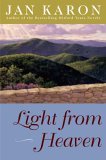
Join us for a delightful interview with Jan Karon as she shares about the influence of her rural upbringing, where all her colorful Mitford characters come from, and a bit about writing technique.
You write about the small town of Mitford, yet haven't you spent
most of your life in cities?
Until I was twelve I lived in the country, then I spent many years
in cities. I think that I was born with a kind of deep affinity for the rural,
the rustic. In addition, I'm very drawn to the pastoral novels of the English
genre -- the village novel where a small group is used to paint a picture of a
larger society. I still have in me a great love for the agrarian -- for what
this country was, for what we still are. People say, "Oh well, I guess
there's no such thing as Mitford." Well, the good news is there are
Mitfords all over the country, and there are still great stretches of open land
and pastures and meadows and fields. It's not all bad news. There's so much left
of this country that is reasonable and moral and strong. And that's the part I
relate to.
You've often said how important a rural upbringing was for you. How
has it influenced your writing?
On the farm there were long passages of time in which to observe.
The senses are very important to me, and I try to bring the experience of the
senses into my writing. And life on the farm is very graphic. Calves are
dropped, colts are foaled, manure lies steaming in the sun. It's the bottom line
of what life is about.
Mitford is packed with delightful characters like Dooley, Miss Rose,
Emma, Miss Sadie, and Homeless Hobbes. Where do they all come from?
Darned if I know. My characters walk in and introduce themselves to
me and I'm stuck with them. When I first moved to Blowing Rock to write a book,
I struggled hard to write according to the outline I came here with, but the
book never worked. The characters never got off the page. That was a real defeat
for me. "Woman's dream turns to nightmare," I thought. "I don't
know how to write a book!"
Then one night in my mind's eye I saw an Episcopal priest walking down the
street. I decided to follow him and see where he went. Well, he went to a dog
named Barnabas, they went to a boy named Dooley, and the story unfolded before
me. Instead of me driving the story, the story began to drive me! I got
interested, wrote a couple of chapters, and there you have it.
How much do you personally relate to Father Tim? Are you very much
like him?
Father Tim's personality is far more conservative than mine, but
like Father Tim, I don't know a great deal about having fun. If I get dragged
into it, I can always enjoy it, but it's hard for me to go out and find it on my
own. And of course we both share a faith. My books are formed on my connection
to God. That's the seasoning in thestew.
How would you describe the nature of that faith?
In my books I try to depict not a glorious faith with celestial
fireworks, but a daily faith, a routine faith, a seven-days-a-week faith. Father
Tim's faith is part of his everyday life. He has simple prayers, not polished,
pious prayers. He follows the Apostle Paul's command that we pray without
ceasing. I try to depict how our faith may be woven into our daily life, like
brandy poured into coffee. I believe that spirituality needs to be basic,
common, everyday.
Father Tim seems in the thick of things whether he wants to be or
not. How does this affect him?
In the first book, At Home in Mitford, he lived a very quiet life.
In the subsequent books we are able to see far more of Father Tim's humanity
because he is surrounded by people. That means that his heart is going to be
broken and his patience is going to be stretched -- all of the things that
happen when we get involved with other people. This has made him a much more
human figure. Father Tim is very heroic but he does grand things in such a quiet
way that he doesn't assume the proportions of a hero. I think Father Tim is
somebody who's into recycling and restoring people. It comes from two places
inside of him. First of all, it comes from that place where he was so deeply
wounded in his relationship with his father. He is in a sense recycling himself;
he's still trying to heal himself. And second, he operates on the fuel, the
steam that comes from his relationship with Jesus Christ. But he's definitely
into reclamation, recycling, helping people find the way -- which is what Jesus
is all about. So I suppose that Father Tim is a type of Christ figure -- not
just because he is a preacher but because of the way he is constructed.
In Out to Canaan, Father Tim lives in a chaotic household. Did you
grow up in such a household?
No, I didn't. I've lived a fairly ordered life. Being a writer
requires a lot of solitude. I've not lived like that, but I've always looked
toward those households with a certain longing.
Where do you write?
My studio stretches across the back of my little house. It has
eight windows that look out on a copse of trees. I can see the blue outline of
the mountains in the distance. Where I write is exceedingly important to me. I
am never comfortable unless I am in a room that pleases me. I need the pictures
on the wall to be hanging straight. I have to do my housekeeping before I can
sit down at the computer. Things need to be in order in my mind and in the place
where I write. In recent months my life has been topsy-turvy. I have learned to
write with utter chaos all around me. I turn to my book with great intensity.
Sometimes I may write twelve hours a day. Sometimes I can write only two hours a
day.
Do you have any conscious technique that so effectively makes
Mitford come alive for people?
I grew up in the era of radio. When you turned on the radio, you
heard the voices and you filled in all the blanks. Radio helped me become a
writer. Television would never help me become a writer. With radio you have to
color in everything. What you need to do for readers is give them as much free
rein as they can take. Let them participate in the story by building their own
imagery.
So conversations and characters bear the burden of telling the
story?
My books are about relationships. With rare exceptions, the scenes
are all one-on-one relationships: Father Tim and Dooley, Father Tim and Cynthia,
Father Tim and Emma. There are times when I step away to the Grill where three
or four people are in a relationship. Basically, I try not to waste the reader's
time with descriptive narrative, details of what people are wearing, how they
look, how tall they are.
You seem to have a lot of lovable eccentrics in your books. Are you
attracted to unusual people?
I see everyone as unusual. Most everyone seems to have an
extraordinary life story. "I just love people," was my grandmother's
saying. Casting the writer's light on ordinary people makes them appear
extraordinary.
Unless otherwise stated, this interview was conducted at the time the book was first published, and is reproduced with permission of the publisher. This interview may not be reproduced or reprinted without permission in writing from the copyright holder.
Maeve Binchy was born in a small village outside Dublin. She spent her childhood in Dalkey, an experience she draws on today when creating the rural villages usually at the heart of her novels. After receiving her B... (more)
If you enjoyed:
A New Song
Try:
Tara Road
by Maeve Binchy

Fannie Flagg's career started in the fifth grade when she wrote, directed, and starred in her first play, titled The Whoopee Girls, and she has not stopped since. At age nineteen she began writing and producing television ... (more)
If you enjoyed:
A New Song
Try:
Welcome To The World, Baby Girl
by Fannie Flagg
We recommend 8 similar authors

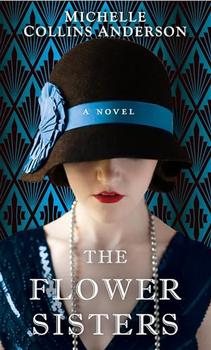
The Flower Sisters
by Michelle Collins Anderson
From the new Fannie Flagg of the Ozarks, a richly-woven story of family, forgiveness, and reinvention.
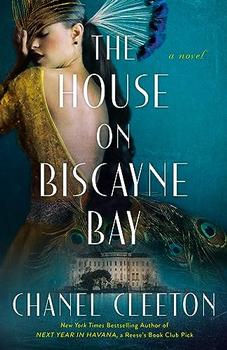
The House on Biscayne Bay
by Chanel Cleeton
As death stalks a gothic mansion in Miami, the lives of two women intertwine as the past and present collide.
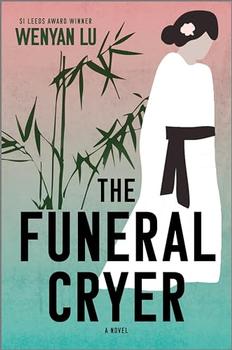
The Funeral Cryer by Wenyan Lu
Debut novelist Wenyan Lu brings us this witty yet profound story about one woman's midlife reawakening in contemporary rural China.
Your guide toexceptional books
BookBrowse seeks out and recommends the best in contemporary fiction and nonfiction—books that not only engage and entertain but also deepen our understanding of ourselves and the world around us.