
-
Your next favorite book
is waiting.
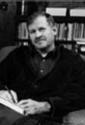
A short 'Note to Readers' from Robert Morgan discussing Gap Creek, including the challenge of Julie's voice.
When I began writing Gap Creek I knew I wanted to tell a story loosely
based on the first year of marriage of my maternal grandparents. They had gotten
married about a hundred years before on Mount Olivet and moved down to Gap Creek
in South Carolina. I knew them as elderly people when I was very young. Grandma,
who kept me during the day while my mother worked in the cotton mill, died when
I was three. I wanted to tell a story about a woman like her, who did heavy
men's work on the farm, and spent her life working for others, for her sisters
and her husband, her children and grandchildren, the sick and needy of the
community.
I tell my students that you do not write living fiction by attempting to
transcribe actual events onto the page. You create a sense of real characters
and a real story by putting down one vivid detail, one exact phrase, at a time.
The fiction is imagined, but if it is done well, it seems absolutely true, as
real as the world around us.
The hardest work I did on Gap Creek was trying to get the voice right.
Julie, who tells her own story, is not well educated and is not much of a
talker. In fact, she feels inarticulate. She feels she expresses herself best
with her hands, with her work. The trick was to create a plain voice, with
simple, direct sentences, that could express the complex emotions and intimacy
of marriage, even poetic experience. When I finally heard that voice in my mind
I was able to write the novel rather quickly.
Unless otherwise stated, this interview was conducted at the time the book was first published, and is reproduced with permission of the publisher. This interview may not be reproduced or reprinted without permission in writing from the copyright holder.

M. Allen Cunningham's debut novel The Green Age of Asher Witherow, set in nineteenth-century Northern California, was a #1 Book Sense Pick and a finalist for the 2005 Book Sense Book of the Year Award alongside Marilynne... (more)
If you enjoyed:
Gap Creek
Try:
The Green Age of Asher Witherow
by M. Allen Cunningham

Charles Frazier was born in 1950 in Asheville, North Carolina and grew up in the mountains of North Carolina. He graduated from the University of North Carolina in 1973, received an M.A. from Appalachian State ... (more)
If you enjoyed:
Gap Creek
Try:
Thirteen Moons
by Charles Frazier
We recommend 5 similar authors




Harvard is the storehouse of knowledge because the freshmen bring so much in and the graduates take so little out.
Click Here to find out who said this, as well as discovering other famous literary quotes!

Can you name the title?
Test your book knowledge with our daily trivia challenge!
Your guide toexceptional books
BookBrowse seeks out and recommends the best in contemporary fiction and nonfiction—books that not only engage and entertain but also deepen our understanding of ourselves and the world around us.
