
-
Your next favorite book
is waiting.
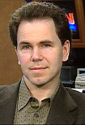
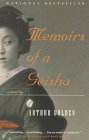
Join us for a conversation with Arthur Golden about Memoirs of A Geisha as he shares what sparked his interest in the subject of geisha, why the Geisha was willing to open up to him, and answers the question, "Are geisha prostitutes?"
Q: What sparked your interest in the subject of geisha?
A: I studied Japanese language and culture in college and graduate school, and afterward went to work in Tokyo, where I met a young man whose father was a famous businessman and whose mother was a geisha. He and I never discussed his parentage, which was an open secret, but it fascinated me. After returning to the U.S., I began work on a novel in which I tried to imagine this young man's childhood. Gradually I found myself more interested in the life of the mother than the son and made up my mind to write a novel about a geisha.
I read everything I could find on the subject, in English and in Japanese, and ended up writing an 800 page first draft focusing on five years in the life of a Kyoto geisha shortly after World War II. Then as I prepared to revise the manuscript, a longtime Japanese friend of my grandmother's offered to introduce me to a Kyoto geisha named Mineko--retired already at the age of 42 and evidently willing to talk to me. I flew to Japan to meet with her, not at all certain what to expect. I worried she might spend an afternoon chatting with me about the sights and then wish me best of luck. But instead she answered every question I asked, always with great candor, and took me on an insider's tour of the geisha district of Gion in Kyoto, even arranging for me to observe and photograph the daily ritual of a geisha being helped into her kimono by a professional dresser. She took my understanding of a geisha's daily existence and stood it on its head. I had to throw out my entire 800 page draft and start from scratch.
Q: Why was she willing to open up to you? You state in the beginning of your novel that geisha don't generally talk about their experiences.
A: She had a number of reasons, I believe. For one thing, she knew I wasn't approaching her as a journalist, but as a fiction writer. I didn't want salacious details about her customers; I never asked for names, or even about experiences she'd had, but only about the rituals and routines of a geisha's life. I found Mineko to be a very kind woman with a generous spirit; we became and remain friends. Actually, I can think of another reason why she helped me: during her years as a geisha, Mineko had at one time or other met many of Japan's great living writers and artists. With her considerable respect for cultural traditions, probably she felt some concern for a struggling young writer.
Q: You mention that Mineko had retired already in her early forties. Is this common among geisha?
A: Most geisha never have the option of retiring, but Mineko was enormously successful and made a great deal of money. I don't think she enjoyed being a geisha. She wanted to run a little bar in the Gion district rather than continuing to wear herself out going from teahouse to teahouse entertaining customers. In fact, I think she'd just opened a bar at the time she met her husband, who is an artist. She retired from the Gion district when they decided to marry.
Q: Is Mineko the model for your protagonist, Sayuri?
A: No, I wouldn't say that. Though it's true that after meeting Mineko, my understanding of geisha changed fundamentally, and of course, my idea of Sayuri changed along with it. I had imagined that geisha probably sprinkled their conversations with high-handed references to art and poetry, but in fact, Mineko was too naturally clever to resort to anything so artificial. For example, when she and her family came to visit us in Boston, I took her to Harvard Yard to see the place; it happened to be an hour or so after commencement ceremonies had ended. We sat together on a bench while I explained the meaning of the different colored gowns--black for undergraduates, blue for master's degrees, and red for PhDs--when an older man stumbled by, clearly a bit drunk. Mineko turned to me and said, "I guess that man's nose just got a PhD." That comment strikes me as so characteristic of Mineko. She became such an exceptionally successful geisha partly because of her cleverness--though her great beauty had a good deal to do with it as well.
In establishing Sayuri's voice in the novel, I considered it essential to find some quality of cleverness that would help her rise out of the mire in which most geisha have no choice but to spend their lives. So in this sense, I did draw on my knowledge of Mineko to create Sayuri. However, the story of Sayuri's life in no way relates to Mineko's. In fact, I've never asked Mineko anything beyond the most superficial questions about her history. I didn't want to limit the possibilities that might suggest themselves to me as I tried to imagine Sayuri's struggle.
Q: Did you feel any reluctance, as a man, to try writing a novel from the point of view of a woman?
A: I certainly did. As an American man of the 1990s writing about a Japanese woman of the 1930s, I needed to cross three cultural divides--man to woman, American to Japanese, and present to past. Actually, I see a fourth divide as well, because geisha dwell in a sub-culture so peculiar that even a Japanese woman of the 1930s might have considered it a challenge to write about such a world. Before meeting Mineko, I'd written a draft in third person. Even after interviewing her I felt no temptation to try entering the head of my protagonist by writing in first person. Instead I wrote another 750 page draft in third person. While I was revising it for submission, a number of big name agents and editors in New York began calling me--very heady stuff for an unpublished writer. But when they saw the manuscript, they all lost interest. I know I'm a perfectly competent prose stylist; I didn't think the writing itself had scared them away. And the subject matter is so fascinating--or at least it was fascinating to me. The way I saw it, if I'd failed to bring the world of geisha compellingly to life, I'd done something dreadfully wrong. And in fact, as I came to understand, my mistake was having chosen to use a remote, uninvolved narrator. So you see, I'd ended up writing a dry book precisely because of my concerns about crossing four cultural divides.
By this time I'd spent more than six years on the project; I certainly felt no temptation to give it up. During these years of work I'd come to know my protagonist and the sub-culture in which she dwelt so much better than I'd ever imagined possible; very quickly I began to ask myself why I shouldn't try crossing those cultural divides after all. As for seeing things from the point of view of a woman, well, I knew my wife quite well; I understood how she felt about things. I felt I could say the same about my mother, and my sister, and quite a number of women friends. If I could understand and sympathize with their points of view, perhaps I could do the same with Sayuri's.
Q: Why did you choose to begin the novel with a translator's preface. The book isn't really in any meaningful sense a translation, is it?
A: No, it isn't a translation; I wrote it in English. My Japanese is fine, but certainly not good enough for that! I did, however, always try to keep in mind how things would be expressed in Japanese, and to select words and phrases that I felt would convey the same tone. But the translator's preface serves quite a different purpose. In writing a novel from the perspective of a geisha, I faced a number of problems. To begin with, how would Americans understand what she was talking about? Even fundamental issues like the manner of wearing a kimono or makeup couldn't be taken for granted if the audience wasn't Japanese. When I'd written the novel in third person, the narrator had had the freedom to step away from the story for a moment to explain things whenever necessary. But it would never occur to Sayuri to explain things--that is, it wouldn't occur to her unless her audience was not Japanese. This is the role of the translator's preface, to establish that she has come to live in New York and will be telling her story for the benefit of an American audience. That's also the principle reason why the novel had to end with her coming to New York. It took me a number of tries to find a believable way of getting her there.
Q: Here's a question you've undoubtedly heard before: Are geisha prostitutes?
A: As a matter of fact, all through the years I worked on this novel, that was the first question people asked me. The answer isn't a simple yes or no. The so-called "hot springs geisha," who often entertain at resorts, are certainly prostitutes. But as Sayuri says in the novel, you have to look at how well they play the shamisen, and how much they know about tea ceremony, before you determine whether they ought properly to call themselves geisha. However, even in the geisha districts of Kyoto and Tokyo and other large cities, a certain amount of prostitution does exist. For example, all apprentice geisha go through something they call mizuage, which we might call, "deflowering." It amounts to the sale of their virginity to the highest bidder. Back in the '30s and '40s, girls went through it as young as thirteen or fourteen--certainly no later than eighteen. It's misleading not to call this prostitution, even child prostitution. So we can't say that geisha aren't prostitutes. On the other hand, after her mizuage, a first-class geisha won't make herself available to men on a nightly basis. She'll be a failure as a geisha, though, if she doesn't have a man who acts as her patron and pays her expenses. He'll keep her in an elegant style, and in exchange she'll make herself sexually available to him exclusively. Is this prostitution? Not in the exact sense we mean it in the West, where prostitutes turn "tricks" with "johns," and so on. To my mind, a first-class geisha is more analogous to a kept mistress in our culture than to a prostitute.
Reproduced with the permission of the publisher, Knopf
Unless otherwise stated, this interview was conducted at the time the book was first published, and is reproduced with permission of the publisher. This interview may not be reproduced or reprinted without permission in writing from the copyright holder.

Richard Flanagan's eight novels have received numerous honors and are published in forty-two countries. He won the Commonwealth Book Prize for Gould's Book of Fish and the Man Booker Prize for The Narrow Road to the Deep ... (more)
If you enjoyed:
Memoirs of a Geisha
Try:
The Narrow Road to the Deep North
by Richard Flanagan

Katherine Govier is the author of nine novels and three short story collections. Her most recent novel The Printmaker's Daughter (originally published as The Ghost Brush in Canada) is about the daughter of the famous ... (more)
If you enjoyed:
Memoirs of a Geisha
Try:
The Printmaker's Daughter
by Katherine Govier
We recommend 9 similar authors







Not doing more than the average is what keeps the average down.
Click Here to find out who said this, as well as discovering other famous literary quotes!

Can you name the title?
Test your book knowledge with our daily trivia challenge!
Your guide toexceptional books
BookBrowse seeks out and recommends the best in contemporary fiction and nonfiction—books that not only engage and entertain but also deepen our understanding of ourselves and the world around us.
