
-
Your next favorite book
is waiting.

A Conversation with Emily Rapp, author of The Still Point of the Turning World, the story of a mother's journey through grief and beyond it.
Q: Why did you write this book?
A: After Ronan was diagnosed, I needed to focus my energies on something other than despair. Writing this book saved me, in the sense that it gave me a constructive task to do each day other than take care of my son, the sight of whom filled me with an immense grief and panic and sadness and joy and love. I felt compelled to write it - I experienced hypergraphia, where I literally couldn't stop writing. And, finally, writing the book felt like a way of kicking back at the chaos of the universe, at this incredibly raw deal: you gave me this experience? Watch and see what I do with it.
Q: Can you describe the experience of writing and sharing Ronan's story?
A: Writing this book clarified an important distinction for me: that writing is cathartic, not therapeutic. Catharsis is from the Greek word to strip away, to burn away the unnecessary, and that's what I felt I was doing. The end goal of a cathartic artistic experience is art. The end goal of a therapeutic experience is emotional stability or regulation. I felt manic and crazed while I wrote this book, and also completely, terrifyingly free. I felt I had nothing to lose, and so I wrote the kind of book I've always wanted to write, I just never thought I'd be writing it about this particular subject. As an artist, the experience was electrifying. As a person, it was draining and exhausting.
Q: Did writing help you explore your grief?
A: I'm not sure it helped in the sense that it made me feel better, but every artist wants to create order from chaos. Grief is the ultimate emotional chaos - it's a full body experience and there's no way to numb it, erase it, get out of it. In a sense, writing about grief externalized the experience. I could examine it objectively, smell it, taste it, throw it around. And I was angry, and asking questions in written form helped me manage that rage.
Q: You drew upon many literary influences, from C.S. Lewis to Mary Shelley to Sylvia Plath. How did these writers and thinkers help you process your experience? Was anyone particularly influential?
A: Lewis and Shelly and Plath have always been touchstones for me, so it's no mistake that they helped me manage this experience as well. Part of what helped me manage my grief experience was to make my world big, and because I'm a writer and a reader, big meant vertically deep. I read and read and read—as a distraction, but also as a way of finding out how others had survived sorrow and moved on. I also found the most helpful writers to be those who were also philosophical in some way, and this fits with my background as a theologian. I was asking the biggest questions about the extremities of the human emotional experience, and I felt I needed literary guides who had done the same kind of intellectual tunneling.
Q: The Still Point of the Turning World is based on your 2011 New York Times essay, "Notes from a Dragon Mom." What compelled you to write that piece? What was the response like?
A: After Ronan was diagnosed, I found myself isolated as a parent in the "normal" world. I was a part of the parenting group of families with Tay-Sachs, but out at the grocery store, in the mall, walking outside - I just felt that the world was going on and I was not a part of it, and I was weary of people feeling sorry for me. As I got to know these dragon parents, as I call them, I realized that they were, in fact, practicing the true art of parenting: which is a slow process of letting go, only we would be letting our children go in the most epic sense, in that we would witness their deaths. They were not objects of pity, and their lives were not hideously said; they were tough, and their lives were beautiful and difficult. The response was overwhelming, from parents and non-parents, and taught me the lesson that there is no ladder of loss or suffering, and that it is general in the world.
Q: What does it mean to you, now, to be a good parent and to live a meaningful life?
A: My goal as a parent is to make Ronan as comfortable as possible, and to fill his short life with meaningful experiences; music, outdoor activities, and most of all, in these final stages of his life, comfort. He is who he is. This is a lesson I will never forget about parenting: that children are people, not projects. My responsibility, I feel, in the wake of Ronan's raw deal, is to live the biggest, fullest, richest life possible, because he was never given the opportunity to do so.
Q: What has Ronan taught you?
A: So much. He has taught me that grief has a terrible beauty because it is an expression of the depth of one's love. He has taught me that there is no use obsessing about the past or worrying about the future, but there is only the moment. He has taught me that the world is chaos, and it will reach all of us, that we have no control. That we are all mortal, and that we should love as hard as we can while we're here, even if it means experiencing gutting loss if we lose that person. He taught me that I'm not alone, and that friendships I've cultivated over years and decades are rock solid, reliable, life-sustaining.
Q: What do you hope readers will take away from your book?
A: That the human project is to love and to lose and to make meaning from this fundamental truth. I hope that people will practice a radical generosity and empathy, be more authentic, let themselves be more vulnerable and real, in public and in private.
Unless otherwise stated, this interview was conducted at the time the book was first published, and is reproduced with permission of the publisher. This interview may not be reproduced or reprinted without permission in writing from the copyright holder.
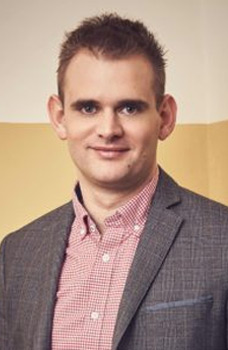
Born in the U.K, Luke Allnutt is a writer and journalist based in the Czech Republic. He is married and has two young boys. (more)
If you enjoyed:
The Still Point of the Turning World
Try:
We Own the Sky
by Luke Allnutt

Julian Barnes is the author of fourteen novels, including The Sense of an Ending, which won the 2011 Booker Prize, and Sunday Times bestsellers The Noise of Time and The Only Story. He has also written three books of short ... (more)
If you enjoyed:
The Still Point of the Turning World
Try:
Levels of Life
by Julian Barnes
We recommend 14 similar authors




Show me the books he loves and I shall know the man...
Click Here to find out who said this, as well as discovering other famous literary quotes!

Can you name the title?
Test your book knowledge with our daily trivia challenge!
Your guide toexceptional books
BookBrowse seeks out and recommends the best in contemporary fiction and nonfiction—books that not only engage and entertain but also deepen our understanding of ourselves and the world around us.
