
-
Your next favorite book
is waiting.
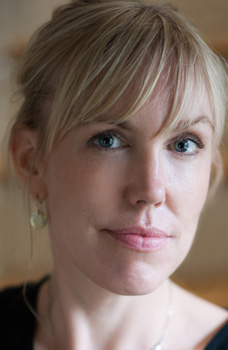
Tara Conklin discusses the inspiration behind her novels, The House Girl and The Last Romantics
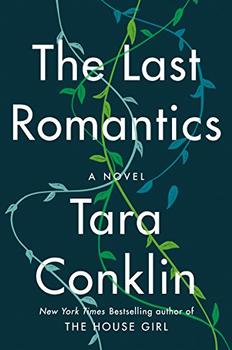
What was the inspiration behind The Last Romantics?
The original inspiration for this book came from a family tragedy that happened many years ago. As details emerged over the weeks and months following the event, I found myself asking so many questions about why and how the tragedy had unfolded. These questions--about all the big things like family, loss, success and love--lodged themselves in the back of my brain. It took about 10 years before I sat down to explore these issues with the fictional Skinner family. By that point in time, I also wanted to investigate some of my own concerns about women, care-giving, marriage, children and career, and the three Skinner sisters were a perfect vehicle. But the core happening at the center of the book is true to the real event.
The story is told from the future and narrated by the 102-year-old poet Fiona Skinner. Why did you select this narrative format?
I wanted to write a story that spanned the characters' lifetimes, but I also wanted to examine my generation--the choices that I've made and my friends have made about family. These seemed like two conflicting narratives goals. I needed a certain degree of distance and omniscience to make the family epic work, but this felt inappropriate for a modern-day story. I wrote three full complete drafts of this novel using different points of view and techniques. It was only after the second full manuscript that I had an a-ha moment: What if Fiona is talking to us from the future? With that perspective, I could have my omniscience and my contemporary relevance. Plus, I had never read a story told in this way. Dystopian or science fiction narratives tend to be about the future world, but my future sections serve primarily as frames for the larger, contemporary story.
I'm really happy with the way it turned out. There's a certain nostalgia in the narrative that now feels natural. And it drives home one of the big themes of the book, which is that these everyday choices we make about who and how to love are what matters. This is what, when we're 100 years old and looking back on life, we'll talk about. This is what we'll remember.
What is it about the relationship between siblings that interests you as a writer?
As one of three sisters and the mother of three, I find sibling relationships fascinating. For some, siblings are the most supportive people in their lives; for others, a sibling is a stranger or even an adversary. Either way, sibling relationships are (for the most part) hugely significant in a person's life, but I think are examined far less in fiction than parent-child, romantic or even friend relationships. I also find it so interesting that the same family experience can be felt and remembered so differently among siblings. I see this among my own sisters: my youngest sister remembers arguments that we had years ago as important in our relationship, but I simply don't recall them at all.
Watching the process of my children growing into themselves, marking their differences, bouncing off each other, is constantly thought-provoking and entertaining. I tried to bring to the novel some of that wonder about how people develop into themselves.
Fiona talks about "the failures of love" as she embarks on her story. Is The Last Romantics a love story?
I think it is a love story. Years ago, I read a quote from Cheryl Strayed in which she called her mother "the love of her life." That really moved me. The phrase "love of your life" is generally used to describe a romantic love, a partner, but I think just as often the most enduring, most influential love relationships involve family.
The siblings--three sisters and a brother--process grief very differently. What role is grief meant to play in Joe's life choices?
I think Joe (and his sisters, too) are burdened with a lot of unprocessed grief over the death of their father when they were so young. All four of them were forced to focus on survival in those first years, and so they never had a chance to mourn, to be comforted, to come to terms with their father's absence. For Joe, this is compounded by the pressure imposed upon him as the only boy. He feels the need to be strong and protective, to not show emotion, to be tough and athletic, to step into this conventional role of "man" rather than just be himself. His sisters have more opportunity to express emotion, but Joe locks it all up.
Their mother, Noni, instills feminist ideals in her daughters, to varying degrees of success. Why didn't she do the same with her son?
This is a question that I've thought about a lot regarding my generation. As a mother of one daughter and two sons, I am very conscious of teaching feminist principles (which are really just about equality) to all of my kids. Noni doesn't think Joe needs to know about feminism because he won't be affected by gender discrimination. But, of course, he does need to know about it, and we see the kinds of problems that arise for Joe because he's pretty oblivious to gender-related issues. I think that for my generation, "feminism" was seen as a woman's concern and a woman's problem. We were educated in what was right, what we should expect and what to fight for while boys and men were basically left out of the discussion.
I think that's changing now, but Harvey Weinstein, the Kavanaugh hearing and the #metoo movement show how insidious these problems truly are. Men of my generation (and older) know what to say, they know the buzzwords, they might wear the right t-shirt or donate money to the right cause, but I don't think they truly get it. And I don't mean to suggest that every man is a potential Weinstein. But men need to be educated about these issues and then proactively engage with them and fight for them alongside their wives, sisters, daughters, mothers. Gender equality is ultimately about fairness and allowing every individual to achieve their full potential--everyone should be working toward those goals.
This interview by Shahina Piyarali first ran in Shelf Awareness and is reproduced with permission.
Unless otherwise stated, this interview was conducted at the time the book was first published, and is reproduced with permission of the publisher. This interview may not be reproduced or reprinted without permission in writing from the copyright holder.

Andrea Bobotis is the author of the debut novel The Last List of Miss Judith Kratt, forthcoming from Sourcebooks in July 2019. A native of South Carolina, she holds a Ph.D. in English literature from the University of ... (more)
If you enjoyed:
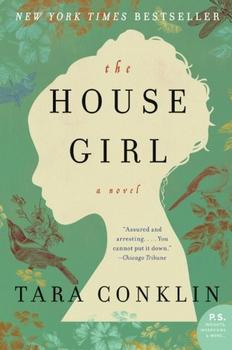
The House Girl
Try:
The Last List of Miss Judith Kratt
by Andrea Bobotis

New York Times Bestselling novelist Joshilyn Jackson is the author of eight novels and a novella: The Almost Sisters, The Opposite of Everyone, Someone Else's Love Story, Gods in Alabama, Between, Georgia, The Girl Who ... (more)
If you enjoyed:
The House Girl
Try:
The Almost Sisters
by Joshilyn Jackson
We recommend 9 similar authors



To make a library it takes two volumes and a fire. Two volumes and a fire, and interest. The interest alone will ...
Click Here to find out who said this, as well as discovering other famous literary quotes!

Can you name the title?
Test your book knowledge with our daily trivia challenge!
Your guide toexceptional books
BookBrowse seeks out and recommends the best in contemporary fiction and nonfiction—books that not only engage and entertain but also deepen our understanding of ourselves and the world around us.
