
-
Your next favorite book
is waiting.

An interview with Tracy Chevalier in which she discusses how 17th century paintings aided in her research for Girl With A Pearl Earring, why she chose Vermeer’s work to write about, and how most of the characters’ looks are based on people in Vermeer’s other paintings.
Everyday life in 17th century Delft is so vivid in Girl with a Pearl
Earring. How did you conduct your research? Where?
Most of it, I confess, was done in my armchair. I read a lot (especially
Simon Schama's The Embarrassment Of Riches: An Interpretation of Dutch Culture
in The Golden Age) and looked at a lot of paintings. Luckily 17th-century Dutch
paintings are mainly scenes from everyday life and so it was easy to see what
houses looked like inside and how they were run. I also went to Delft for four
days and just wandered around, taking it in. Vermeer's house no longer exists,
but there are plenty of 17th-century buildings still left, as well as the Market
Square, the Meat Hall, the canals and bridges. It's not hard to get an idea of
what it was like then.
Little is known of Vermeer's life—at least compared with other Baroque
painters like Rembrandt. Why did you choose Vermeer's work to write about?
I chose Vermeer's work because it is so beautiful and so mysterious. In his
paintings, the solitary women going about their domestic tasks—pouring milk,
reading letters, weighing gold, putting on a necklace—inhabit a world that we
are getting a secret glimpse at. And because it feels secret—the women don't
seem to know we're looking at them—it seems also that something else is going
on underneath, something mysterious we can't quite grasp. The fact that so
little is known about Vermeer was happenstance—happily so, as it turned out,
for it meant I could make up a lot without worrying about things being
"true" or not.
Were you inspired by this particular painting or by Vermeer's work in
general?
I was inspired specifically by this particular painting, though I know his
other work as well. A poster of this painting has hung on the wall of my bedroom
since I was nineteen and I often lie in bed and look at it and wonder about it.
It's such an open painting. I'm never sure what the girl is thinking or what her
expression is. Sometimes she seems sad, other times seductive. So, one morning a
couple years ago I was lying in bed worrying about what I was going to write
next, and I looked up at the painting and wondered what Vermeer did or said to
the model to get her to look like that. And right then I made up the story.
Is Girl with a Pearl Earring a true story? To what extent is it based in
fact?
It isn't a true story. No one knows who the girl is, or in fact who any of
the people in his paintings are. Very little is known about Vermeer—he left no
writings, not even any drawings, just 35 paintings. The few known facts are
based on legal documents—his baptism, his marriage, the births of his
children, his will. I was careful to be true to the known facts; for instance,
he married Catharina Bolnes and they had eleven surviving children. Other facts
are not so clear-cut and I had to make choices: he may or may not have lived in
the house of his mother-in-law (I decided he did); he converted to Catholicism
at the time of his marriage but not necessarily because Catharina was Catholic
(I decided he did); he may have been friends with the scientist Antony van
Leeuwenhoek, who invented the microscope (I decided he was). But there was a lot
I simply made up.
You chose to give your novel the same title as the painting. Is there a
greater purpose for this? What sort of a relationship do you see the novel and
the painting having?
The novel has the same name as the painting because the painting is the
culmination of the story; its creation is what the story is leading up to. It
also points up the earring, which is important as a symbol because it represents
the world Griet gets drawn into and ultimately rejected from. The novel could
not exist without the painting. I would never have written it, and I don't think
it would have the same resonance with readers if the painting didn't exist.
Do you paint? If not, how did you learn about the process and tools?
I don't paint, though I did take a painting class while writing this book so
I could find out a little about how it's done. I was absolutely awful at it, but
I learned a lot. I also read about Vermeer's painting technique, and spoke with
the woman who restored the painting for the 1996 Vermeer exhibition. She was
able to explain to me some of the finer details of how he painted. As for the
paints and how they were made, I found some old books about making paints and
learned from them. I also bought some linseed oil (which is mixed with pigment
to make paint) and left the bottle open as I was writing so that I could smell
what they would have smelled.
17th century literature reflected religious and social changes just like
17th century painting. Milton's radical Paradise Lost was published during this
time. Did you consider this sort of thing when writing an historical novel?
I didn't consider Paradise Lost, but clearly religious change in the
Netherlands at the time was a very important issue. The Dutch had just thrown
off the rule of the Catholic Spanish and were keen to distance themselves from
Catholicism. Protestantism suited their natures. The Dutch Catholics were
tolerated but were seen as slightly outside the system, which is fascinating
when you consider that Vermeer actually converted to Catholicism, and so chose
to be a maverick. You have to consider religious and social change when writing
historical novels. They are essential to the push and pull of the story. In
fact, all my novels are historical and set during periods of great social
change. My first novel, The Virgin Blue (published in Britain), is set during
the 16th century Reformation in France, and the novel I'm working on now is set
in England at the beginning of the 20th century and up through World War I.
While reading the novel, I couldn't help examining and re-examining the
painting every few pages. Did you write the novel with the painting at hand?
Oh yes. With all his paintings, in fact. I kept the catalogue from the 1996
Vermeer exhibition almost permanently open. Most of the characters' looks are
based on people in his other paintings. In fact, if you want to see which
paintings link to which people, check out the book's website at www.pearlearring.com.
Did you know how the story ended before you started writing?
Yes. I had the whole story worked out (except for the odd detail) before I
started writing. This is unusual for me. Often I know only some of the story
before I start writing. This book was a dream to write because of that and
because the style is so spare.
Why the camera obscura*? It plays such an important part, lending all
sorts of ideas about technology and foreshadowing what's to come. *For more
information on the camera obscura, visit the book's website at
www.pearlearring.com.
The camera obscura is a tangible representation of a different way of
looking. Griet has the capacity to look in a different way, but she needs
Vermeer to show her how. He does that partly with the help of the camera obscura.
It also reminds us that in order to see clearly you have to focus, shut out the
world and look at one corner of a room. That is what Vermeer's paintings
do—they reveal the world in a room. That is also what the novel tries to
do—it is deliberately narrow and focused, and in it is a whole world.
What's next? Are you ready to work on another historical novel?
Yes. The next novel is set in a Victorian cemetery in London at the turn of
the century and up through World War I. It's about two girls whose families have
adjacent plots at the cemetery, and the apprentice gravedigger they meet there.
In a wider sense the book is about the changing values at the beginning of the
modern era, looked at through the changing attitudes to death and mourning. The
Victorians bought elaborate tombs for their dead and followed strict and
elaborate mourning rituals, but by the end of World War I graves became much
simpler and mourning was conducted in private. Why did this change occur? The
book attempts to answer that. I can't seem to write a contemporary novel. I
suppose I'm more comfortable in the past, where I know what is important and
lasting. If I write about today, I worry that it will date in ten years' time.
Reprinted with the permission of Penguin Putnam Publishing.
Unless otherwise stated, this interview was conducted at the time the book was first published, and is reproduced with permission of the publisher. This interview may not be reproduced or reprinted without permission in writing from the copyright holder.




Novelist, biographer, and poet Peter Ackroyd was born in London on October 5, 1949.
He graduated from Clare College, Cambridge, and studied at Yale University as a Mellon Fellow, where he completed Notes for a New Culture: ...
(more)
If you enjoyed:
Remarkable Creatures
Try:
The Lambs of London
by Peter Ackroyd
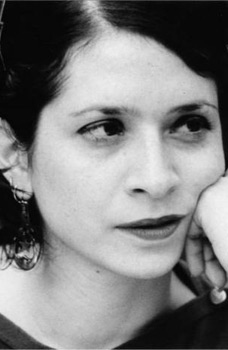
Chloe Aridjis is a Mexican–American writer who was born in New York and grew up in the Netherlands and Mexico. After completing her Ph.D. at the University of Oxford in nineteenth–century French poetry and magic ... (more)
If you enjoyed:
Girl With A Pearl Earring
Try:
Asunder
by Chloe Aridjis
We recommend 29 similar authors






I write to add to the beauty that now belongs to me
Click Here to find out who said this, as well as discovering other famous literary quotes!

Can you name the title?
Test your book knowledge with our daily trivia challenge!
Your guide toexceptional books
BookBrowse seeks out and recommends the best in contemporary fiction and nonfiction—books that not only engage and entertain but also deepen our understanding of ourselves and the world around us.
