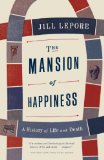
Jill Lepore discusses her nonfiction work: The Mansion of Happiness: A History of Life and Death
Q: You show how prevailing opinions about life and death can change the course of politics, and can in fact be dangerous. In your opinion, is there a particular lesson from the past that we need to take to heart as these debates and discussions of life continue?
A: There are only two lessons. 1. The past is not dispositive. 2. No day is a bad day to read E.B. White’s 1947 essay, “Death of a Pig.”
Q: You've taken on some of the biggest questions of the human condition in this book, and yet you've approached them through very familiar experiences: parenting fears, breastfeeding, board games, children's literature, adolescence, etc. How did you decide on this approach?
A: I didn't decide on that as an approach so much as it's just how my mind works. I spend a lot of time puzzling over the ordinary, wondering where things come from and why they are the way they are. Coffee cups, voting rights, traffic lights - anything, everything. Most things, the longer and harder you think about them, the bigger and harder the questions they raise. One day I was playing The Game of Life, spinning the Wheel of Fate and driving down the Highway of Life, and I thought, "Hey, where did this game come from, anyway?"
Q: You are an historian, yet through your writing (particularly for The New Yorker) you've also become a very popular public intellectual. Do you ever find it difficult to balance these two sides of your work?
A: Yes. But, generally, it's where it's difficult that it gets interesting. I'm fascinated by the relationship between the past and the present. I'm fascinated by that relationship as an object of study (What forces cause change over time?) but I'm also fascinated by that relationship as a matter of narrative (What story best chronicles that change?). The tension between analysis and storytelling is not unlike the tension between being a Harvard professor and writing for a magazine. It's like trying to sing "I am the Very Model of a Modern Major-General" while skipping rope. Either you're going to run out of breath or you're going to trip; the only unknown is which will happen first. Still, it keeps you on your toes.
Q: A history of various board games about life form the framework to this book. (Readers will be fascinated to learn where Milton Bradley got his ideas!) How has the end "goal" of life changed over time according to these games, and the societies that they represent?
A: In eighteenth- and early nineteenth-century games of life, the goal was to enter the mansion of happiness: Heaven. In Milton Bradley's 1860 game, the goal was to win. In the 1960 game, the goal was to retire to Millionaire Acres. The most recent game of life has no goal: life is aimless. When you think about that shift, over the centuries, it turns out to be awfully revealing.
Q: Questions about life and death often boil down to a question of rights. The protection of "life, liberty, and happiness" were central to the founding of this country, but as you write "life, it would seem, trumps all." Do you think the founders would be surprised by the way that these words have been appropriated by various factions over our history?
A: In writing this book, I tried to offer a different vantage, "a long view" on some of the painful and often heartless arguments that have determined the course of American politics since the 1960s. I find comfort in knowing that these arguments are not timeless; they have a history; they have a beginning, which means they might one day have an end.
Q: The application (or misapplication) of scientific discoveries to affect social change is a theme that appears in many of the chapters of The Mansion of Happiness. Has society's reaction to scientific advances become more measured over time?
A: No. In 1939, E.B. White visited the World's Fair, which that year was called The World of Tomorrow. He had a head cold. "When you can't breathe through your nose," he reported, "tomorrow seems strangely like the day before yesterday." Today, I'm sitting here, home sick, staring at the cover of the May 2012 issue of Wired, which just came in the mail. The cover story, about an Internet whiz, is called "The Man Who Makes the Future." When you can't breathe through your nose, tomorrow still feels strangely like the day before yesterday.
Q: The battle over "the right to life," particularly concerning abortion, has become one of the key platforms of the conservative right, but you point out that this was not always the partisan issue that it is today. When did that change?
A: That depends. It changed at different points for party leaders, for elected officials, and for voters, in that order, and beginning in 1971. But my point is: the process by which this serious and complicated issue was reduced to a matter of partisan politics is profoundly troubling, not to mention shabby and grubby.
Q: Another theme that emerges from your book is the distinction between how ideas of life and death have been different for the poor and wealthy. In which areas of your research did you see the class divide emerge most strongly?
A: That's all over the place in the world we live in, to be seen, by everyone, every day; anyone who's ever walked into a hospital has seen it. But an aspect of my research that really set me back on my heels had to do with human milk, breast pumps, and the care of infants. In few other stages of life, I think, is economic inequality so starkly visible.
Q: As one might expect, questions of parenting play a large role in the discussions of life and death. Do you think that your own experience as a parent led you to explore any sources in a different way than you might have without that experience?
A: Undoubtedly. If some kid wasn't putting me up to it, I would never have been playing The Game of Life, or reading Stuart Little. Or, wait, strike that. I'd for sure have been reading Stuart Little. If you have twelve hours or so, I could make a dent at explaining how I feel about E.B. White.
Q: Was there any discovery from your research for this book that particularly surprised you?
A: That Stuart Little was banned. Shocking! Fascinating!
Q: You show how prevailing opinions about life and death can change the course of politics, and can in fact be dangerous. In your opinion, is there a particular lesson from the past that we need to take to heart as these debates and discussions of life continue?
A: There are only two lessons. 1. The past is not dispositive. 2. No day is a bad day to read E.B. White's 1947 essay, "Death of a Pig."
Unless otherwise stated, this interview was conducted at the time the book was first published, and is reproduced with permission of the publisher. This interview may not be reproduced or reprinted without permission in writing from the copyright holder.

Dr. Erica Brown is a writer and educator who works as the scholar-in-residence for the Jewish Federation of Greater Washington. She is the author of Inspired Jewish Leadership, a National Jewish Book Award finalist, and a ... (more)
If you enjoyed:
The Mansion of Happiness
Try:
Happier Endings
by Erica Brown

Sebastian Junger grew up in suburban Massachusetts and graduated from Wesleyan University with a degree in cultural anthropology in 1984 and has been a freelance journalist whose work has appeared in such magazines as Outside... (more)
If you enjoyed:
The Mansion of Happiness
Try:
Tribe
by Sebastian Junger
We recommend 7 similar authors


The House on Biscayne Bay
by Chanel Cleeton
As death stalks a gothic mansion in Miami, the lives of two women intertwine as the past and present collide.
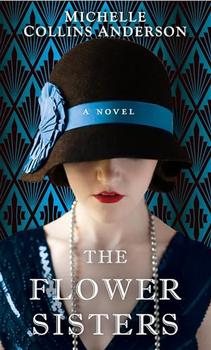
The Flower Sisters
by Michelle Collins Anderson
From the new Fannie Flagg of the Ozarks, a richly-woven story of family, forgiveness, and reinvention.

The Funeral Cryer by Wenyan Lu
Debut novelist Wenyan Lu brings us this witty yet profound story about one woman's midlife reawakening in contemporary rural China.
Your guide toexceptional books
BookBrowse seeks out and recommends the best in contemporary fiction and nonfiction—books that not only engage and entertain but also deepen our understanding of ourselves and the world around us.