
-
Your next favorite book
is waiting.

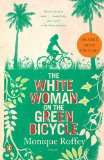
Monique Roffey discusses The White Woman on the Green Bicycle.
In an interview in The Guardian (London), you talked about your parents and their arrival in Trinidad—including the fact that your mother brought her green bicycle. How much of George and Sabine is based upon them? Was your mother as notorious for her bicycle riding as Sabine?
Yes, everyone knew my mother because she rode around Port of Spain on her green bicycle in her shorts, looking very glamorous and yet very foreign too. For months after she first arrived, she would go to parties or meet people for the first time and they would say "Oh, you're the women on the green bicycle," so she was well-known for her bike.
My parents had a long and eventful marriage and were always a bit like movie stars to me, when they were young. Yes, to some extent George and Sabine are based on them, but in many ways not at all. My mother had no interest in Eric Williams, for example, or the PNM, and she never attended the University of Woodford Square; all of that has to do with my own interest in Trinidad's recent history.
What did your parents think about Eric Williams?
To my knowledge and memory, they did not have strong opinions about him.
You capture the cadences of the spoken language brilliantly. Was this difficult, or—as a native Trinidadian—did this come easily to you? Did you coin the incredibly evocative "steupse," or is it commonly used in Trinidad?
Trinidad's language is a fusion of English, African, and French and so we have our own words and even our own dictionary. Steupse is a common local word and it's the onomatopoeic word for the sound people make to show disapproval, or to show they are vexed, when they suck their teeth together. It means "Oh for God's sake."
I am bilingual and can speak this other type of English when I want to. It's in my ear and it is the language I grew up with all around me. Trinidadians love speaking their own English; it's full of poetic forms and can be playful and lyrical and comical. Trinidadians are verbal acrobats, and I love being on the island just to hear the people speak. One of my favorite poets is Anthony Joseph, a Trinidadian also based in the UK. He is one of the best examples of writers of my generation using this fusion-language. Check him out.
At what point did you begin to become aware of the social inequities in Trinidad? How conscious were you of Eric Williams when he was in power?
Eric Williams died when I was fifteen, and I remember his funeral vividly. But after that, all I ever heard about him was what the adults in the white community made of him, that he was corrupt and a failure. The Caribbean was built on crime; it has a criminal past. It was born from slavery, piracy, you name it… big heinous crimes of humanity were committed on almost every island. There is evidence of slavery everywhere even today, even just in place names. You cannot live here and not know about all this from a very young age and without understanding that today's problems with crime and corruption are directly linked. Piracy still exists in the Caribbean and oil is the new mono-crop in Trinidad for sure. In Wide Sargasso Sea there is a passage where the newlyweds visit a beach called "Massacre." The Mr. Rochester character asks his new white wife Antoinette who was massacred here and she replies that she doesn't know, and it doesn't matter either, so many have been killed. This is true wherever there has been slavery, so many killed it is hard to know who was killed and where and when.
Like George and Sabine's son, Sebastian, you were sent to boarding school in England at a relatively young age. Were you—like Sebastian—sent away so that you didn't grow up "too" Trinidadian?
Yes. And it worked. But in a most unusual way. I am an outsider in both the UK and in Trinidad. This suits me. Writers need to stay on the outside of society, as observers. I very much relate to the mad woman in the attic, the white Creole woman with frizzy hair; that's me, this upstart. Chain her up, hide her away. She might be crazy. Much to say here!
Why did you choose to make your fictional proxy male? Do you have a sibling like Pascale who stayed in Trinidad during his or her school years? If so, how close are you now?
I was born in April, and my parents almost called me Pascale. If I'd never left Trinidad I may have grown up into a woman just like her; a hard drinker, a limer, and married to a rich man I do not love! Sebastian, the son, is a bit like me, the prodigal child who comes from the metropolis and has a good job and seems very educated. But he says, "Don't worry, the grass is not greener." I feel very strongly that I may choose to reside in a developed capital city, but I do not see Trinidad as a less interesting place—quite the opposite. And while some Trinidadians look to Europe or the States as somewhere more credible, the vast majority of Trinidadians are fiercely passionate about their country. You just have to be here for Carnival to see that.
I have a brother who lives in Trinidad. Like me, he went to a British boarding school and then university in Canada. But he chose to live, work, and marry in Trinidad and is much more local than me… he is nothing like the characters in this book.
You split your time between London and Trinidad. Do you consider yourself a Caribbean writer or an English one? Where do you feel most at home?
I am Trinidadian by birth and half English by blood and possess two passports. Roffey is a very English name. My father was an Englishman. But I am a white Creole, to be exact about it; I have been mixed up into the culture of Trinidad. While I am most at home in London, I cannot really label myself as either British or Trinidadian. I write in the English language and live in the UK. I find it hard to say that I am an entirely British writer, especially when I supported Trinidad in the 2006 World Cup and also support the West Indies cricket team.
What is the current political situation in Trinidad? How has your novel been received there?
The novel has been received extremely well here. Patrick Manning and the PNM were voted out of office in early 2010; we have a new female prime minister, Kamla Persad-Bissessar and a new party, and I think she's an awful lot better than any prime minister I've seen so far. We have a Canadian chief of police who has been here a year too. All this is promising.
In the novel, Sebastian and Sabine discuss the "murder a day" (p. 88) in Trinidad. Does this estimate still hold true?
The murder rate is still high, yes.
The blimp that you describe hovering over Port of Spain seems so preposterous that it's shocking to discover that it's real and not your fictional creation. Is it still there? Can you talk a bit about how it came to be and the people's response to its presence?
Since the new government, it has been taken down and we no longer see it. But exactly what the blimp was really doing remains a mystery to me.
What are you working on now?
My erotic memoir With the Kisses of His Mouth is out in June in the UK. I have been working on a novel the last few months, called Archipelago. I have been traveling a lot through the Dutch islands and to South America and living in Trinidad the last few months. It begins and ends in Trinidad; it is an adventure story, and has something to do with Moby Dick; that's all I can say for now.
Unless otherwise stated, this interview was conducted at the time the book was first published, and is reproduced with permission of the publisher. This interview may not be reproduced or reprinted without permission in writing from the copyright holder.


Chimamanda Ngozi Adichie grew up in Nigeria. Her work has been translated into more than fifty-five languages. She is the author of the novels Purple Hibiscus, which won the Commonwealth Writers' Prize; Half of a Yellow Sun, ... (more)
If you enjoyed:
The White Woman on the Green Bicycle
Try:
The Thing Around Your Neck
by Chimamanda Ngozi Adichie
Monica Ali is the daughter of English and Bangladeshi parents.
She came to England at the age of three, and her first home was Bolton in Greater Manchester. Ali later studied at Oxford University.
Her first novel, Brick ...
(more)
If you enjoyed:
The White Woman on the Green Bicycle
Try:
Brick Lane
by Monica Ali
We recommend 8 similar authors



Heaven has no rage like love to hatred turned, Nor hell a fury like a woman scorned.
Click Here to find out who said this, as well as discovering other famous literary quotes!

Can you name the title?
Test your book knowledge with our daily trivia challenge!
Your guide toexceptional books
BookBrowse seeks out and recommends the best in contemporary fiction and nonfiction—books that not only engage and entertain but also deepen our understanding of ourselves and the world around us.
